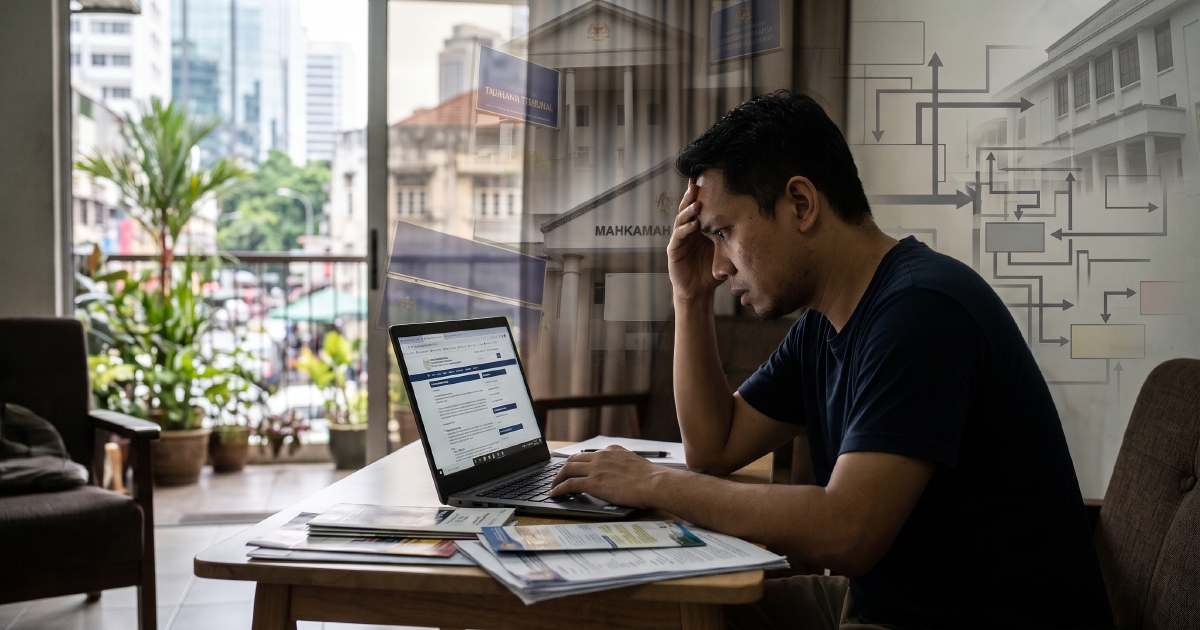

Malaysia’s civil justice system is performing relatively well by international standards. Yet a persistent weakness in public access to information raises an important question: how accessible is justice to ordinary Malaysians who do not know where to turn?
The recently released World Justice Project (WJP) Rule of Law Index 2026 offers encouraging news for Malaysia. At a time when the rule of law continues to deteriorate in many parts of the world, Malaysia recorded a modest improvement in its overall performance, ranking 53rd out of 143 countries, with an overall score of 0.57.
Among the eight factors assessed, civil justice emerged as Malaysia’s strongest area, placing the country 37th globally and third among 44 upper-middle-income countries.
These findings deserve recognition.
However, beyond the rankings lies an important question about the experience of ordinary Malaysians when they encounter legal disputes. How easily can they identify their rights, understand the remedies available and navigate the institutions established to assist them?
Information gap in access to justice
One striking contrast in Malaysia’s 2026 performance is the disparity between civil justice and open government.
While Malaysia ranks 37th in civil justice, it occupies 104th position in open government, making it one of its weakest-performing factors.
Open government is assessed through four sub-factors: publicised laws and government data, the right to information, civic participation and complaint mechanisms.
Although the right to information falls under open government rather than civil justice, the relationship between information and access to justice should not be overlooked.
For an ordinary person experiencing a legal dispute, the first challenge is often not the legal proceedings themselves, but knowing where to begin.
Consider a consumer who purchases a defective product online and is denied a refund. Should the consumer approach the Ministry of Domestic Trade and Cost of Living, file a claim before the Tribunal for Consumer Claims, or seek legal advice?
Similarly, an employee who believes they have been unfairly dismissed may be uncertain whether to approach the Labour Department or the Industrial Relations Department. These institutions perform different functions, and approaching the wrong one may result in unnecessary referrals and delays.
The situation becomes more complicated when a dispute involves overlapping issues falling within the responsibilities of multiple institutions.
Malaysia certainly does not lack institutions or mechanisms for resolving disputes. Courts, tribunals, legal aid services, regulatory bodies and administrative complaint channels are available for different categories of grievances.
The difficulty lies in navigating them. At present, information is largely organised according to the functions of individual ministries, departments and agencies. Each institution maintains its own website, procedures and information resources.
While such information may be readily available, individuals must first identify the relevant institution before they can access the appropriate guidance.
This creates a fundamental accessibility problem. The system assumes that members of the public already possess some understanding of the administrative and legal framework governing their disputes.
For those unfamiliar with that framework, locating the appropriate information may require searching multiple websites, contacting different agencies or being redirected from one institution to another.
This is particularly challenging for individuals without legal knowledge or the financial means to obtain professional advice at an early stage.
[[nid:1581223]]
The availability of information should therefore not be confused with its accessibility. A justice system may offer numerous remedies, yet those remedies remain difficult to utilise if people do not know where to find them.
Towards a more accessible justice information system
One possible approach to addressing this gap is the development of an integrated, one-stop online portal that brings together information on legal rights, available remedies and dispute resolution mechanisms.
Rather than establishing another agency or duplicating existing services, the portal would serve as a central gateway, helping members of the public identify the appropriate institutions and access relevant information.
The European Union’s e-Justice Portal offers a useful model. It provides a centralised platform through which individuals can obtain information on legal procedures, legal aid, mediation and other remedies, while directing them to relevant resources across EU member states.
Malaysia could consider adopting a similar approach, adapted to its own legal and administrative framework.
Such a portal could be organised around the types of problems people face, rather than the functions of individual government agencies. For instance, users could begin by selecting the nature of their dispute, whether involving employment, consumer transactions, housing, family matters or inheritance.
The portal would then provide straightforward guidance on their possible legal remedies, the institutions responsible and the procedures involved, with direct links to official complaint channels, tribunal services and legal aid providers.
Where a dispute involves multiple agencies, it could also clarify their respective roles and help users identify the appropriate course of action.
The effectiveness of such an initiative would depend on coordination among relevant ministries, courts, tribunals and other agencies to ensure that information remains accurate, consistent and up to date.
The platform should also be multilingual, accessible to persons with disabilities and complemented by existing physical assistance channels.
Importantly, Malaysia would not need to build an entirely new information infrastructure. Existing government service portals and agency-specific platforms already provide much of the necessary information.
What is needed is a more coordinated, citizen-centred approach that brings these resources together, allowing people to navigate the justice system based on the problems they face rather than requiring them to understand how government institutions are organised.
Access to justice begins with information
While this recommendation would not, by itself, resolve the broader challenges reflected in the WJP’s open-government indicators, it could address an important barrier to accessing civil justice: the difficulty of finding and navigating information about available legal remedies.
Malaysia’s encouraging civil justice performance provides a strong foundation for further progress. However, strengthening access to justice should not be confined to improving the efficiency and effectiveness of courts, tribunals and other dispute resolution mechanisms.
Equal attention must be given to ensuring that these mechanisms are readily understood and accessible to the people they are intended to serve.
After all, the existence of legal rights and remedies means little if individuals are unable to identify how and where to exercise them. A justice system should not require people to understand the complexities of government structures before they can seek assistance.
Access to justice must therefore begin long before a person enters a courtroom. It begins with access to clear, reliable and easily navigable information that enables people to understand their rights, identify available remedies and know where to turn when disputes arise.
The writer is a lecturer at the Ahmad Ibrahim Kulliyyah of Laws, International Islamic University Malaysia