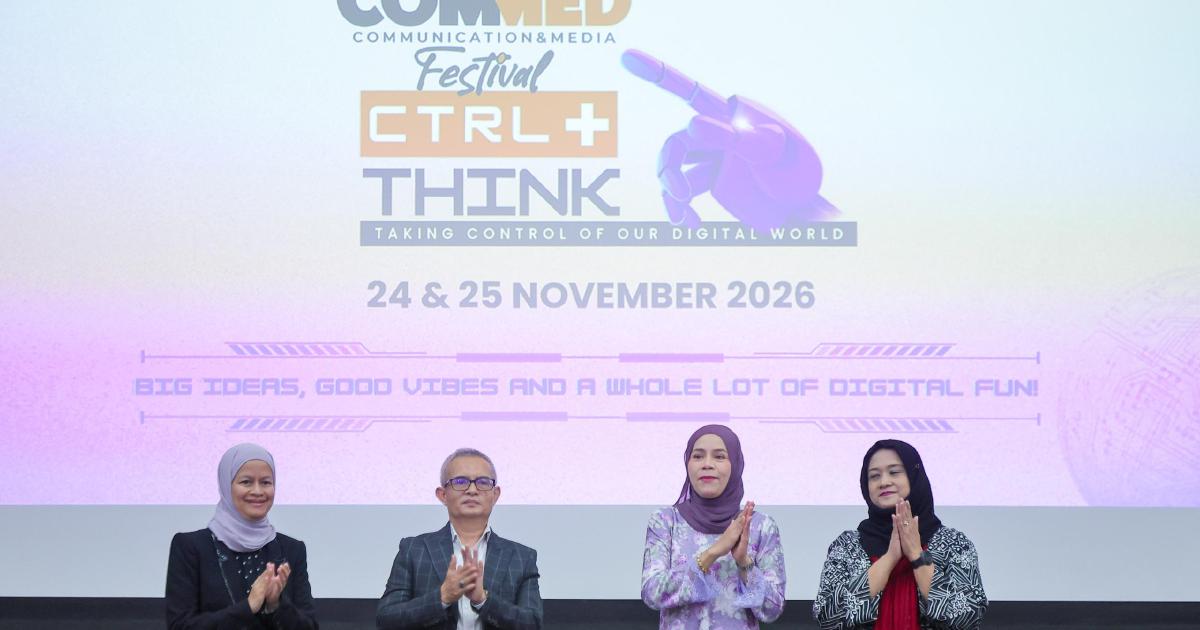

SHAH ALAM: Artificial intelligence (AI) can generate content and manipulate information, but human judgment remains essential in determining what is credible and ethical, says Prof Dr Abd Rasid Abd Rahman.
The Universiti Teknologi Mara (UiTM) Communication and Media Studies Faculty dean said although AI could generate articles, images, voiceovers and videos within seconds, users remained responsible for distinguishing accurate information from fabricated or misleading content.
“AI has no values of its own. It simply amplifies the intentions of whoever uses it,” he said at the opening of the Communication and Media Festival (Commed) 2026 at UiTM Shah Alam.
He said the technology could also be exploited to fabricate statements, clone voices and misrepresent individuals, making human judgment essential in deciding whether AI-generated content was credible.
“Machines can generate content, only people can exercise judgment.”
Rasid urged future communicators to question AI-generated material, identify bias and inaccuracies, and consider the ethical implications before using the technology.
Referring to His Majesty Sultan Ibrahim, King of Malaysia’s royal decree at UiTM’s 105th convocation last week, Rasid said freedom of expression must be accompanied by responsibility.
Social media users should respect others and verify information before sharing it to prevent the spread of slander and hatred.
“We can disagree without becoming enemies, and we must verify before we share so that in the rush to be first, we do not end up spreading slander and hatred,” he said.
Meanwhile, UiTM secured more than 3,000 pledges through its Digital Literacy and Safety Pledge initiative, aimed at encouraging safer and more responsible online behaviour among staff, students and alumni.
The month-long campaign, introduced on Oct 24 by FKPM in collaboration with the Communications and Multimedia Content Forum of Malaysia (Content Forum), focuses on cyberbullying, personal privacy, data protection and verifying information before sharing it.
Rasid said digital safety extended beyond protecting passwords and personal information to include how people communicated, shared content and interacted online, according to a statement issued in conjunction with Commed 2026.
“Laws and regulations are important, but digital safety also depends on the decisions we make as individuals,” he said.
He said FKPM incorporated responsible communication into its programmes through coursework, industry engagement and community projects, while encouraging students to use technology to inform and create rather than deceive or manipulate.
“Laws can regulate platforms, they cannot shape character. That work begins in places like this, in our classroom, and in our faculty,” he added.
He eminded students that professional success required both talent and good conduct.
“Your talent will open doors for you, your courtesy will keep them open,” he said.
Commed 2026, themed “CTRL + THINK: Taking Control of Our Digital World”, runs for two days until tomorrow and features forums, workshops and exhibitions on digital literacy and responsible communication.
The festival also involves international delegates from Universitas Pendidikan Indonesia (UPI), who have participated in discussions with UiTM representatives.