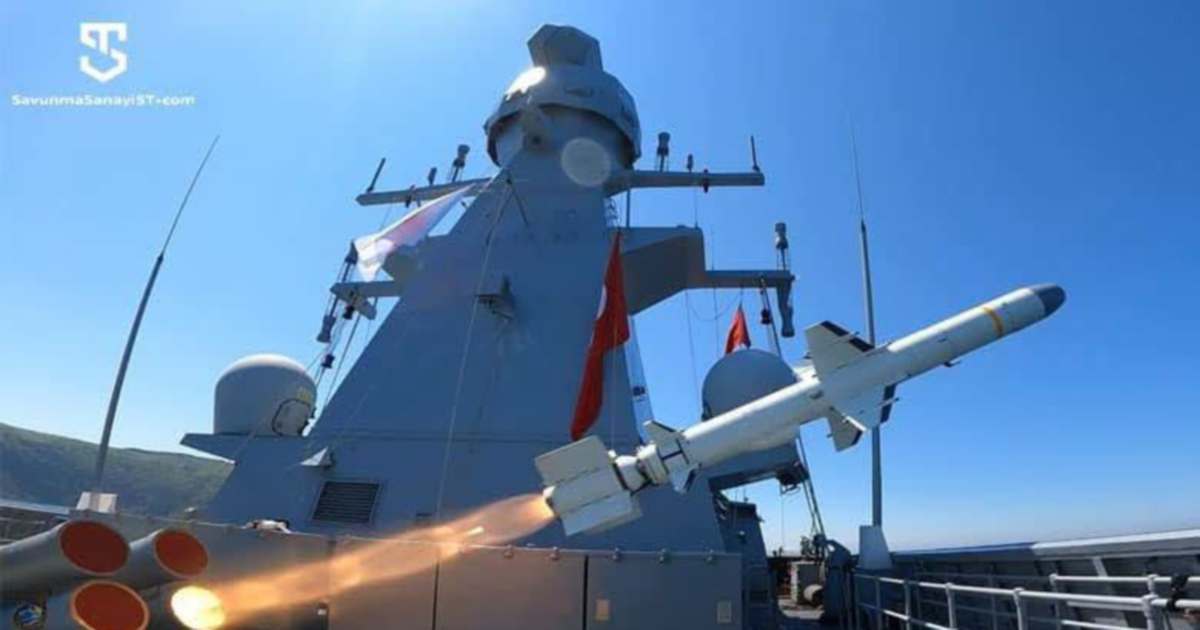

KUALA LUMPUR: The selection of Turkiye’s Roketsan Atmaca antiship missile system to replace the cancelled Naval Strike Missile (NSM) on the Royal Malaysian Navy’s littoral combat ships (LCS) could improve logistical efficiency and strengthen the country’s defence industry.
Universiti Pertahanan Nasional Malaysia Centre for Defence and International Security Studies director Professor Dr Adam Leong said Atmaca was an excellent choice for the LCS, particularly as the same missile system would also equip the littoral mission ship batch 2 (LMS B2) vessels.
“The missile is competitive with other systems in the market, with the ability to engage surface vessels and fixed land targets at ranges exceeding 200km.
“It also features multiple guidance systems and counter-electronic warfare capabilities, while its land-based variant could reportedly be launched from coastal defence positions at ranges of up to 400km.”
[[nid:1577950]]
The Defence Ministry selected the Atmaca after evaluating proposals from Turkiye, France and Italy. Negotiations with the Turkish side are set to begin.
Minister Datuk Seri Mohamed Khaled Nordin said the 250km-range missile could be delivered as early as 2029, partly by leveraging Malaysia’s existing Atmaca procurement for its LMS B2 vessels.
Leong said using a common missile system across different naval platforms would improve supply chain management, training, maintenance and logistical support.
“This added flexibility will provide additional options to strengthen the armed forces’ joint-force capabilities by streamlining anti-ship, coastal-defence and land-attack missile requirements in the future.”
He said the Atmaca was likely selected after the navy assessed its cost-effectiveness, delivery timeline and ease of integration with the LCS combat management system.
Janes Defence consultancy principal defence analyst Ridzwan Rahmat said the Atmaca offered Malaysia a viable alternative for meeting the immediate operational requirements of the LCS programme, although it had a shorter publicly documented testing record than the NSM.
The NSM, developed by Norwegian defence company Kongsberg Defence & Aerospace, was initially selected to arm the six LCS vessels under a 128.7 million euros contract signed in 2018.
However, Norway suspended the export licences for the missiles and associated launchers on Feb 4, 2026, before permanently revoking them on April 20.
Malaysia had paid 129.8 million euros, or about 94 per cent of the combined 137.91 million euros procurement value, according Khaled.
The missile systems had been manufactured, tested by the navy and were ready for delivery. Malaysia is seeking to recover the payments and claim compensation over the failed procurement.
On the Atmaca’s integration, Ridzwan said adjustments would be required to the LCS combat systems, but the process should not be overly complicated.
“Turkish weapon systems were generally designed to be system-agnostic, allowing them to interface with radars, sensors and combat management systems from different manufacturers and countries.
“This would mean that the Atmaca could interface with the LCS’s Thales SETIS combat management system, SMART-S search radar and TMEO Mk2 electro-optical tracking system,” he said.
Ridzwan said the selection was also expected, given that the Atmaca would already be operated on the navy’s LMS B2 ships.
He said the missile was in the same weight class as the NSM, meaning there would not be a need to rebalance the LCS’s upper hull structure.
Using a common missile system across the LCS and LMS B2 fleets would also make logistical sense, potentially reducing costs and easing supply chain challenges, he said.
However, he said the missile’s performance in Malaysia’s hot and humid climate would need to be established.
“The Atmaca was developed by Turkiye in a much milder climate and it has largely not been proven out in the tropical region.”
On potential technology transfer, Ridzwan said Turkiye had established a reputation for transferring defence technologies, adding that the benefits Malaysia could gain would depend on the readiness of the local industry.
“I think it is more a question of how ready the Malaysian defence industry is to receive that level of technology transfers.”