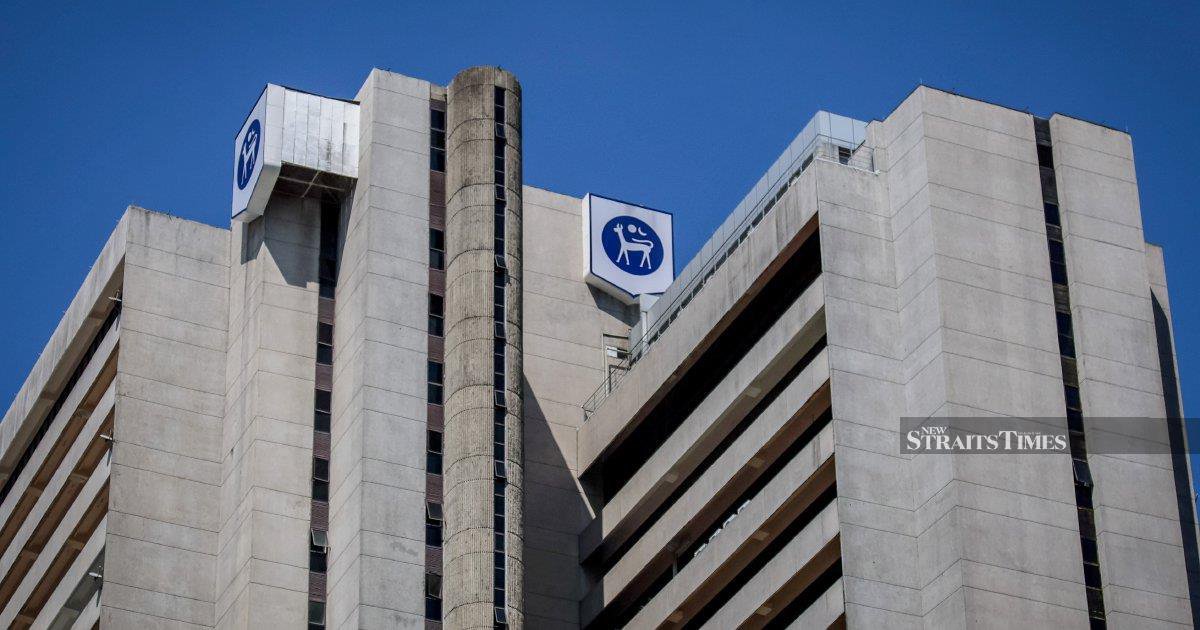

KUALA LUMPUR: Bank Negara Malaysia may have held interest rates steady but the door remains open for a rate hike as early as the first quarter of 2027.
Economists said the central bank has little immediate reason to tighten policy, with Malaysia recording the lowest inflation rate in Asean and the ringgit holding broadly steady against the US dollar year-to-date.
Generous petrol subsidies have also helped shield consumers from the energy shock, while the 2027 Budget emphasis on fiscal discipline has reduced the need to raise rates pre-emptively despite a string of pro-consumer measures.
Still, they expect a hike in the overnight policy rate (OPR) to 3.0 per cent in January as resilient economic growth and a modest pick-up in inflation strengthen the case for monetary policy normalisation.
Bank Negara maintained the OPR at 2.75 per cent at its final Monetary Policy Committee (MPC) meeting of 2026 on Thursday.
The central bank said the latest indicators pointed to continued resilience in global growth, supported by strong global technology investment and stable labour markets.
Recent indicators showed sustained economic growth momentum in the third quarter of 2026, it added.
The central bank expects economic growth to exceed five per cent this year. The economy grew 5.3 per cent in the third quarter.
“Growth was underpinned by strong export performance amid sustained domestic demand. The solid growth momentum is expected to bring 2026 growth to above five per cent,” it said in a statement.
HSBC senior Asean economist Yun Liu said Bank Negara appears to have gained more room to wait for the right moment before acting.
Stable inflation, a resilient ringgit and tighter fiscal management have given the central bank greater flexibility than many of its regional peers, whose currencies have come under sharper depreciation pressure.
“We continue to expect Bank Negara to raise the OPR by 25 basis points in the first quarter of 2027, taking it back to 3.0 per cent.
“The move is likely to be a pre-emptive step to get ahead of potentially stronger inflationary pressures next year, rather than the beginning of an aggressive tightening cycle,” Yun said.
Unlike some regional central banks, Yun said Malaysia’s next rate move is more likely to be a one-off policy normalisation than the start of a sustained series of hikes.
Bank Muamalat Malaysia Bhd chief economist Dr Mohd Afzanizam Abdul Rashid said Bank Negara’s “status quo” decision reflected its optimism over Malaysia’s economic outlook, with growth expected to remain healthy despite external uncertainties.
The balance of risks to the economy appeared broadly balanced, although inflationary pressures could warrant monetary policy normalisation in 2027, he added.
“We believe the 25 basis point hike could happen as early as January next year when the MPC meeting cycle commences in 2027,” he told Business Times.
Afzanizam said monetary policy normalisation is apt to ensure interest rates send appropriate signals to the economy and encourage capital allocation towards more productive activities.
He said keeping interest rates too low when economic growth is above trend and inflation remains elevated could encourage speculative activities.
He also said Malaysia’s economic resilience had remained evident despite fuel supply disruptions arising from the ongoing conflict in the Middle East.
Afzanizam attributed this partly to Petroliam Nasional Bhd’s ability to secure alternative fuel supplies outside the Strait of Hormuz through its extensive international business network.
He said the government’s fiscal capacity to accommodate a higher fuel subsidy bill of RM40 billion had also helped cushion the impact on the economy.
The use of MyKad for targeted fuel subsidies had helped reduce leakages, allowing savings to be channelled back to Malaysians, he added.
Universiti Teknologi Mara senior lecturer Dr Mohamad Idham Md Razak said maintaining the OPR was appropriate given resilient domestic demand and relatively contained inflation.
He said there was no immediate need to tighten monetary policy as the current rate continued to provide stability for households and businesses while supporting consumption and investment.
“Stronger GDP growth does not automatically justify an interest rate increase, particularly when growth is supported by exports, investment and sustained domestic demand rather than excessive borrowing or overheating,” he said.
Idham said any future adjustment to the OPR should be gradual and guided by inflation trends, wage developments, credit growth and domestic economic conditions rather than GDP growth alone.
He added that Bank Negara should distinguish between temporary supply-side inflation and persistent demand-driven pressures before considering monetary tightening.
“Supply-driven inflation requires targeted fiscal and supply-side measures, while sustained demand-driven inflation may warrant monetary tightening,” he said.
Idham said the central bank should closely monitor whether higher costs were being passed on to consumers and becoming embedded in broader prices and wages.
He said the priority should be to prevent persistent inflation from eroding household purchasing power without unnecessarily weakening economic growth.
The MPC’s first meeting in 2027 is scheduled for Jan 21.