
Along the coasts of the Netherlands, Germany and Denmark, its intertidal flats host a wealth of marine life and birds. But extraction industries, tourism and fishing are taking their toll
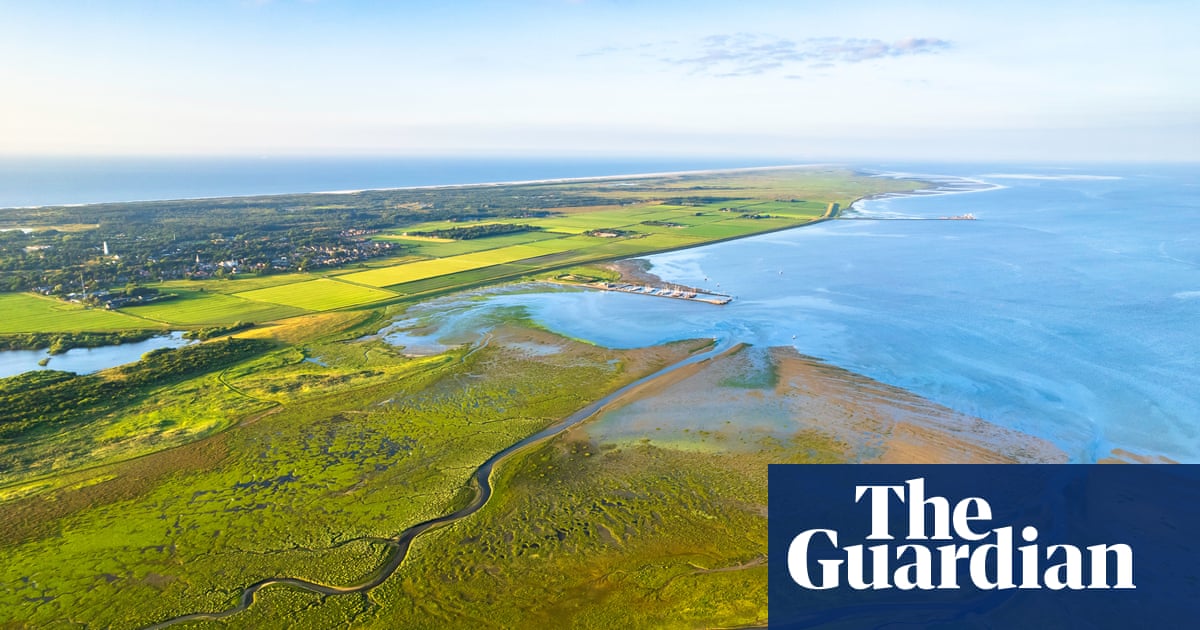
Stand on the coastline at high tide and you look out over unbroken water, with sandy islands rising a few miles offshore. A few hours later and the view across the Wadden Sea has transformed into a maze of deep channels, drying sandbanks, salt marshes and mud flats.
As the largest unbroken system of intertidal sand and mud flats in the world, this ever-changing habitat stretches hundreds of miles along the north European coasts of Germany, Denmark and the Netherlands and was awarded world heritage status by Unesco in 2009.
Aerial view of the unique features of the Wadden Sea coast. Photograph: Janis Meyer/CWSS