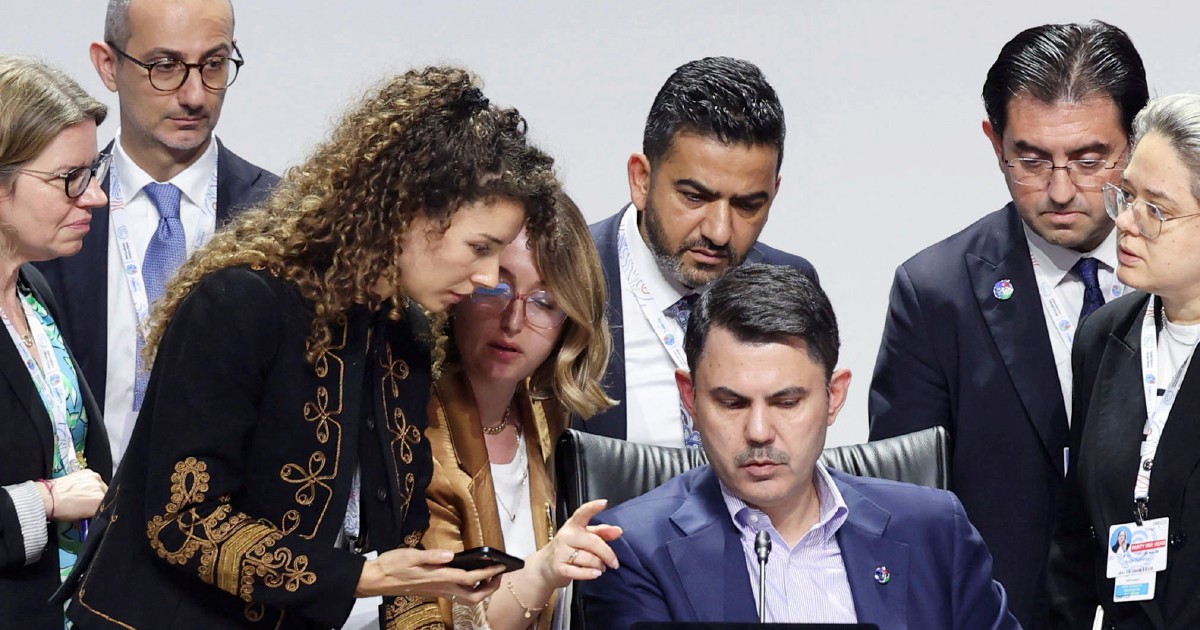

ANTALYA: The COP31 presidency proposed an eleventh-hour deal Sunday that again fails to mention fossil fuels by name – an omission that sparked a tense standoff at the UN climate talks.
The latest offering by summit co-hosts Turkiye and Australia published deep into overtime leaves unresolved tensions over planet-heating fossil fuels but retains a much-sought goal to electrify the global economy.
The proposal needs consensus approval from nearly 200 nations at a closing session Sunday but they have struggled to bridge differences during two weeks of grinding negotiations.
Fossil fuels are a flashpoint at the climate talks and the summit comes against a difficult backdrop of soaring energy prices and geopolitical tensions stemming from the war in Iran.
A draft deal unveiled earlier this week called for a faster phase out of fossil fuels but a second, pared-down version released Thursday stripped away all mentions of coal, oil and gas.
Threats of a walkout prompted Turkiye and Australia to convene a hurried meeting between the European Union and Saudi Arabia – opposing camps on fossil fuels – in a bid to broker a compromise.
The latest text introduces a reference to a previous global deal in 2023 to shift the world away from fossil fuels – but stops short of naming them explicitly.
And it retains a contentious push to expand carbon capture and storage, a dispute technology championed by the fossil fuel industry but criticised as costly and ineffective in cutting emissions.
The draft also calls for global efforts to boost the share of electricity in total final energy consumption to 35 percent by 2035 and the expansion of “clean energy.”
The summit had been under pressure to show progress in tackling soaring greenhouse gas emissions in a year of climate-linked disasters from Europe to Nepal and Indonesia.
Facing blowback over fossil fuels, Turkey and Australia pointed to “electrification” as a way to cut heat-trapping emissions and bolster energy security.
This works by replacing technologies that burn fossil fuels directly – like diesel cars and gas heating – with electric alternatives.
But some nations had demanded an explicitly “clean” electrification target so that the additional electricity was produced by renewable energy and not fossil fuels.
Around one-third of global electricity is produced using coal and another fifth using fossil gas.
Attempts by Saudi Arabia, India and Kenya meanwhile to delay the next set of reports by the UN’s Intergovernmental Panel on Climate Change (IPCC) have been another major source of friction at the talks.
The draft text “highlights the importance” of these reports for an upcoming stocktake of global carbon-cutting efforts in 2028.
Dozens of countries across Europe, Africa and the Pacific want these assessments by the global scientific authority on climate change published in time for that crucial stocktake.
Countries have also disagreed at COP31 over how to respond to the looming breach of the 1.5C warming target set under the Paris climate accord.
The latest draft expressed “deep concern” that global warming would cross 1.5C above pre-industrial levels in the next few years.
The talks also jammed over long-running complaints that rich nations are shirking their obligations to help developing nations confront climate change.
The removal of a US$120 billion target for climate adaptation angered developing nations.
Leave a Comment