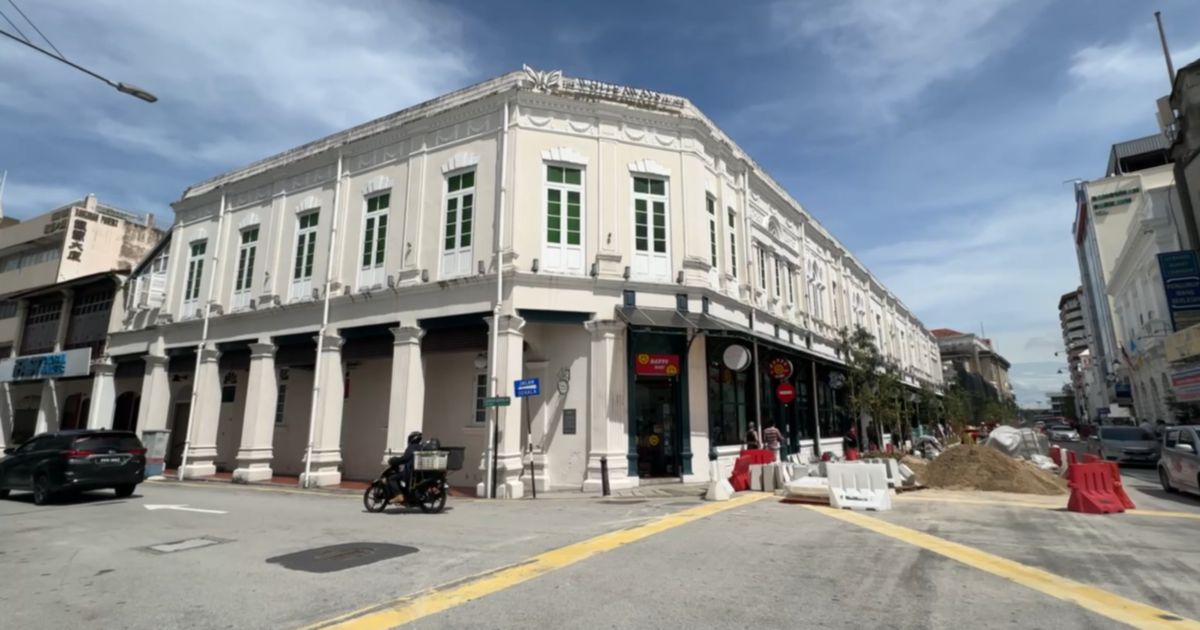

GEORGE TOWN: Established in 1786 as an unpaved coastal trading road, Beach Street has evolved into a preserved Unesco World Heritage financial district and tourism hotspot.
Founded by Captain Francis Light to facilitate the spice, tin and rubber trade, late-19th-century land reclamation pushed the shoreline towards Weld Quay, transforming the area into the Straits Settlements’ colonial banking centre.
Despite World War II bombings and the port’s relocation after 1957, the street retained its financial roots, with legacy businesses, restored landmarks such as Whiteaways Arcade and modern cafes continuing to shape its character.
For 52-year-old pasembor seller Nasir Ali Abdul Karim, whose family business has operated in the area for 72 years, the transformation has been striking.
“Back then, there weren’t as many buildings, and customers were mostly office and port workers because it wasn’t a tourist spot.
“Things sold for RM2 to RM2.50. Today, it’s easily RM8,” he told the New Straits Times when met.
Located near the ferry terminal and cruise pier, Nasir’s stall now draws visitors from Singapore and Hong Kong, fuelled by social media.
“During school holidays, the queue stretches all the way to the end. We barely have time to chat,” he said, adding that nearby construction had not deterred the crowds.
Datuk Asok Kumar G. Poduval, 68, recalled when his late father started their textile business near the street in 1968.
“There were only five Indian textile shops back then and smaller crowds even during Deepavali, as fewer people knew about the area.
“Today, there are 50 to 60 shops, and we’ve expanded into a three-storey premise at the entrance of Little India,” said Asok, who took over in 1985.
“With stronger spending power and younger generations earning more; some working overseas (and) families now come to shop and dine.
“Customers previously bought lower-range items, whereas today, they readily spend RM200 to RM3,000 on sarees,” he added.
Following Beach Street’s recognition among the world’s coolest streets, visitors continue to be drawn to its walkable charm and colonial architecture.
First-time visitor from the United States, Amber Martinez, 33, discovered the street through TikTok.
“It’s creative, colourful and feels very safe to walk around. I loved the heritage buildings, friendly locals and interactive street art like the swings,” she said, adding that she had already recommended it to her best friend.
Local food content creator Koh Jia Yun, 30, praised the area’s blend of European-style architecture, cafes and local staples such as Ali Nasi Lemak.
“It has a London vibe that makes it popular for photography, including graduation shoots.
“Even with some construction limiting photo spots, it’s still a great walkable street to explore,” she said.
Historic Beach Street has been ranked ninth on Time Out’s list of the 28 Coolest Streets in the World for 2026.
The global media and hospitality brand released its annual ranking yesterday, recognising streets that best capture vibrant city life through food, culture, shopping and community spirit.