
SHAH ALAM: Social media users can still be held responsible for spreading harmful content, even when they share it with friends without intending to cause harm, says the Communications and Multimedia Content Forum of Malaysia (CMCF).
Its chief executive officer, Mediha Mahmood, said users could not absolve themselves of responsibility simply because they did not create the original material or intend to cause harm.
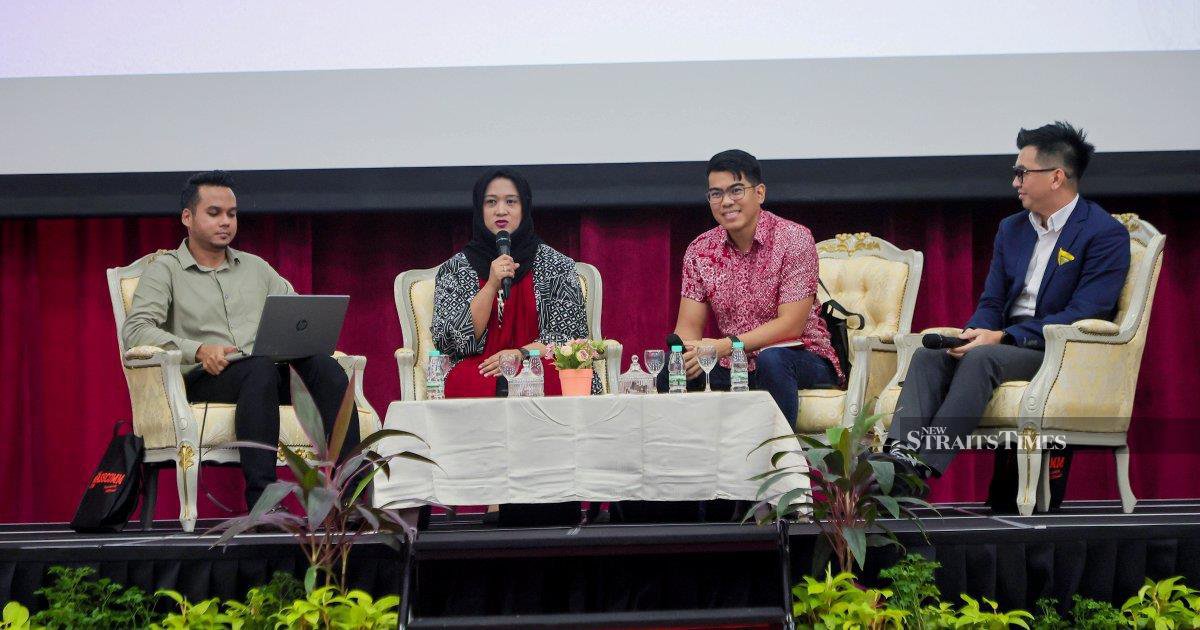
“There’s a lot of times where, you would say that ‘I just forwarded the information, or just reposted, or quoted it, but republication is a publication of the harmful content,” she said during a forum titled “The Good, The Bad, and The Digital”, held in conjunction with the Communication and Media Festival (Commed) 2026 at Universiti Teknologi Mara Shah Alam.
She was one of the panellists, alongside REV Media Group chief operating officer Nicholas Sagau and Tujuh Warisan Sdn Bhd managing director Eizaz Azhar.
The session was moderated by a TV3 presenter and host, who is also Business Times news editor, Muhammed Ahmad Hamdan.
Mediha also urged users to verify information before forwarding or reposting it, noting that sharing the material also amounted to republishing it.
She said transparency was equally important when using artificial intelligence (AI), particularly when generating content that could mislead audiences.
“The simplest rule to AI content right now is disclosure. You disclose when you’re using AI, especially if it might mislead your viewers, your audience,” she said.
She cited AI-generated images depicting incidents such as accidents or forest fires as examples of content that should not be presented as genuine, adding that existing ethical restrictions must also apply to AI-generated visuals involving children in criminal cases.
Meanwhile, Nicholas said that as content creation became increasingly accessible, allowing almost anyone to produce and share digital content, building audience trust and ensuring credibility remained major challenges for the industry.
He said the rise of social media platforms and influencers had transformed how people created and consumed content.
“Previously, you needed a studio, a camera and a tripod. Today, you don’t need all that to create content.
“Anyone can create content and that has led to the emergence of influencers, which has changed the way people consume content.
“But that has also created another challenge, where everyone thinks they can create content,” he said.
He said the ease of producing content had also contributed to an oversupply of material, with some creators prioritising clicks and views over quality and usefulness.
He cited videos featuring people eating large quantities of food as an example of content created primarily to attract attention and generate views.
He also highlighted how algorithms could reinforce users’ viewing habits by continuously recommending similar content based on their interests.
“The challenge today is no longer whether people can create content. There’s enough content to consume. The real challenge is figuring out how we build trust in the content being produced.
“Where there’s not enough trust in content to be produced, but at the same time people are still consuming the content,” he said.
Meanwhile, he said the growing use of AI had introduced both opportunities and challenges for content creators.
“One of the narratives that came about AI is that people assume with AI you can create content, video and simulation of what happened in the accident for example.
“But people forget that actually in the industry, using AI as an assistant to create content is actually one of the biggest superhuman skills that one should have.
“AI tools today are supposed to help humans become more human,” he said.
He also warned that fears of AI replacing human creativity and taking over content production could discourage people from learning to use the technology.
“When we don’t use AI, then one cannot compete in AI space anymore.”