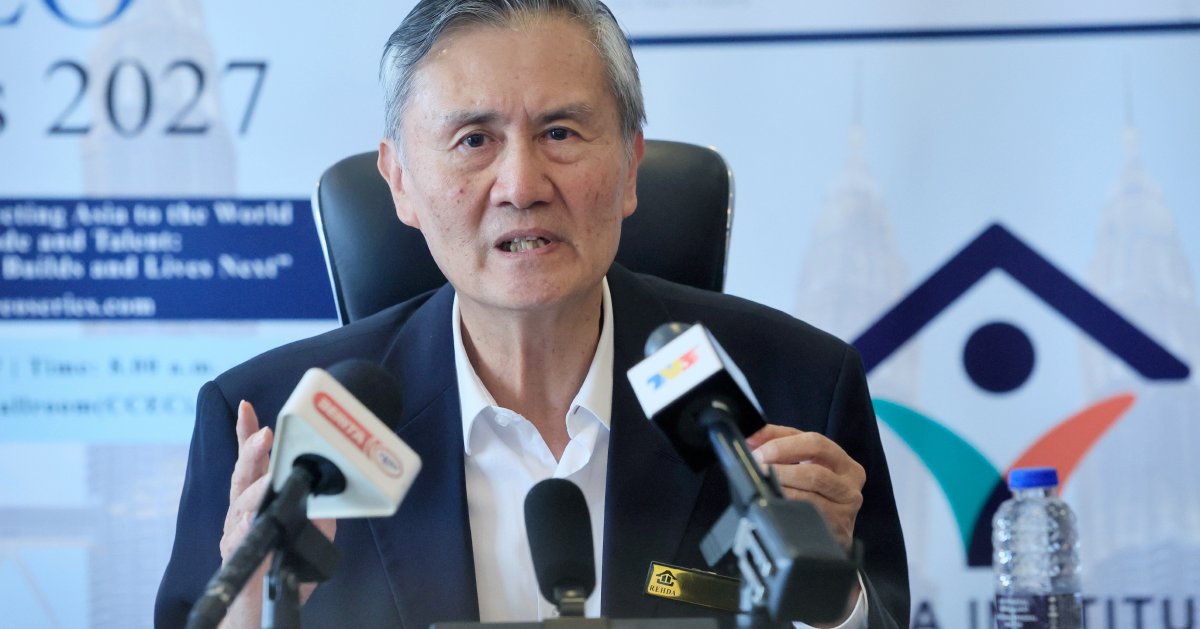

PETALING JAYA: Malaysia must do more than attract investments, ensuring that approved projects translate into actual business operations, higher-value jobs and sustained economic activity, Rehda Institute said.
Its chairman and CEO Series 2027 organising chairman Datuk Jeffrey Ng Tiong Lip said the country’s competitiveness would increasingly depend on its ability to convert investment commitments into tangible economic activity, supported by a strong business ecosystem.
This included reliable infrastructure and utilities, an available skilled workforce, capable local suppliers and consistent policies.
“Investment approvals signal confidence and opportunity, but they are only the first step. The ultimate measure is operating capacity, local supply chain activity, better jobs and sustainable demand for industrial, commercial and residential assets.
“It is about converting momentum into measurable outcomes,” he said at the pre-launch press conference for CEO Series 2027 here today.
Ng said Malaysia must ensure that incoming investments create opportunities for local businesses, rather than simply serving as a host to foreign companies.
He cited a recent delegation to Shanghai and Suzhou, which showed that Chinese companies were seriously considering Malaysia as an investment destination.
“The task now is to make sure these proposals become factories, offices, homes and jobs here, with Malaysian developers, contractors, real estate investment trusts (Reits) and small and medium enterprises (SMEs) taking part,” he said.
He said greater engagement with China and other East Asian markets could bring technology transfer, business partnerships and increased demand for industrial, commercial and residential properties.
However, Malaysian companies must be better positioned to participate in the resulting value chains to ensure that the benefits are not concentrated among foreign investors.
Ng also highlighted demographic changes, particularly the country’s ageing population, as an emerging economic and development consideration.
Citing the Statistics Department estimates, he said the proportion of Malaysians aged 65 and above rose from eight per cent in 2025 to 8.4 per cent in 2026.
This trend is expected to create growing demand for senior care, retirement living and related services.
However, he said these opportunities must be assessed alongside affordability, service quality, access to healthcare and the sustainability of operating models.
These issues will be among the key areas examined at CEO Series 2027 on January 12, which will explore the economic and investment trends shaping Malaysia and the wider Asean region.
Themed “Malaysia – Connecting Asia to the World”, with the supporting theme “Capital, Trade and Talent: Where Asia Invests, Builds and Lives Next”, the conference will examine how shifting capital flows, trade, technology and demographic trends could influence the country’s economic landscape in 2027.
Ng said the conference would also provide a platform for cross-sector discussions on economic risks, credit conditions and industry competitiveness.
Perspectives from the World Bank and S&P Global Ratings, alongside an industry leaders panel, are expected to contribute to discussions on these issues and the implications of Budget 2027.
The conference is organised by the Joint Organising Secretariat of CEO Series 2027, with Rehda Institute as the convener and support from more than 15 industry associations.
It is expected to bring together more than 550 senior stakeholders from the public and private sectors, including representatives from banking and finance, manufacturing, construction, real estate and property development.