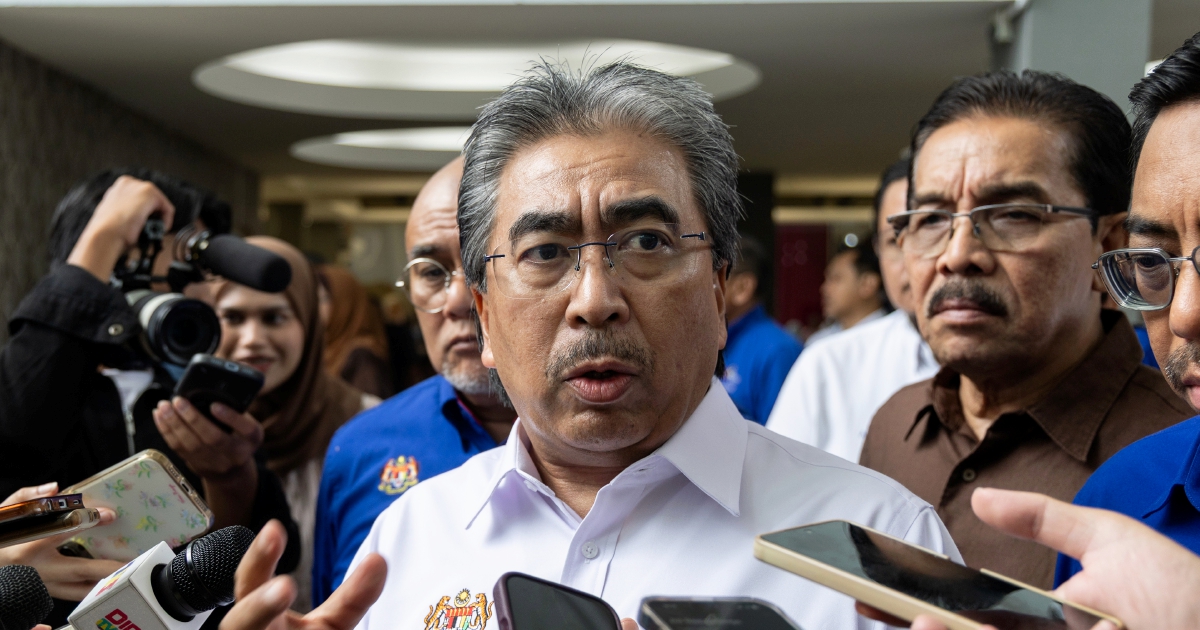

KUALA LUMPUR: Public housing in the capital should be redeveloped solely for the intended purpose, without the luxury units developers typically add to such projects, said Investment, Trade and Industry Minister Datuk Seri Johari Abdul Ghani.
He said many low-income workers had been priced out of the city, making jobs paying up to RM3,000 economically unviable for locals.
“If they live in the city and there is public housing with cheap rent, then when someone offers them a salary of RM2,500 or RM3,000, they can take it.
“But if they have no housing in the city, they have to live far away,” he told reporters after the Madani Adopted Village programme for Kampung Datuk Keramat at Kem Kementah here.
Also present were the ministry’s secretary-general Datuk Hairil Yahri Yaacob and Malaysia External Trade Development Corporation (Matrade) chief executive Datuk Abu Bakar Yusof.
Johari, who is also Titiwangsa member of parliament, said the solution lay in redeveloping the medium-density public housing flats owned by Kuala Lumpur City Hall (DBKL), given the scarcity of land in the capital.
“But when we redevelop, we must not add more expensive homes. Developers often build two blocks for public housing and use the rest of the land for expensive homes priced at RM800,000, RM900,000 or RM1 million. That won’t do,” he added.
Johari drew a clear distinction between this approach and urban renewal under the proposed Urban Renewal Act (URA).
“Look at the URA, for example. They want to do all this (redevelopment), but they build expensive homes on the surplus land. That won’t do. Right? It’s hard for us to support that,” he said.
Johari said sites identified for public housing should be legally gazetted for that purpose.
Asked whether housing costs were contributing to urban poverty, he said rents of around RM500 in redeveloped public housing would give households some financial breathing room.
He cited the example of a service-sector worker living in Semenyih and earning between RM2,500 and RM2,800 to illustrate the problem.
“They may pay RM800 (in rent), but then how much does commuting here cost?
“Set aside money for EPF and everything else, and there is no economic value left, so they won’t take the job,” he said.
In his speech, Johari said he had told investors who complained that locals were turning down jobs paying RM2,500 that Malaysians were not lazy.
He said foreign workers could take the same low-paid jobs because they were provided with dormitories or shared accommodation.
On Aug 21, 2025, Housing and Local Government Minister Nga Kor Ming tabled the Urban Renewal Bill for its first reading in the Dewan Rakyat. The Bill sought to provide for urban renewal in town planning, with projects potentially involving urban redevelopment, regeneration or revitalisation.
In January 2026, Communications Minister Datuk Seri Fahmi Fadzil said the Bill had been withdrawn to allow comprehensive enhancements before being re-tabled.