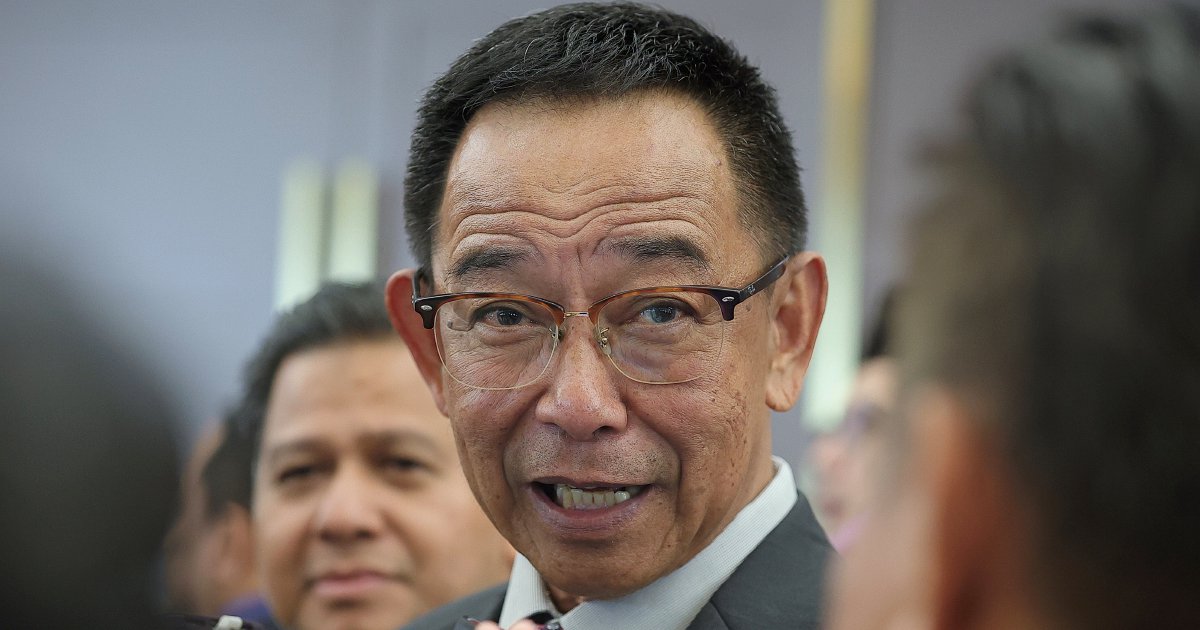

KUCHING: The political strength of Datuk Seri Abdul Karim Rahman Hamzah in Asajaya is believed to be among the factors Sarawak Pas will not contest the seat in the 13th Sarawak election.
This is despite Pas having a strong strategic base in Samarahan.
The party is, instead, eyeing Samariang, Sebuyau and Beting Maro.
Although Pas has not explicitly said the strength of Gabungan Parti Sarawak (GPS) or Karim’s standing was the specific reason for not contesting in Asajaya, a political observer who is also a former military intelligence officer believes these were among the party’s key considerations.
This is because Karim, who is likely to be defending his seat, is not only a member of the Sarawak cabinet holding two ministerial portfolios, but also Parti Pesaka Bumiputera Bersatu (PBB) information chief.
PBB is the backbone party of GPS, so Karim effectively serves as the coalition’s chief spokesman.
He also heads the Sarawak United National Youth Organisation, one of the largest non-governmental youth organisations in Sarawak.
“Karim’s political standing and influence are seen as among the factors any opposition party needs to consider before deciding to challenge GPS in Asajaya.
“Over five state elections since 2001, he has secured victories with majority margins ranging from 3,665 to 5,063 votes, retaining the mandate of voters in the constituency for more than two decades,” said the observer, who declined to be named.
In the 2001 state election, Karim secured 5,068 votes with a majority of 3,665 votes, before improving on his performance in the 2006 state election with 6,949 votes and a majority of 5,063 votes.
He then garnered 7,597 votes with a majority of 4,489 votes in the 2011 state election, followed by 6,163 votes and a majority of 4,078 votes in the 2016 state election.
In the last election, Karim retained the Asajaya seat once again, securing 6,380 votes to defeat three challengers with a majority of 4,531 votes.
Pn Pas’ decision to target Samariang, Sebuyau and Beting Maro, the observer said the choices were not made at random, but took into account the party’s history of participation, the strength of its grassroots machinery and its long-term strategy ahead of the 16th General Election (GE16).
“There are three key aspects worth examining when analysing Pas’ strategy, particularly how the party intends to use the 13th Sarawak election as a platform to expand its influence in Sarawak.
“The selection of Sebuyau shows that Pas is not merely looking for constituencies to contest, but also intends to use the state election as a platform to build its strength ahead of GE16, given that Sebuyau, together with Beting Maro, falls under the Batang Lupar parliamentary constituency,” he said.
He said Beting Maro would serve as a testing ground for Pas to gauge its ability to translate organisational strength into voter support, particularly as the area has nearly 1,500 registered members and eight party branches covering almost all villages within the constituency.
“Pas also has experience contesting in Beting Maro since 2001 and has continued its community outreach activities following the 12th state election in 2021,” he said.
In 2021, Pas candidate Arifiriazul Paijo secured 2,058 votes but lost to GPS-PBB candidate Razaili Gapor, who garnered 3,769 votes.
“That track record provides Pas with a basis to assess changes in voter support and the effectiveness of its grassroots operations,” said the observer.
He said Samariang, meanwhile, holds historical and symbolic significance for Pas, particularly in the party’s efforts to maintain its political presence in Kuching city.