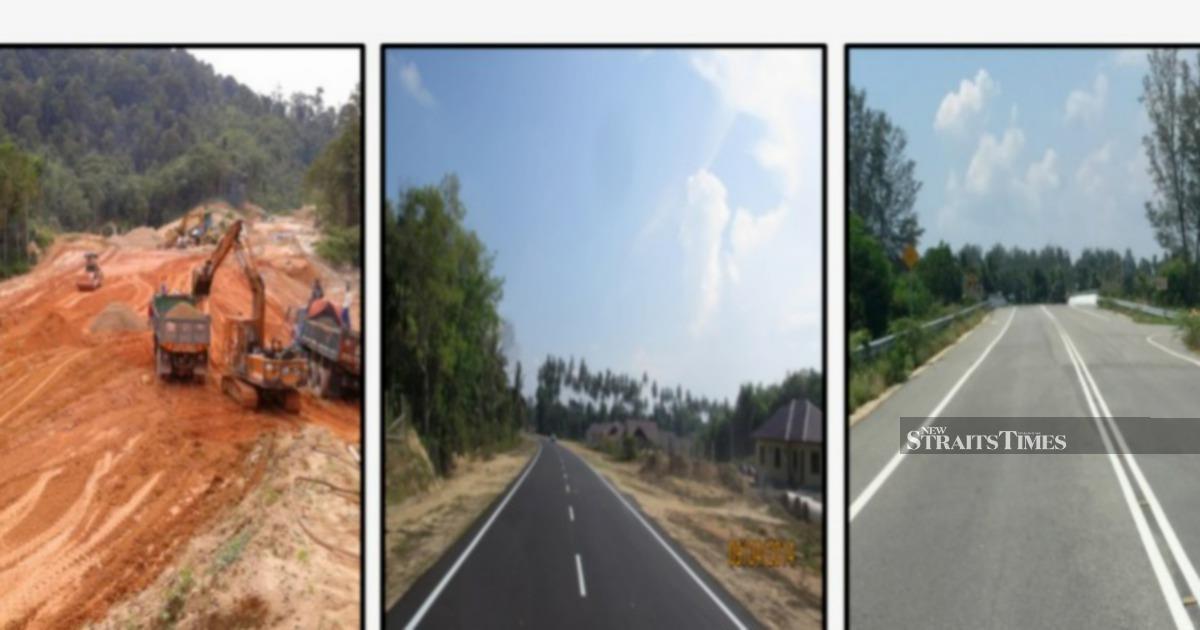

KUALA LUMPUR: Kampar member of parliament Chong Zhemin has asked for a year-by-year breakdown of allocations diverted to pay the Rural and Regional Development Ministry’s arrears, and their effect on other programmes.
“How much was transferred from each programme, what was the reason for each transfer, and what was the effect on implementation?” he said.
Chong was debating the 2027 Budget, also known as the Supply Bill 2027, at the committee stage in the Dewan Rakyat here.
He asked whether the construction of homes for poor families were postponed to build roads, and whether water or electricity projects were reduced for the same purpose.
“If everything came from genuine savings without affecting the people, please prove it through records. The people have a right to know who bears the consequences when JALB (Rural Roads Programme) requirements exceed the original plan,” he said.
Previously, Finance Minister Datuk Seri Anwar Ibrahim had said the Rural and Regional Development Ministry had made financial commitments and incurred expenditure exceeding the original allocations approved in the annual budgets for rural road projects, leading to arrears.
Chong said he recalled that during the winding-up of the ministry’s policy session, he had asked its minister, Datuk Seri Dr Ahmad Zahid Hamidi, where the allocation came from when a Notice of Change (NOC) was made, and how the ministry would ensure no project was sacrificed.
“The answer was that not a single project was sacrificed,” he said.
However, Chong said Finance Minister II Datuk Seri Amir Hamzah Azizan explained last Thursday that increasing the JALB allocation meant reducing allocations for other programmes.
He also cited a statement by the rural and regional development minister’s press secretary, Fadzmel Fadzil, reported by a news portal last Friday.
“(The ministry) had to use existing internal allocations to pay the arrears,” Chong quoted the statement as saying.
He said this meant the NOC had been used.
According to the statement, programmes affected included a RM200 million allocation for building and repairing homes for the poor, including Orang Asli communities, as well as assistance for small B40 entrepreneurs, fishermen and farmers.
On accountability, he said the Finance Ministry had said NOC approval must be obtained before any new expenditure or commitment was made.
“If everything is in order, state the findings of the review. If there were breaches of financial procedure, what action will be taken against the ministry?”
Chong said the Finance Ministry had confirmed a separate additional RM500 million, on top of an internal NOC of RM491 million, bringing this year’s JALB allocation to about RM3.1 billion.
“Yet that amount is still insufficient to meet commitments,” he said.
He asked how much more shortfall was expected by the end of the year, and whether next year’s allocation would partly be needed to pay this year’s arrears.