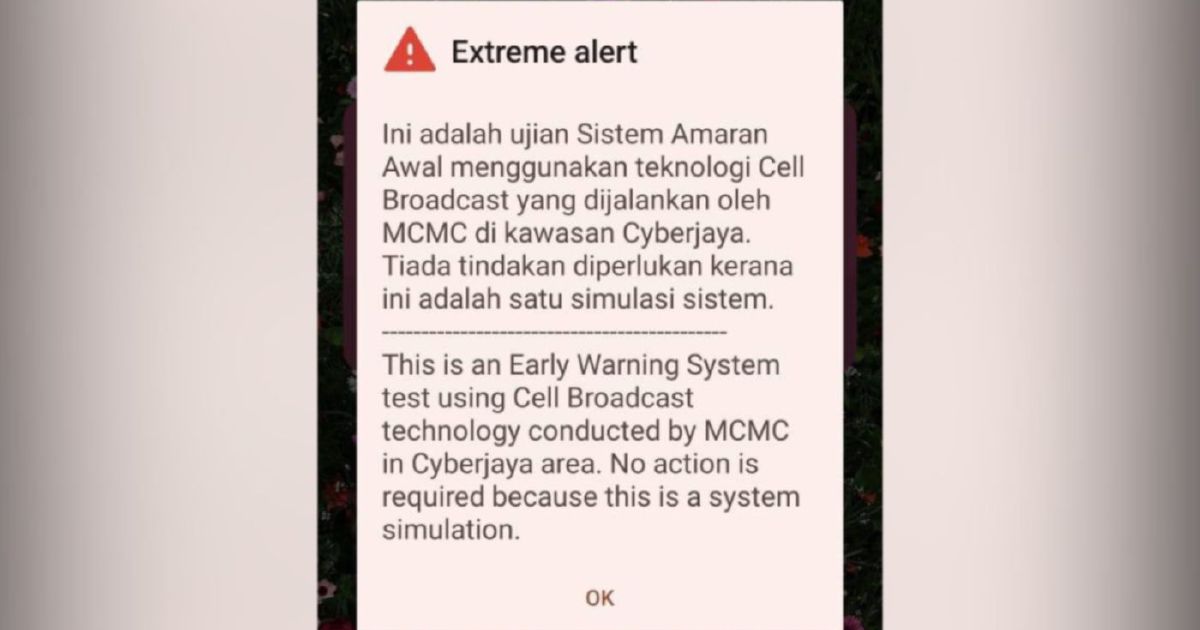

KUALA LUMPUR: The public will take part in a nationwide test of the country’s new Early Warning System (EWS) on Nov 29, as the government moves towards rolling out emergency alerts directly to mobile phones.
The Malaysian Communications and Multimedia Commission (MCMC), which briefed media representatives on the system today, said the nationwide exercise would allow the public to test their phones’ ability to receive emergency alerts.
The test is part of a phased implementation, following an internal technical test at MCMC’s headquarters today and a simulation exercise at parliament on Nov 23.
Full operations will begin after the system’s readiness has been verified.
The EWS uses Cell Broadcast System (CBS) technology to send emergency alerts simultaneously to compatible mobile phones within designated areas through 4G and 5G networks.
Unlike conventional SMS, which sends messages to individual phone numbers, CBS broadcasts alerts to multiple devices within a specified geographical area.
The technology is designed to deliver alerts in less than a minute, display them directly on phone screens with an alert sound and reach users without being affected by network congestion.
The system is intended to alert people in areas at risk of or affected by emergencies, giving them more time to take precautionary measures and protect themselves.
MCMC said compatible devices included iPhone 11 and newer models running iOS 27.2 or later, Android phones running Android 12 or later, and Huawei devices using EMUI 16 or later.
Compatibility would depend on the device model, configuration and support for CBS or Wireless Emergency Alerts (WEA) in Malaysia.
Users are advised to update their phone operating systems and ensure emergency alert settings are enabled.
No additional application, registration or mobile data subscription is required to receive the alerts.
However, alerts will not be received if a phone is switched off, in flight mode, outside network coverage or does not support the technology.
The EWS cover six alert categories: National Alert, Extreme Alert, Severe Alert, Amber (Missing Person) Alert, Test Alert and Exercise Alert.
The first phase will cover disaster-related incidents, including floods, severe weather, tsunamis and industrial or environmental hazards.
The National Disaster Management Agency (Nadma) will lead disaster-related alerts, while the National Security Council and Health Ministry will oversee alerts concerning public safety and health threats under a subsequent phase.
The EWS is being developed through cooperation between MCMC, Nadma, relevant government agencies and telecommunications service providers.
MCMC said the system would complement existing warning channels, including television, radio, print media and online platforms, rather than replace them.