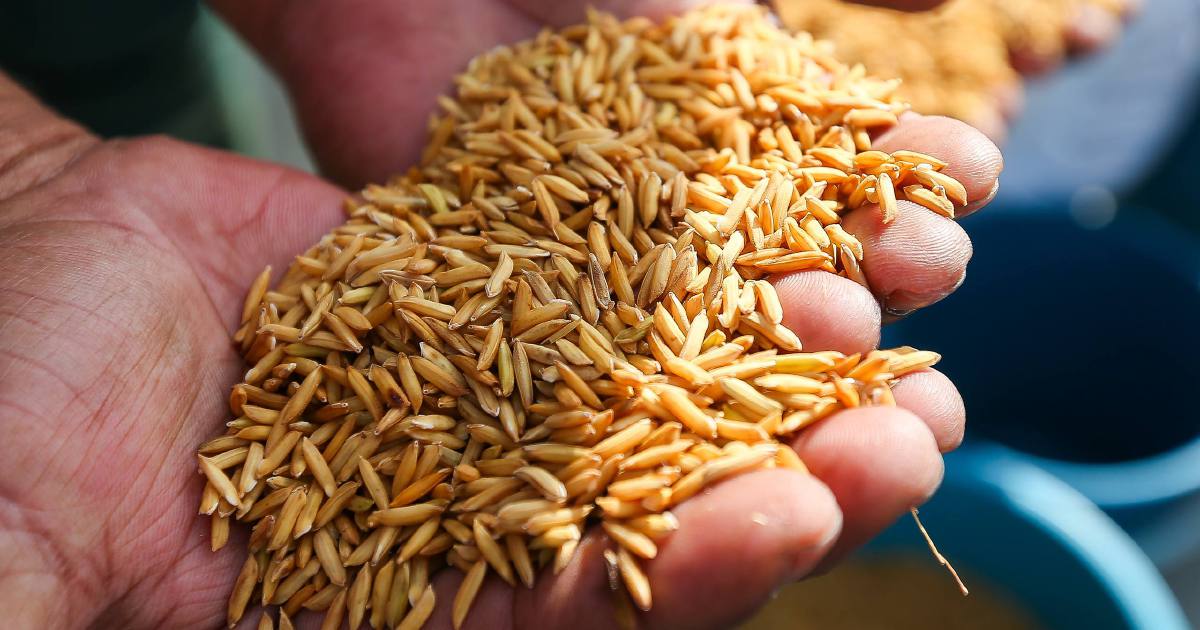

ALOR STAR: Farmers participating in the Kedah Zakat Board’s (LZNK) Asnaf Large-Scale Smart Padi Field (SBBA) project could potentially increase their yields to 11 tonnes per hectare using a new nuclear technology-based rice variety, NMR152.
Malaysian Nuclear Agency research officer Dr Sobri Hussein said the variety was developed through nuclear-based mutation breeding, with the potential for higher yields, greater weather resilience and improved agronomic traits.
However, he said that good farm management remained crucial, as the variety alone could contribute only about 50 per cent towards higher yields, with the remainder depending on farming practices.
“As such, farmers must pay attention to fertilisation, disease control and soil conditions to achieve good yields. We hope this variety, which took 10 years to develop, will bring better returns to farmers,” he said after a handover of NMR152 seeds from Malaysian Nuclear Agency director-general Dr Muhammad Rawi Mohamed Zin to LZNK chief executive officer Datuk Syeikh Zakaria Othman.
The pilot project involves the distribution of 2,000kg of certified NMR152 seeds, packed in 100 bags, to LZNK at Kampung Alor Melintang, to strengthen the rice farming ecosystem under the waqf agriculture concept.
Sobri said research had found the variety suitable for areas prone to drought and those with less favourable soil conditions.
He cited areas with rocky and sandy soil, where farmers had previously struggled to achieve good yields but recorded improvements after using NMR152.
He also assured the public that the variety was safe for cultivation and consumption.
Meanwhile, SBBA participant representative Iza Faizal Halim, 50, said the new variety offered hope to about 10 project participants of regaining their previous highest yields.
“Previously, we used the 297 variety, which produced about six to seven tonnes per hectare. We hope NMR152 will help us achieve more than 10 tonnes per hectare, similar to the yields we recorded about two years ago,” he said.
Rawi said the collaboration with LZNK was aimed at helping farmers increase their yields and income through the use of NMR152 seeds.
He said the pilot project would assess the variety’s effectiveness in improving crop productivity and rice production, while creating opportunities to boost farmers’ income.
Syeikh Zakaria said LZNK was committed to identifying the best rice varieties and would seek advice from Malaysian Nuclear Agency on expanding the use of NMR152 across its projects if the trial proved successful.
He added that LZNK remained open to collaboration with various agencies to improve yields, reduce production costs and share farming practices that could benefit farmers throughout Kedah.