
PEOPLE in Malaysia are linked by the common thread of bountiful food, dominated by the ubiquity of local delicacies.
Local and foreign foodies and influencers wax lyrical on the country’s epicurean delights, analyse recipes and spotlight chefs, turning them into mini-superstars. But in celebrating Malaysia’s melting pot of global dishes, little attention is placed on how the raw food material is actually sourced.
The country remains a supreme gourmet paradise chiefly because of affordability and supply stability.
This is underlined by Malaysia’s rank of 10th out of 60 countries on the inaugural Resilient Food Systems Index released this year. It also holds 6.23 months of physical rice stockpiles (1.05 million tonnes) to ensure short-term availability and help maintain stable prices.
Malaysia is self-sufficient in 23 commodities, including duck meat and eggs, tropical fruits, poultry and fish.
Yet, there is still concern over the rising import bill for key staples. Last year, Malaysia spent RM93.7 billion on importing mutton (with the import dependency rate at 90.7 per cent), beef (82.6 per cent), rice (45 per cent) and temperate vegetables.
Local farming is heavily reliant on imported fertiliser and sensitive to feed price fluctuations, while extreme weather, such as floods and a forecasted Super El Niño next year, is also a concern.
They have already been cited as factors behind Malaysia’s padi output falling 4.5 per cent below the national five-year average this year.
In the next 10 years, the National Agrofood Policy 2021-2030 and phased import-reduction road maps intend to reduce the import bill by 13 per cent, or RM93.7 billion, annually.
To meet this goal, Agriculture and Food Security Minister Datuk Seri Mohamad Sabu announced an ambitious plan to increase padi yields in Muda Agricultural Development Authority (Mada) areas to 10 tonnes per hectare by 2030.
This target is attainable through modern technology, improved fertilisation and better farming practices.
Mada covers 100,685ha across the rice bowls of Kedah and Perlis, the nation’s largest granary area accounting for 40 per cent of its rice production.
In comparison, Thailand averages 2.85 to three tonnes per hectare nationally across 10 to 11 million ha.
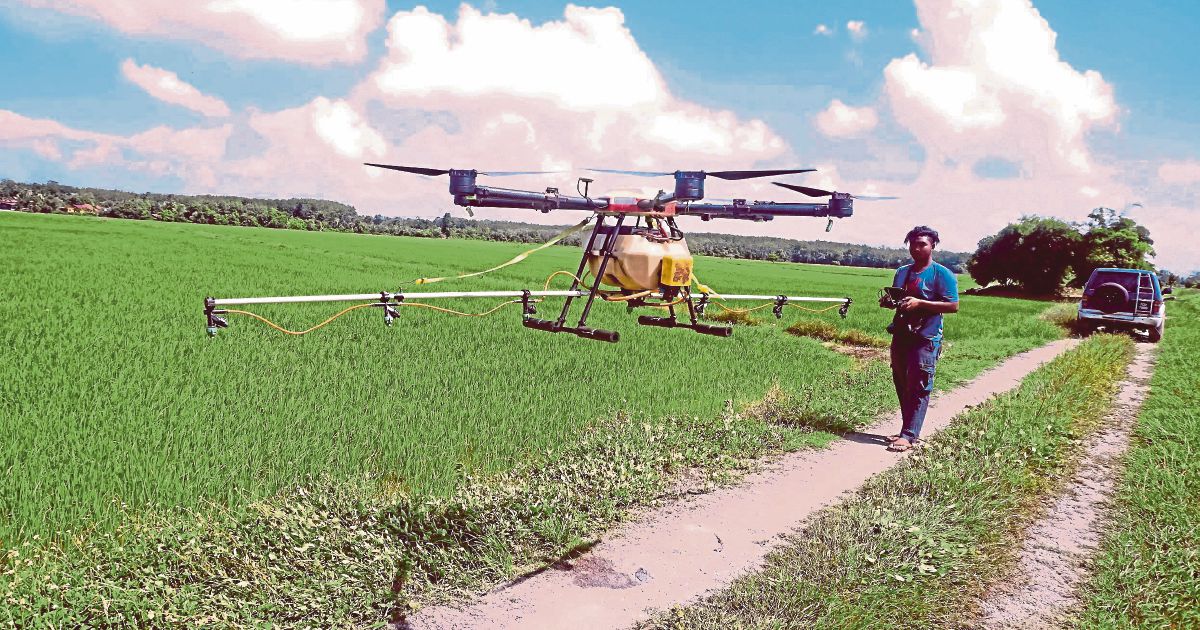
Malaysia’s rice authorities are rolling out drones, technical and vocational education and training and better fertilisation practices while continuing to provide RM2.6 billion in subsidies for local production to boost productivity.
Each extra tonne per hectare adds RM500 for farmers. Of course, there are obstacles: Mada averages only five to 5.22 tonnes per hectare, a two per cent yield increase in the latest season.
To double the average by 2030, Mada needs rapid, widespread adoption rather than isolated gains, swifter modernisation and better preparation against the elements. And to somehow make farming “cool” for the next generation.