
WHENEVER the conversation turns to electric vehicle motorsport, the mind almost instinctively wanders toward multi-million-dollar spectacles: carbon-fibre Formula E single-seaters zipping around temporary city circuits, bespoke electric hypercars conquering global hillclimbs, or Le Mans-conquering hybrids that only the big manufacturers can afford to build and race.
To the average Malaysian independent garage owner or paddock mechanic, these high-end racing series feel like science fiction – impressive to watch on television, but entirely irrelevant to their daily livelihood.
Yet, these workshop owners are the ones who desperately need to upskill their talent if they want to remain relevant as the world goes electric, and there is no faster way to learn new skills than in motorsports.
If Malaysia is serious about upskilling its technical workforce for the electrified era, we need to start encouraging a new class of competitors: a separate hybrid class should be created for all levels of motorsport activities.
In fact, the government, through the Motorsports Association of Malaysia (MAM), must encourage hybrid class entries by setting aside prize money for organisers who are willing to go the extra mile.
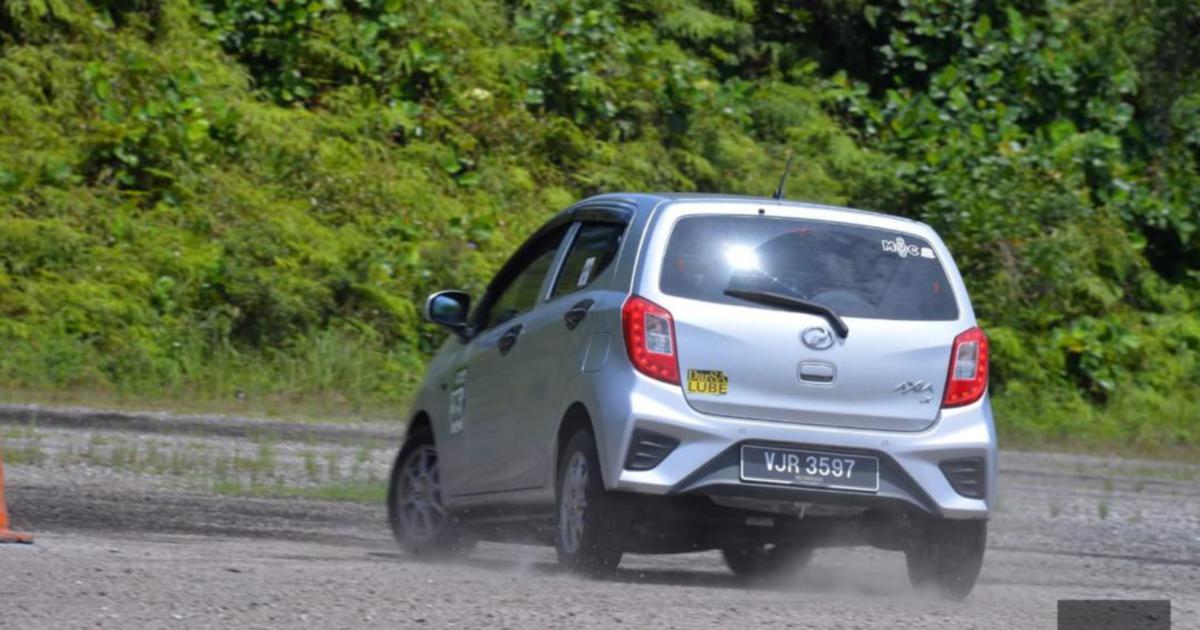
With grassroots motorsports, we should focus on low-cost and accessible forms of racing – primarily Time Attack, Autocross, or Gymkhana.
The Right Discipline For The Job
Why Autocross? Because unlike high-speed circuit endurance racing, which places immense thermal strain on battery packs and requires massive cooling budgets, Autocross operates in short, intense bursts on closed tarmac lots or kart tracks.
A typical Autocross run lasts between 60 to 90 seconds.
It tests low-speed chassis balance, immediate torque delivery, regenerative braking calibration, and rapid thermal management under peak discharge cycles.
Crucially, it is also a discipline with a low barrier to entry.
The Motorsports Association of Malaysia regulations allow Autocross participation without requiring expensive full-welded roll cages, dedicated racing fuel systems, or specialised pit crews.
It is a sport where a street-legal car, a certified helmet, and a focused driver can compete safely and affordably.
Unlocking A Decade Of “Legacy” Hybrids
The second misconception about electrified motorsport is that it requires brand-new, six-figure battery electric vehicles.
Malaysia already possesses a vast, underutilised fleet of 10-15-year-old hybrid cars sitting in used car lots and independent workshops across the country.
First- and second-generation Honda Jazz Hybrids, Civic Hybrids, CR-Zs, and Toyota Prius or Prius C models are now accessible on the secondary market for modest sums.
Add to this existing pool the modern wave of affordable electrified offerings – from modern mild-hybrids to national entries like the Proton e.Mas series and Perodua’s upcoming electrified platforms – and you have the making of a vibrant, multi-tiered grid.
For an independent garage, taking a decade-old hybrid or a modern budget EV and prepping it for an Autocross competition is the ultimate hands-on classroom.
To make an electrified car competitive in a timed slalom, a mechanic cannot simply bolt on an aftermarket exhaust or swap out a camshaft.
They are forced to engage directly with high-voltage battery cooling, inverter parameters, brake-by-wire feel, weight distribution, and energy recovery strategies.
Prize Money As A TVET Catalyst
Mechanics do not learn high-voltage diagnostics by reading government whitepapers or attending passive lectures.
They learn when there is a lap time to beat, a rival workshop in the next pit bay, and actual prize money on the line.
This is where public policy and agencies like the Ministry of Youth and Sports, MARii, or local automotive councils should step in.
Instead of sinking millions of ringgit into hosting foreign sanctioning bodies or high-end international race events that yield little trickle-down technical knowledge, a fraction of that budget could fund a national Electrified Autocross & Time Attack Championship.
By offering meaningful prize purses across distinct categories – such as Legacy Hybrid, Production PHEV, and Open EV – the government can create a direct financial incentive for independent workshops to participate.
To win, garage crews will naturally seek out high-voltage safety certifications, learn how to safely isolate traction batteries, reprogram power management units, and optimise thermal management.
Without realising it, racing converts neighborhood mechanics into certified, high-voltage-capable technicians – building the exact workforce required to service Malaysia’s future electrified fleet.
From The Paddock To The Workshop Floor
The transition to electric and hybrid vehicles is often discussed in terms of charging infrastructure and showroom incentives.
But the long-term success of Malaysia’s automotive sector rests on the hands that will maintain, repair, and engineer these vehicles once the warranty expires.
We do not need a glitzy, high-cost EV racing series to prove our technological credentials.
By embracing grassroots Autocross as an educational incubator, we can turn carparks and kart tracks into high-voltage laboratories – proving that the fastest way to upskill Malaysia’s automotive workforce is through a set of cones, a stopwatch, and a checkered flag.