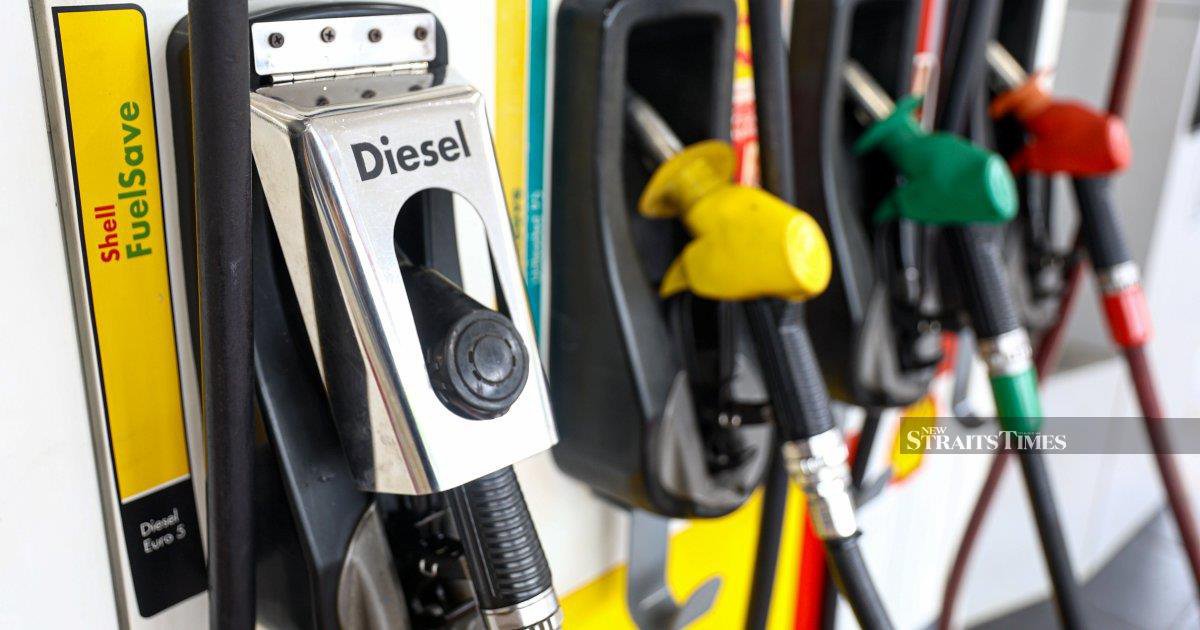

KUALA LUMPUR: The retail price of unsubsidised RON97 will drop by 20 sen per litre, while unsubsidised RON95 and diesel prices will each fall by 15 sen for the Nov 19 to 25 period.
The Finance Ministry (MOF) said in a statement that the new price of unsubsidised RON97 would be RM4 per litre, while RON95 would be RM3.72 and diesel RM4.72 per litre.
It said prices of refined petroleum products in regional markets had declined during the Automatic Pricing Mechanism (APM) calculation period, in line with the moderation of global crude oil prices.
The development reflected easing price pressures in international petroleum markets, while expectations of increased global crude oil supply had also influenced price movements.
“Supplies of petroleum products continue to increase despite several constraints that could affect market price stability.
“Geopolitical uncertainties and the risk of disruptions to petroleum shipments could still affect global supplies.
“As such, global petroleum prices are expected to remain volatile in the near term,” it said.
MOF said the Madani government remained committed to protecting the public and businesses through targeted fuel subsidies under the Budi Madani initiative.
Nearly RM4 billion has been allocated for fuel subsidies next year to help ease the people’s cost-of-living burden.
Under Budi95, eligible recipients will continue to enjoy RON95 at RM1.99 per litre, compared with the unsubsidised price of RM3.72.
This means the government subsidises RM1.73 per litre, or 47 per cent of the unsubsidised price.
For Budi Diesel, eligible recipients will continue paying RM2.10 per litre, compared with the unsubsidised price of RM4.72.
The government bears a subsidy of RM2.67 per litre, equivalent to 56 per cent of the unsubsidised price.
MOF said eligible Malaysians could continue purchasing subsidised RON95 and diesel using their MyKad under Budi95 and Budi Diesel, subject to their respective monthly eligibility limits.
“The Madani government will continue taking a prudent approach to protect the public from price fluctuations while ensuring the country’s fuel supply remains sufficient and secure,” it said.