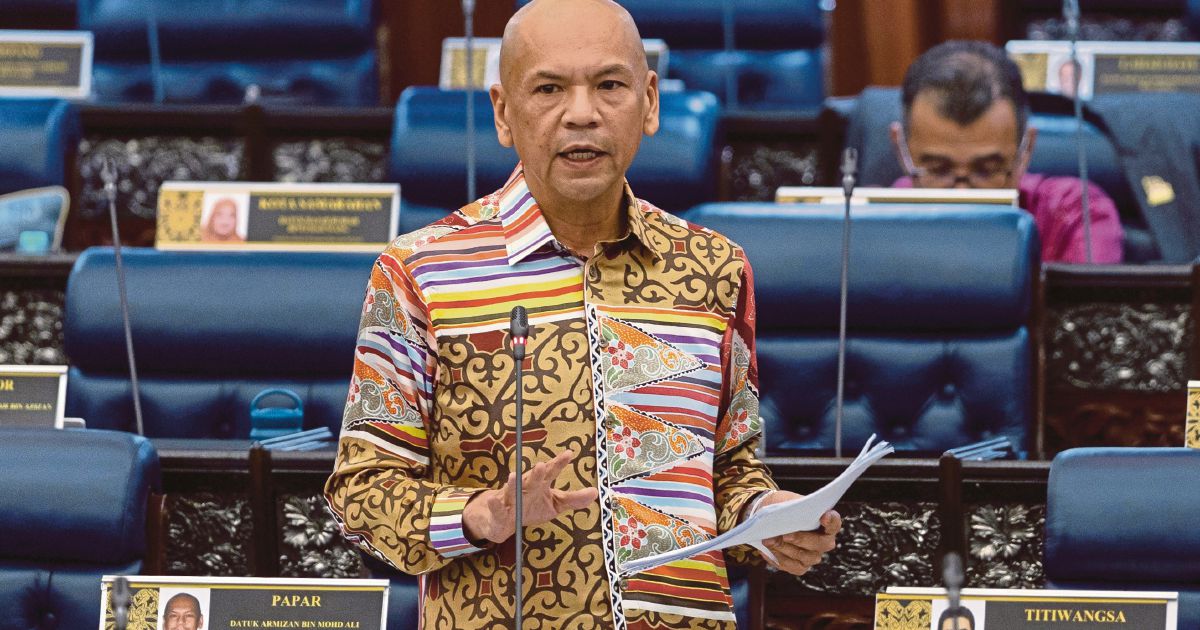

KUALA LUMPUR: The government’s system for tracking subsidised cooking oil cannot identify buyers, leaving gaps that allow leakages and misuse, Domestic Trade and Cost of Living Minister Datuk Armizan Mohd Ali said.
He said the electronic Cooking Oil Price Stabilisation Scheme (eCOSS), introduced in May 2023, could track supplies delivered to retailers but not identify buyers.
“We know how much is supplied and the quota reaching retailers, but we do not have data on who buys the cooking oil,” he told the Dewan Rakyat today.
Armizan was winding up the committee-stage debate on the Supply Bill 2027 for his ministry.
He said some retailers had allegedly stored subsidised cooking oil packets before selling them in bulk to certain parties.
Others had reportedly opened the packets and transferred the contents into bottles for resale at higher prices.
To address the gaps, Armizan said the ministry had introduced the Mobile eCOSS application, which requires consumers to scan a QR code when buying subsidised cooking oil packets.
He said the system would help authorities identify buyers, monitor purchases and improve subsidy targeting.
Although the requirement had drawn complaints from consumers, Armizan said the data was necessary to curb leakages.
“Leakages are still occurring. I do not deny that, but compared with before, there has been a reduction,” he said.
Armizan said enforcement had also been strengthened, while the ministry had revised the distribution system to improve access to subsidised cooking oil.
Under the new arrangement, repackaging companies determine 50 per cent of distribution destinations, while the ministry’s state and district offices decide where the remaining supplies should be delivered.