
Poor countries are paying creditors instead of preparing for climate disasters. The international financial system must stop deepening their vulnerability
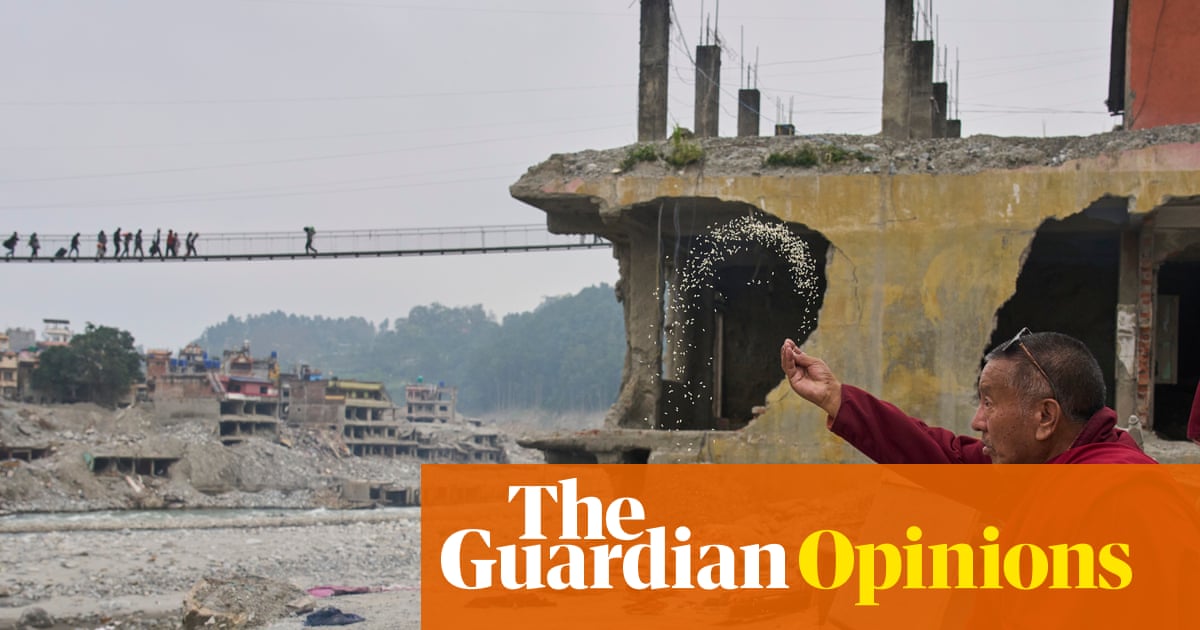
The catastrophe that struck Nepal’s Himalayas in August began with a collapsing glacier. An avalanche of ice and rock unleashed deadly floods, sweeping away villages, bridges and roads, and leaving thousands dead or missing. It illustrated the dangers posed by global heating to the Himalayas’ increasingly unstable glaciers. Nepal lost a tenth of its electricity generation. Reconstruction will cost about $5bn. Yet the Loss and Damage Fund, hailed as a historic breakthrough at the 2022 UN climate summit, has earmarked just $20m for Nepal – less than 5% of the $482m that Kathmandu must pay its external public creditors this year.
“The scale of resources needs to increase,” Nepal’s delegation to this year’s UN climate conference drily observed. They are not the only ones agitating for change at Cop31. In its September report, Debt Fuels the Climate Crisis, ActionAid noted that the global south’s external borrowing is 100 times more than the climate finance it received. Poor nations end up trapped in debt dependency because they export cheap raw materials, but import expensive food, fuel and manufactured goods, invariably priced in dollars. The charity warned that climate-vulnerable countries are now expected to fund decarbonisation while servicing dollar loans that often pressure them to export fossil fuels rather than invest in green industrialisation.