
Military bases around Washington, D.C., have become an increasingly common refuge for some of President Donald Trump’s most powerful officials, as threats linked to Iran and a surge in threats against public officials raise security concerns across the administration.
“So you have this combination of a permission structure on the left for violence, combine it with the ability to track it and create a long paper trail, and the numbers explode, and these threat matrices go crazy,” former Secret Service agent and former FBI Deputy Director Dan Bongino said.
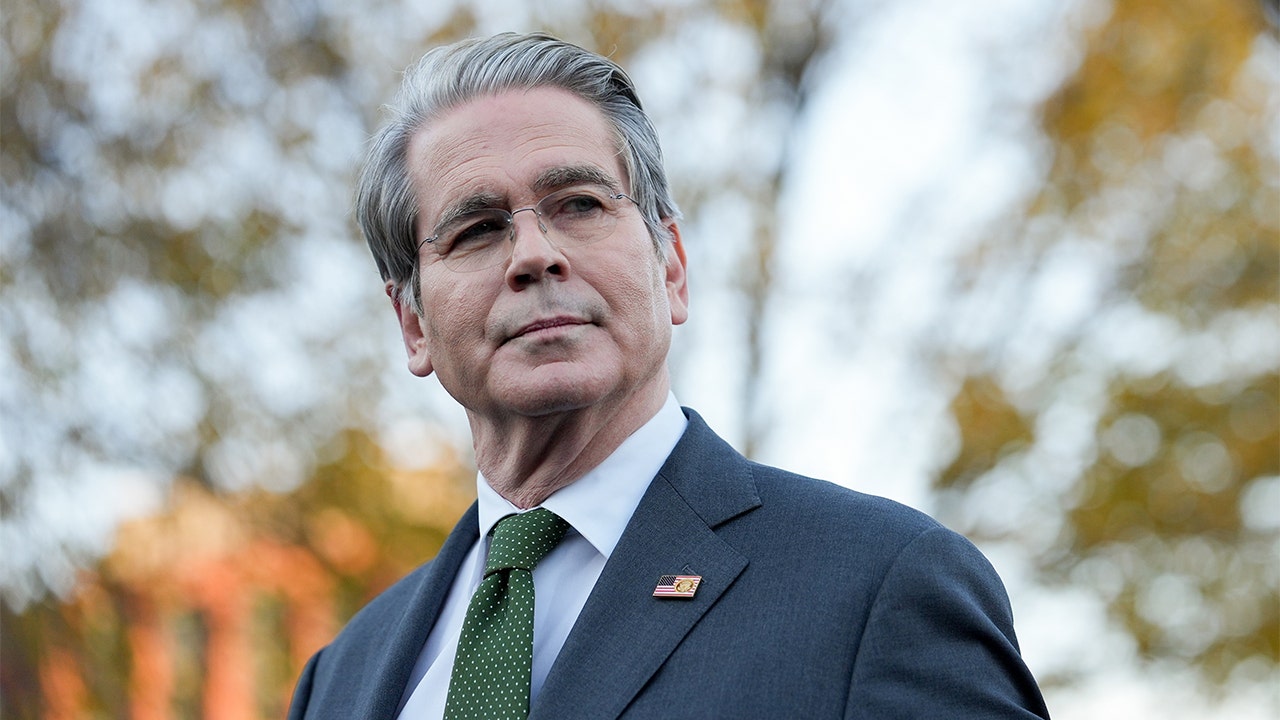
Treasury Secretary Scott Bessent is the latest senior administration official to relocate to a military installation, joining a growing number of top Trump officials living behind military gates as federal authorities confront security threats that extend well beyond the White House.
IRAN HAS ‘SUBSTANTIALLY INCREASED’ EFFORTS TO TARGET AMERICANS ABROAD, US INTELLIGENCE MEMO WARNS
“After The Wall Street Journal published an article featuring an online photo that allowed the location of the Secretary’s Georgetown home to be geo-located, security concerns began to increase which have now forced the Secretary to relocate to a military base for his safety. The news media has an obligation to act responsibly amid growing threats against public officials,” a source familiar with the situation told Digital.
Threats against Bessent had reached “more than an advanced stage” amid reported Iranian assassination threats, a senior administration official told Digital on Tuesday, but did not elaborate.
The Iranian threats against Bessent come amid a documented history of alleged Tehran-backed assassination plots targeting senior U.S. officials.
Attorney General Todd Blanche also relocated to a military base from his home around March, a different source familiar with the arrangements told Digital on Thursday.
The Justice Department charged a member of Iran’s Islamic Revolutionary Guard Corps in 2022 in an alleged murder-for-hire plot targeting former Trump national security adviser John Bolton, while prosecutors disclosed in 2024 that another Iranian operative had allegedly been tasked with developing a plan to assassinate Trump.
Bongino said federal protection decisions are generally driven by threat assessments that account for threatening communications, social media activity and intelligence gathered by security personnel. Agencies responsible for protecting senior officials use those assessments to determine what level of protection is necessary.
Secret Service Director Sean Curran said last month that threats against the agency’s full-time protectees had increased more than 40% from the previous year, with roughly 10,000 threat cases recorded in 2026 at the time.
Digital reached out to the White House and Secret Service for comment.
“Pretty much, sadly, anyone at the cabinet, or even sub-cabinet level, with any kind of public persona in the Trump administration, needed a detail,” Bongino said.
US EVACUATES 13 MILITARY AIRCRAFT FROM SECOND UK BASE AS NEW IRAN THREAT RAISES ALARM
The assassination of conservative activist Charlie Kirk and multiple attempts on President Donald Trump’s life have heightened concerns about political violence, as security officials confront a growing volume of threats against public officials.
Bongino pointed to his own experience as FBI deputy director, saying his security needs were comparable to those of some of the government’s highest-ranking law enforcement officials.
“Mine was on par with the attorney general and the FBI director that we had to expand it,” Bongino said of his threat assessment and security detail. “It was an independent analysis.”
Bongino said social media has made threats against public officials easier to track, but the sheer volume of online activity has also created more work for investigators trying to determine which threats are credible.
SECRET SERVICE CHIEF SAYS THREATS AGAINST PROTECTEES UP 40%, CITES INTERNET AND MENTAL HEALTH
Bongino said the disruption to Bessent’s personal life underscores the seriousness of the security concerns surrounding his move.
“For him to have to uproot his life. And move on to a military facility where the housing’s not terrible in those places, but it’s certainly not what he’s used to,” Bongino said. “This stuff, it’s not a convenience issue, I can promise you that. This is definitely serious stuff.”
Lawmakers have also raised concerns about security and federal spending. Rep. George Whitesides, D-Calif., secured House Armed Services Committee approval in June for a proposal seeking a Pentagon report on political appointees living in military housing, including the threats justifying their moves, legal authority for the arrangements and rental costs.
Sen. Maggie Hassan, D-N.H., also questioned whether the reported transfer of $415 million in Secret Service funding to White House construction projects could affect the agency’s protective operations, citing federal watchdog concerns about staffing and resource shortages.
Barry Donadio, a former Secret Service agent who served during the George W. Bush and Barack Obama administrations, similarly told Digital that the decision to relocate Bessent to a military installation suggests an extraordinary level of concern among those responsible for his protection.
“My first inkling is that the [threat] is so high that they cannot protect him with certainty, unless he is on a military base which speaks volumes for the situation at hand,” Donadio said.
TRUMP ADMIN APPROVES $351 MILLION FOR WHITE HOUSE SECURITY MEASURES AMID QUESTIONS OVER BALLROOM FUNDING
Donadio said the move could indicate that officials believe Bessent would be safer on a military base than at a private residence.
“They may have foiled an attack already that is not being publicized, and as an extra measure, have moved him to a military base for protective custody,” Donadio said, clarifying that he did not mean Bessent was in custody, but rather under heightened government protection.
Bessent is not the only senior Trump administration official whose security concerns have prompted a move to military housing.
Secretary of State Marco Rubio and Secretary of War Pete Hegseth have reportedly taken up residence at Fort McNair in Washington, D.C., while White House chief of staff Stephen Miller and other administration officials have moved to military installations or protected government housing.
TRUMP ADMIN APPROVES $351 MILLION FOR WHITE HOUSE SECURITY MEASURES AMID QUESTIONS OVER BALLROOM FUNDING
The relocations have not all stemmed from the same threats. Some followed concerns about domestic political violence, while Bessent’s move comes amid reported threats linked to Iran.
Bongino said threats against high-profile officials can also extend beyond their time in government, describing an incident in which an individual allegedly appeared at a California television studio with a manifesto threatening him and other officials.
“I mean, this stuff is real, it happens every day,” Bongino said. “And when you’re living through it and you’re not accustomed to it, you know, and it follows you after office too.”
He said officials including Bessent, FBI Director Kash Patel, CIA Director John Ratcliffe and Hegseth understood that public service in the administration could make them targets even after leaving office.
Fort McNair, a historic Army installation along the Potomac River in Washington, D.C., has emerged as one of the military properties housing senior Trump administration officials. The installation, which dates to the late 1700s, is home to the National Defense University and traditionally provides residential quarters for senior military leaders.
Fort McNair’s residential quarters are divided into two housing groups, according to a 2020 National Capital Planning Commission report, while a 2024 Army filing identifies 27 historic homes built before 1919 at the installation.
The Army’s housing website lists 88 historic dwelling units across Fort McNair and nearby Fort Myer combined, without specifying how many are at each base.
The growing use of military housing by senior civilian officials also raises questions about who approves the arrangements, whether officials pay for their accommodations and what impact, if any, the moves have on housing traditionally reserved for military personnel.