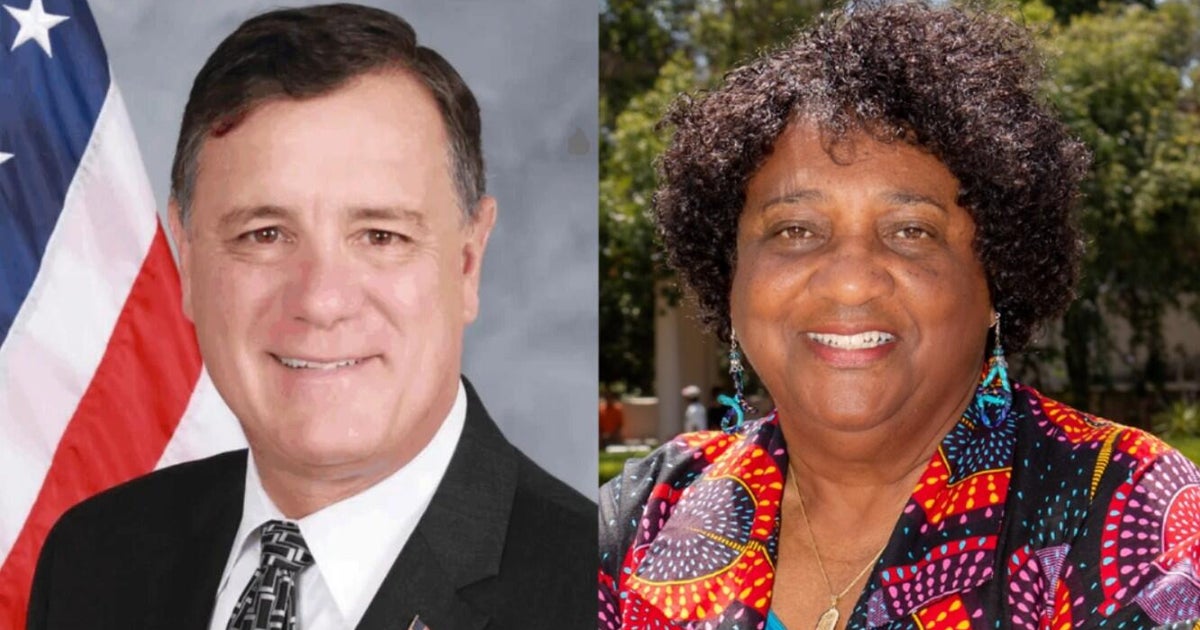

California voters face starkly different approaches to ballot counting and election integrity from the candidates for secretary of state.
Democratic incumbent Shirley N. Weber is facing Republican challenger Donald P. Wagner, an Orange County supervisor and former state legislator, in the Nov. 3 election for the office responsible for overseeing California elections and enforcing state election laws.
Weber was appointed secretary of state in 2021, becoming California’s first Black secretary of state, and won a full term in 2022. Her campaign emphasizes protecting voting rights, maintaining access to voting and strengthening election security.
In her candidate statement, Weber recounts how her family fled the Jim Crow South, where her parents were unable to vote. She says she will oppose efforts to restrict voting opportunities, including shorter polling hours, fewer voting days and the elimination of vote-by-mail ballots.
Wagner emphasizes election security and faster results in his candidate statement. He supports Proposition 39, a 2026 ballot measure that would require voter identification at polling places and additional identifying information on mail-in ballot envelopes. He also calls for mail ballots to be returned by Election Day, and advocates reviewing voter rolls and changes to California’s election procedures. In May, Wagner and the American Independent Party of California sued Weber in federal court, alleging the state had failed to properly maintain its voter registration rolls.Donald Wagner, Shirley Weber
Wagner argues that California’s lengthy ballot-counting process takes too long to report final results. Weber, meanwhile, has defended the state’s election procedures and emphasized protecting eligible voters’ access to the ballot. California law allows mail ballots postmarked by Election Day to be received and counted for up to seven days afterward, provided they meet the legal requirements.
Weber has joined state Attorney General Rob Bonta in challenging local election changes in court, including Huntington Beach’s voter ID law and Shasta County’s Measure B, which proposed significant alterations to voting and ballot counting. She also opposed Riverside County Sheriff Chad Bianco’s seizure of election materials, which the California Supreme Court ruled was unlawful in September.
In January, a federal judge dismissed the Trump administration’s lawsuit against Weber seeking California’s unredacted voter-registration records, but the Justice Department appealed the ruling.
In October, the Trump administration sued Weber again, seeking an injunction forcing California to set aside mail ballots for over 20,000 voters flagged by federal agencies as “likely” noncitizens. The 9th Circuit Court of Appeals dismissed the motion on Oct. 26; a federal judge later denied the DOJ’s request for an emergency restraining order, with the 9th Circuit again rejecting an appeal for emergency relief.
On Nov. 2, the U.S. Supreme Court rejected the Trump administration’s effort to intervene and stop California from counting the disputed ballots.
Previously, Wagner has pushed to release state voter information to the Justice Department, citing voter irregularity claims.