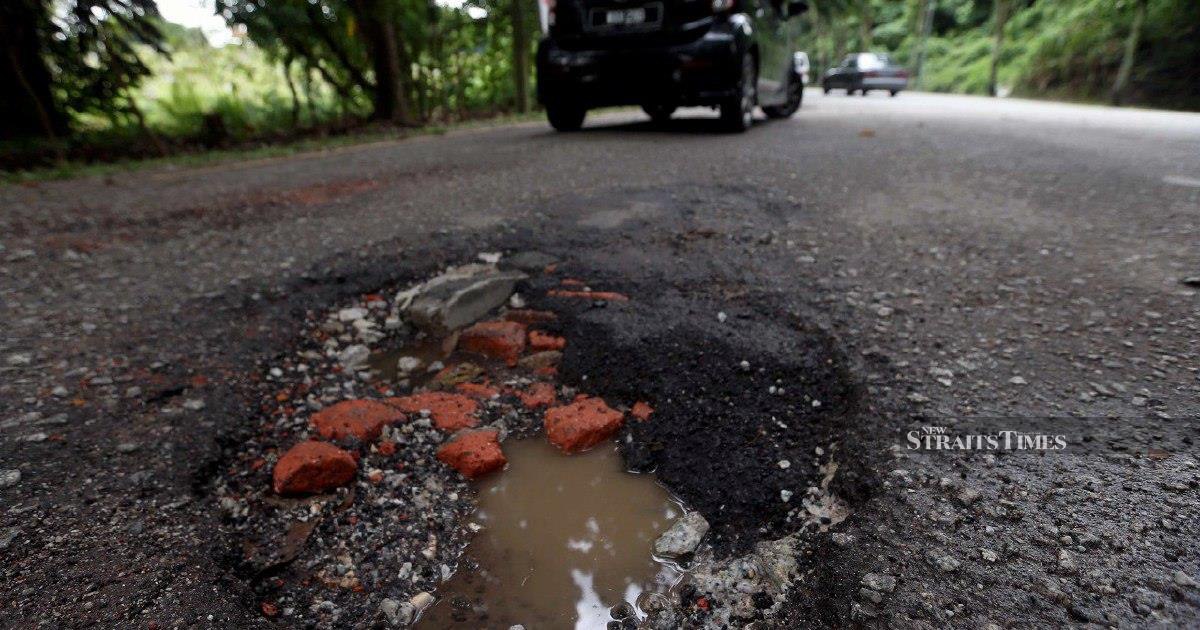

LETTERS: The Road Safety Expert Association (RSEA) expresses serious concern over the fatal motorcycle crash involving a motorcyclist who reportedly lost control while attempting to avoid a sewer manhole opening along Jalan Meru Tambahan, in front of SMK Meru, Klang, Selangor, on Nov 17, 2026.
According to preliminary reports, the motorcyclist, believed to be in his early 30s, collided with the rear of a car before falling onto the road and subsequently coming into contact with a lorry travelling alongside.
He was pronounced dead at the scene. RSEA extends its deepest condolences to the family of the deceased.
This tragic incident once again raises serious questions about road infrastructure safety, maintenance responsibilities and the effectiveness of existing road inspection and hazard prevention mechanisms.
This is not the first time that road users have lost their lives or been exposed to serious danger due to road infrastructure hazards.
RSEA emphasises that manholes, sewer covers, drainage openings and utility access points located within road surfaces must be properly installed, secured, maintained and kept level with the road pavement.
Any damaged, displaced, uneven or uncovered manhole presents a potential danger, particularly to motorcyclists.
Similarly, potholes, deteriorating road surfaces, uneven patches and poorly executed road repairs must not be treated as minor maintenance issues.
They are potential road safety hazards that can cause motorcyclists to lose control, force sudden evasive manoeuvres and create dangerous situations involving other vehicles.
- PBT AND JKR MUST TAKE FULL RESPONSIBILITY FOR ROAD SAFETY INSPECTIONS
RSEA calls upon all Local Authorities (Pihak Berkuasa Tempatan – PBT), the Public Works Department (Jabatan Kerja Raya – JKR), including state and district-level offices, to conduct comprehensive and systematic road safety inspections within their respective jurisdictions.
These inspections must cover:
- Manholes, sewer covers and utility access points located on road surfaces.
-
Potholes, damaged pavements and uneven road surfaces.
-
Poorly patched potholes and defective road repair works.
-
Damaged road shoulders and drainage systems.
-
Road defects and obstructions that may endanger motorcyclists and other road users.
-
Temporary roadworks, excavation sites and reinstatement works by utility contractors.
- INTRODUCE MANDATORY ROAD SAFETY AUDITS AND PERIODIC INSPECTIONS
RSEA proposes that every PBT and JKR state and district office establish a structured road safety inspection and audit programme.
The programme should include:
- Scheduled inspections of all roads under their respective jurisdictions.
-
Risk-based inspections of accident-prone locations and high-risk corridors.
-
A centralised road hazard reporting and monitoring mechanism.
-
A mandatory response timeframe for addressing reported road defects.
-
Immediate temporary safety measures where hazards cannot be rectified immediately.
-
Documentation of corrective actions and verification that repairs have been completed satisfactorily.
Road safety inspections must not be conducted merely as an administrative exercise. They must produce measurable outcomes and ensure that identified hazards are eliminated before they contribute to serious or fatal crashes.
- ACCOUNTABILITY OF UTILITY COMPANIES AND CONTRACTORS
RSEA also calls for closer monitoring of utility companies and contractors undertaking excavation, sewerage, drainage, telecommunications and other infrastructure works along public roads.
Any excavation or reinstatement work must comply with the relevant technical requirements and safety standards.
Responsibility for ensuring that manhole covers, road surfaces and reinstated sections are safe must be clearly established.
Relevant authorities must also ensure that defective work is rectified promptly and that appropriate accountability mechanisms are enforced.
- ESTABLISH A NATIONAL ROAD HAZARD MANAGEMENT SYSTEM
RSEA believes that Malaysia needs to move beyond a reactive approach, where action is taken only after a crash or public complaint.
We must adopt a proactive road hazard management system to identify, report, assess risk, rectify, verify and continuous monitoring.
Every identified road hazard should be recorded, assigned to the responsible agency, prioritised according to risk and monitored until corrective action is completed.
RSEA further proposes that PBT and JKR publish periodic performance reports covering the number of hazards identified, the number rectified, outstanding high-risk defects and the time taken to complete repairs.
- ROAD SAFETY IS A SHARED RESPONSIBILITY
RSEA acknowledges that road users must always exercise caution, maintain appropriate speeds and remain alert to changing road conditions.
However, road safety cannot depend solely on the behaviour of road users.
Government agencies, road authorities, local councils, utility operators and contractors have equally important responsibilities to ensure that the road environment is safe and does not expose the public to preventable risks.
A motorcyclist should not have to make a sudden life-threatening manoeuvre simply because a manhole cover or road defect has not been properly maintained.
RSEA urges the Ministry of Works (KKR), Ministry of Housing and Local Government (KPKT), PBT and JKR to take this matter seriously and initiate nationwide road infrastructure safety inspections, particularly at locations where manholes, utility covers and road surfaces pose potential risks to motorcyclists.
Do not wait for another fatal crash before inspecting a dangerous road.
The fundamental principle of road safety management is prevention, not merely investigation after lives have been lost.
Every pothole, defective manhole and unsafe road surface must be recognised as a potential safety risk requiring timely intervention.
JAMIL MANAN SUPRI
Founder, Road Users Safety and Motorsports Adviser
Road Safety Expert Association (RSEA)
The views expressed in this article are the author’s own and do not necessarily reflect those of the New Straits Times