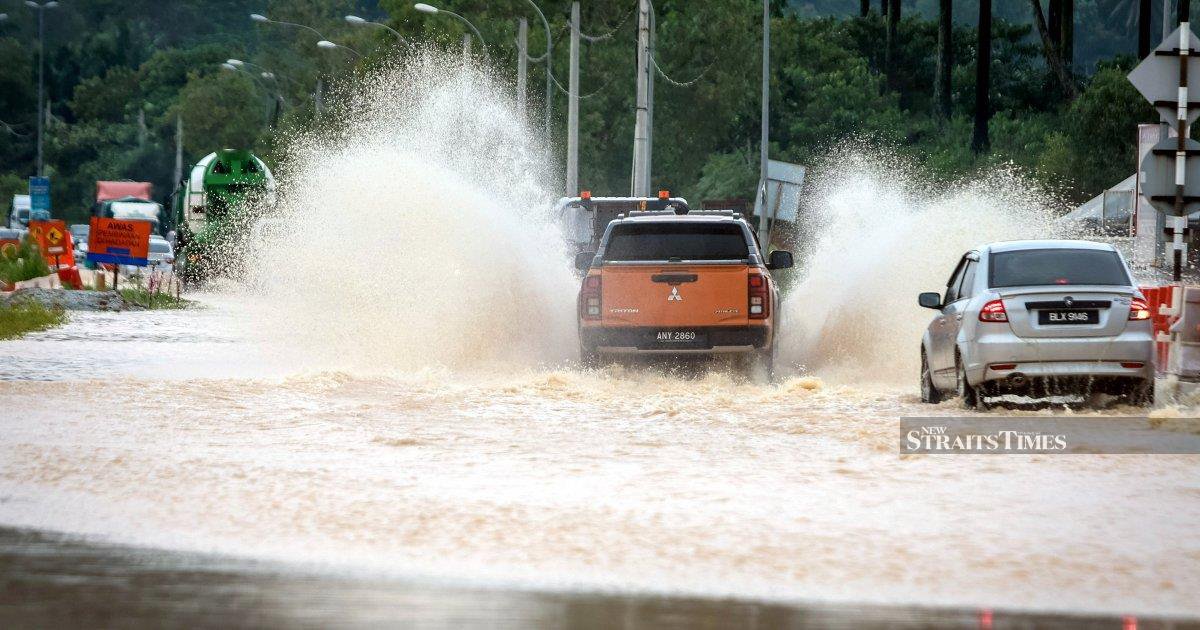

KUALA LUMPUR: Motorists in the Klang Valley should prioritise safety when travelling through 56 identified flood hotspots and 232 flood-prone areas during the monsoon season.
Road Safety Expert Association (RSEA) founder Jamil Manan Supri said, based on information from the Selangor Drainage and Irrigation Department, Klang recorded the highest number of flood hotspots at 13, followed by Petaling (11) and Gombak (10).
He said drivers should pay particular attention to high-risk areas in Selangor, including Taman Sri Muda, Sections 7 and 13 in Shah Alam, Bukit Raja, Kapar, Kampung Rantau Panjang and Jalan Kebun in Klang.
Other areas at risk include Jalan 223, Section 51, PJS 2, PJS 4 and PJS 6, Taman Medan, Sri Manja, Buana Perdana, Batu Caves and parts of Gombak.
“In Kuala Lumpur, particular attention should be given to low-lying roads, junctions, underpasses and areas with inefficient drainage systems that are frequently affected by flash floods.
“This includes routes such as Jalan Ampang, Ampang, Taman U-Thant, Sungai Besi, Bangsar, Jalan Bukit Pantai, Jalan Damansara, Segambut, Taman Tun Dr Ismail and areas around Lembah Keramat,” he said in a statement.
Jamil said vehicle owners should prepare a safety checklist and ensure their vehicles’ essential components were in optimal condition before travelling, particularly during the flood season.
“Basic checks should include radiator coolant levels, engine oil, lights, horn, windscreen wipers and tyre pressure.
“Ensuring tyres have adequate tread and are inflated according to the manufacturer’s specifications is crucial to prevent loss of traction through aquaplaning on wet roads,” he said.
He also cautioned drivers against arbitrarily reducing tyre pressure, advising them instead to slow down and maintain a safe following distance in wet conditions, as braking distances increase.
Jamil also reminded motorists not to rely entirely on digital navigation applications when choosing their routes.
He said navigation applications might suggest the fastest route, but it was not necessarily the safest. Drivers should take alternative routes or postpone their journeys if their intended routes were reported to be flooded or closed.
Meanwhile, RSEA outlined specific safety measures for motorists facing floods and aquaplaning, a dangerous condition in which tyres lose contact with the road surface.
Drivers were advised to obey road closure instructions and not assume that four-wheel-drive (4WD) vehicles or sport utility vehicles (SUVs) were safe to drive through floodwaters at any depth.
“If a vehicle becomes trapped in floodwaters, drivers should remain calm and avoid restarting the engine if it stalls after water enters, as this could cause serious damage.
“If water levels rise and threaten lives, drivers and passengers should leave the vehicle immediately through the windows or another safe exit and move to higher ground before calling 999.
“Motorcyclists, who are more vulnerable to skidding, should slow down, avoid sudden braking, wear reflective raincoats and avoid seeking shelter under large trees or in potentially hazardous underpasses,” he said.
RSEA also urged the Public Works Department, Drainage and Irrigation Department and local authorities to step up monitoring of road surface damage, drainage efficiency, warning signs and street lighting maintenance.
“Road safety is a shared responsibility. We must move beyond merely reporting incidents towards managing risks before they occur.
“Do not measure a journey’s success by how quickly you reach your destination, but by whether you arrive safely,” he said.