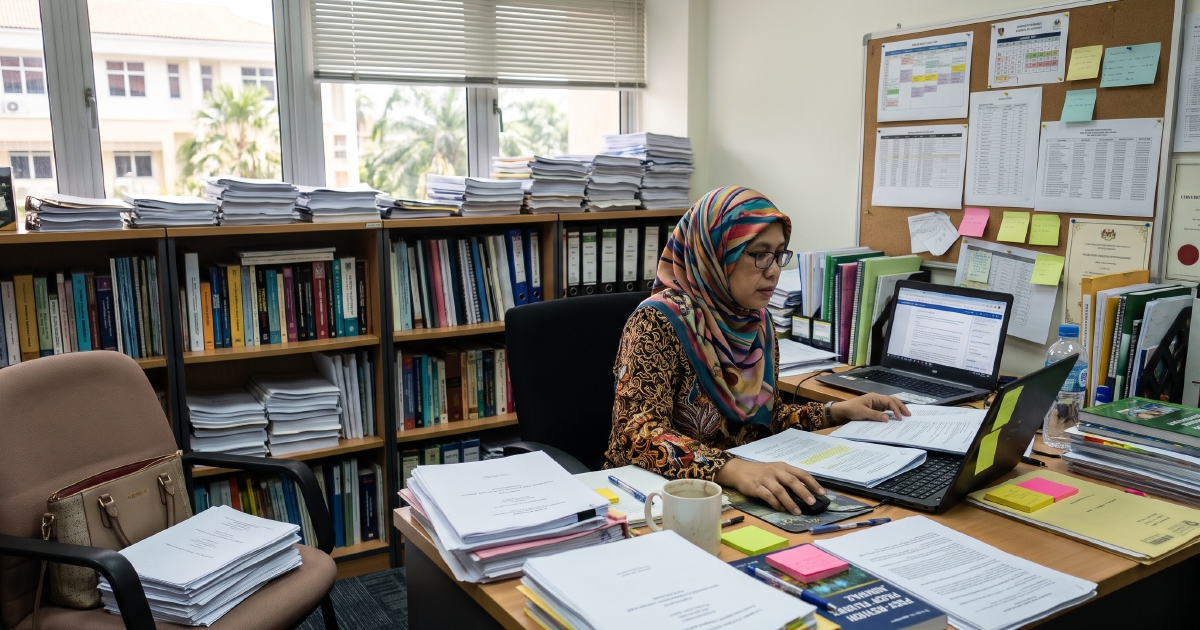

KUALA LUMPUR: Lecturers’ academic freedom and welfare will form part of Malaysia’s higher education overhaul as the government moves to repeal the Universities and University Colleges Act 1971 (AUKU), with their obligations under Act 605 also coming under examination.
Higher Education director-general Datuk Professor Dr Azlinda Azman said academics had highlighted that discussions on the issue appeared to focus largely on students, despite their own concerns.
Those concerns were raised during dialogue sessions in Higher Education Minister Datuk Seri Dr Zambry Abd Kadir’s visits to public universities and direct engagements with academic groups.
“They said sometimes people outside see students, students, students. But what about us? We academics too feel that changes must also take into consideration the academicians’ needs and struggles.
“Yes, we (the ministry) will take that into consideration,” she told the New Straits Times in an interview.
Asked whether the proposed “One Higher Education Act” could strengthen academic freedom and autonomy for lecturers, Azlinda said their obligations under the Statutory Bodies (Discipline and Surcharge) Act 2000, or Act 605, and public service requirements would also need to be examined.
The government plans to table amendments to AUKU in the Dewan Rakyat next month, focusing on students’ freedom of expression and association, ahead of its eventual repeal.
The reforms
Azlinda said the proposed act would harmonise existing higher education laws, with the repealing of AUKU requiring a phased approach to ensure universities could continue operating under a clear legal framework.
Consultations would involve academic associations, including the Malaysian Academic Association Congress (MAAC), university administrators and support staff, with workshops to gather their proposals.
“We do not want any party to be left out of helping us produce the One Higher Education Act.”
Azlinda said the ministry was open to suggestions on improving university governance and protecting academic staff welfare.
“If they think it is not good enough, tell us. Then come to us and show us the solutions. We will try our best to incorporate what is suitable,” she said.
Examining the workload
On complaints of excessive workloads, Azlinda said the ministry regularly received feedback from academics and was studying the issue, with input from researchers and industry representatives.
She acknowledged that lecturers’ responsibilities extended beyond teaching to research, publications, innovation, supervision and securing research grants.
Universities have autonomy to set their key performance indicators (KPIs), she said, but the ministry recognised that requirements differed between institutions.
“We cannot be doing the study ourselves because then, there would be no checks and balances.”
She said universities needed to consider work-life balance when setting expectations for academics and assessing responsibilities, though experiences differed between individuals — some academics were managing research and teaching alongside administrative duties.
Azlinda said universities needed to examine that balance, taking into account their KPIs and how performance was calculated.
More lecturers, limited funding
Azlinda said funding constraints affected universities’ ability to recruit permanent lecturers, even as they sought to expand student intake.
“If you ask us (the ministry), we want more lecturers. And we want lecturers who focus on all the emerging areas.”
Retired academics and practising professionals were among those engaged to support additional classes, allowing universities to draw on their experience without waiting for new permanent posts.
Universities also needed existing academics to develop their expertise as fields evolved, while maintaining links with industry to keep teaching relevant.
Mental wellbeing needs action
MENTAL WELLBEING NEEDS ACTION
On mental health, Azlinda said universities had strengthened counselling services, while some had introduced mentoring arrangements linking younger academics with senior lecturers and professors.
She acknowledged that burnout and the expectations placed on lecturers could affect their wellbeing, alongside personal and family pressures.
Support included access to counsellors, university health facilities and, at some institutions, artificial intelligence tools used for initial screening and referrals.
“We at the higher education ministry emphasise mental wellbeing. But implementation must take place at university level.
“The top management has to pick it up and implement it,” she added.