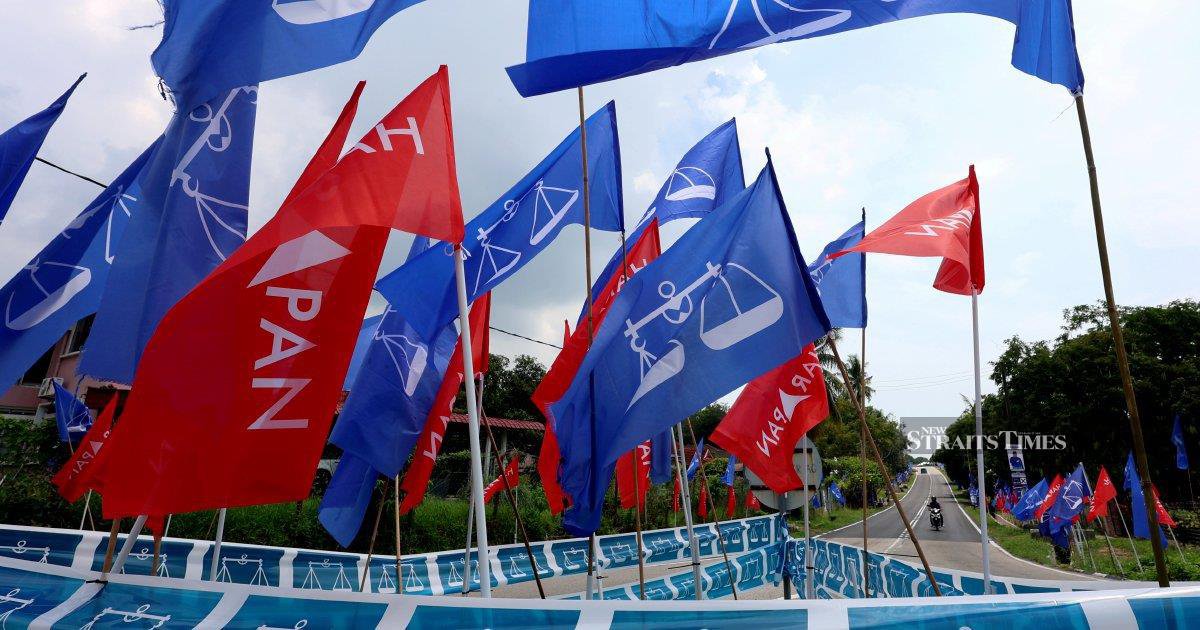

MELAKA: The Barisan Nasional-Perikatan Nasional joint election manifesto offers a structured development agenda for the state, although Pakatan Harapan has put forward several distinctive proposals aimed at youth entrepreneurship and inclusive economic growth, a political analyst said.
Universiti Malaya senior political science lecturer Dr Mohammad Tawfik Yaakub said the BN-PN manifesto stood out for its measurable economic commitments, particularly its targets
of attracting RM30 billion in investments, creating 25,000 jobs and delivering 25,000 affordable homes over five years.
He said the pledges directly address economic opportunities and living standards, providing clear benchmarks against which the coalition’s performance could be assessed.
Tawfik said the proposals on free water for eligible households and financial assistance for B40 students pursuing technical and vocational education and training courses were promising.
He said the initiatives could help ease the cost of living while improving employment prospects for the low-income group.
However, he added, PH’s manifesto should not be overlooked, particularly its proposal to allocate 30 per cent of local authority contracts to young people.
He described the initiative as an interesting approach to encouraging youth entrepreneurship and increasing their participation in the local economy.
“PH’s proposal to allocate 30 per cent of local authority contracts to young people stands out as an interesting initiative to encourage youth entrepreneurship.
“Its commitment to providing special grants for women entrepreneurs, expanding childcare facilities for working mothers and attracting 25 million tourists by 2032 could also strengthen economic participation.”
Tawfik said all coalitions must ensure their commitments translate into tangible improvements in people’s lives rather than merely achieving impressive numerical targets.
On criticism that PH repackaged initiatives introduced by the past government, Tawfik said there was some merit to the argument.
He said some proposals in PH’s manifesto reflected priorities pursued by previous state administrations.
“For example, PH’s Smart Melaka initiative overlaps with the Smart Melaka Blueprint 2035 launched in 2022, while tourism development, affordable housing and public service digitalisation have long been part of the state’s development agenda.”
Nevertheless, Tawfik said, it would be unfair to dismiss PH’s entire manifesto.
Ilham Centre research fellow and political analyst Mujibu Abd Muis said BN was capable of fulfilling its 20 main commitments, based on its financial capacity, realistic planning and effective implementation mechanisms.
“In my view, the manifesto is relatively strong in terms of benefit distribution and welfare.
“People do not just want the cost of living to be reduced through assistance. They also want higher income, quality jobs and wider economic opportunities.”
International Islamic University Malaysia political scientist Associate Professor Dr Syaza Shukri said voters who believe BN had been delivering assistance would likely find the joint manifesto sufficient, as their priority was having a government that could continue providing support.
“Why fix what is not broken? At this point, I feel voters have trust in BN-PN as the state government, with BN leading the administration.
“They don’t need fancy promises. They just need a government that can provide assistance.”