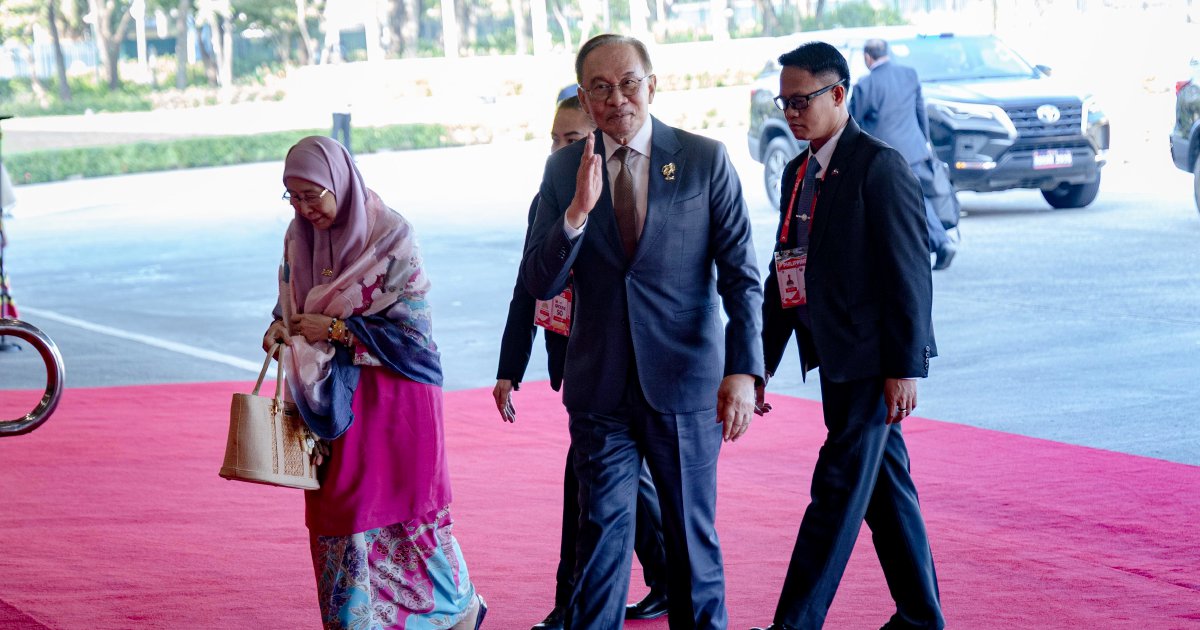

MANILA: Prime Minister Datuk Seri Anwar Ibrahim has called on Asean member states to diversify their sources of food and medicines while strengthening regional production capacity to reduce reliance on external suppliers amid growing global uncertainties.
He said recent global disruptions had exposed the risks of depending on a limited number of suppliers for essential goods, underscoring the need for greater regional cooperation to safeguard supply chains.
In his intervention at the plenary session of the 49th Asean Summit, Anwar said member states should increase intra-regional trade in agricultural inputs, including fertilisers, seeds and animal feed, while ensuring the uninterrupted movement of essential supplies across borders during crises.
“Nowhere is this more urgent than in food and medicines, the essentials our people cannot do without.
“Bolstering regional food security must start with fertilisers, seeds and feed, much of which we source from beyond our region.
“Asean must strengthen resilience across this whole chain: trading more of these inputs among ourselves, keeping essential food and agricultural inputs flowing through trusted green lanes in times of crisis, and collectively optimising regional reserves such as the Asean Plus Three Emergency Rice Reserve,” he said.
On medicines, Anwar urged Asean countries to recognise one another’s regulatory approvals, pool their purchasing power and stockpiles, and expand regional manufacturing of essential medicines and vaccines.
He said the COVID-19 pandemic had demonstrated how quickly supply chains could break down during times of crisis.
“We must not be complacent, climate change and environmental degradation make the looming risk of a future pandemic a statistical probability.
“Asean must redouble our efforts on accessibility of medicines by mutual recognition of regulatory approvals, pooling our purchasing power and stockpiles, and building regional manufacturing capacity for essential medicines and vaccines,” he said.
On energy, Anwar said the Asean Power Grid (APG) remained the bloc’s foremost strategic priority.
He urged Asean to accelerate work on the grid, saying national power grids could no longer operate in isolation with regional energy demand projected to quadruple by 2060.
“Accelerating the APG turns individual vulnerabilities into collective strength, unlocking cross-border renewable power sharing and guaranteeing an affordable, secure energy future for our people,” he said.
On digital economy, Anwar welcomed the signing of the Asean Digital Economy Framework Agreement (DEFA), which he said would help double the region’s digital economy to US$2 trillion by 2030.
“Yet as AI increasingly shapes the global economic and security landscape, its development and governance must not be dictated by the commercial interests of a handful of global technology corporations.”
Anwar urged Asean member states to strengthen their collective technological capabilities, safeguard data sovereignty and establish governance frameworks that uphold transparency and accountability.
The meetings running from Nov 15 to 17 under the Philippines’ chairmanship themed, “Navigating Our Future, Together”.