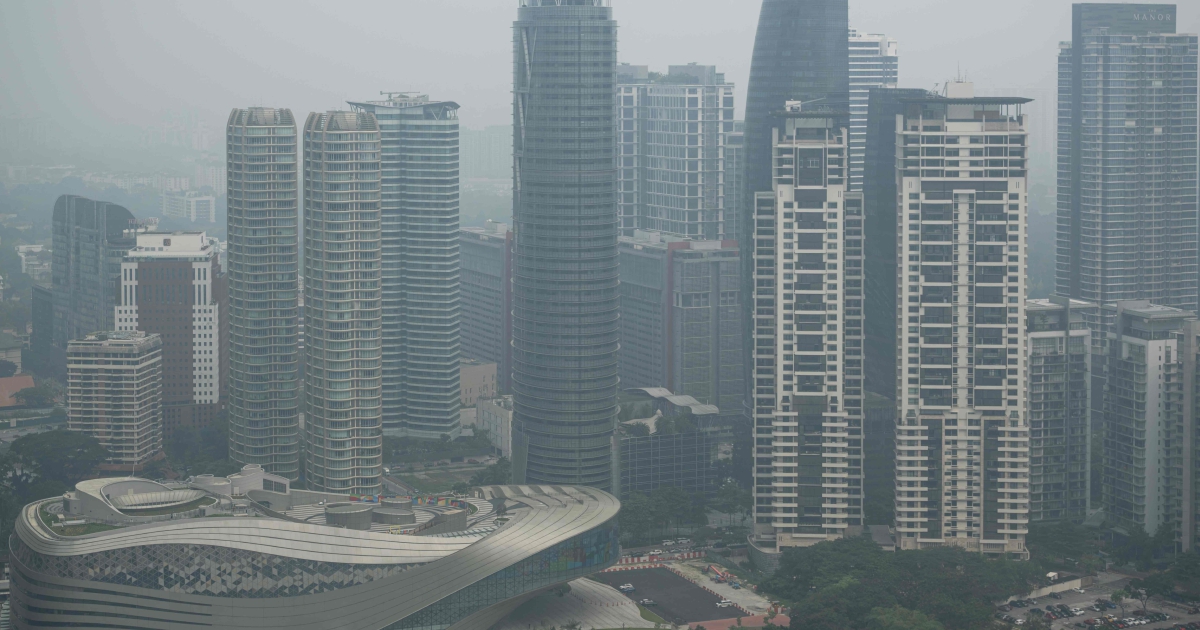

LETTER: The recurring transboundary haze problem deserves urgent attention at the 49th Asean Leaders’ Meeting in Manila.
Asean leaders must seize this opportunity to review the implementation and effectiveness of the Asean Agreement on Transboundary Haze Pollution, which was signed in 2002.
After more than two decades, the region should be asking a fundamental question: Why does transboundary haze continue to threaten the health, environment and livelihoods of millions of people despite having a regional agreement in place?
The problem is not the absence of commitments, but the lack of effective implementation, enforcement and accountability.
I urge Asean leaders to move beyond diplomatic declarations and take concrete, coordinated and measurable action. In particular, Asean should prioritise the following:
- Strengthen enforcement and accountability: Companies and plantation operators responsible for illegal land clearing and forest fires must be held accountable. Cross-border investigations, information sharing and enforcement cooperation must be strengthened.
-
Make the Asean Coordinating Centre fully operational: Member states should expedite the necessary ratification processes and provide the Centre with adequate resources, expertise and capacity to coordinate regional prevention, monitoring and emergency response.
-
Improve early detection and monitoring: Greater use of satellite technology, real-time hotspot monitoring and weather forecasting should enable member states to detect and respond to fires before they escalate into major haze incidents.
-
Address the root causes: Asean must strengthen peatland protection, forest conservation, sustainable agricultural practices and the enforcement of zero-burning policies.
-
Put public health first: Children, senior citizens, outdoor workers and people with respiratory vulnerabilities must receive particular protection through timely public warnings, health advisories and coordinated emergency measures.
I also call on Asean leaders to establish clear targets, deadlines and annual progress reporting under the Asean Haze-Free Roadmap 2023–2030. Every member state must demonstrate measurable progress towards achieving a transboundary haze-free Asean by 2030.
Malaysia should play an active role in advocating stronger regional cooperation and ensuring that this issue remains high on Asean’s agenda. Clean air knows no national boundaries. Neither should our responsibility to protect it.
The people of Asean should not have to endure another year of unhealthy air, respiratory problems, school disruptions and economic losses because of preventable forest and land fires.
The time has come for Asean to move from commitment to action. We must not merely manage the haze when it occurs; we must prevent it from happening in the first place.
The ultimate measure of Asean’s success must be a haze-free region where every citizen has the right to breathe clean air.
TAN SRI LEE LAM THYE
Chairman
Alliance for a Safe Community (IKATAN)