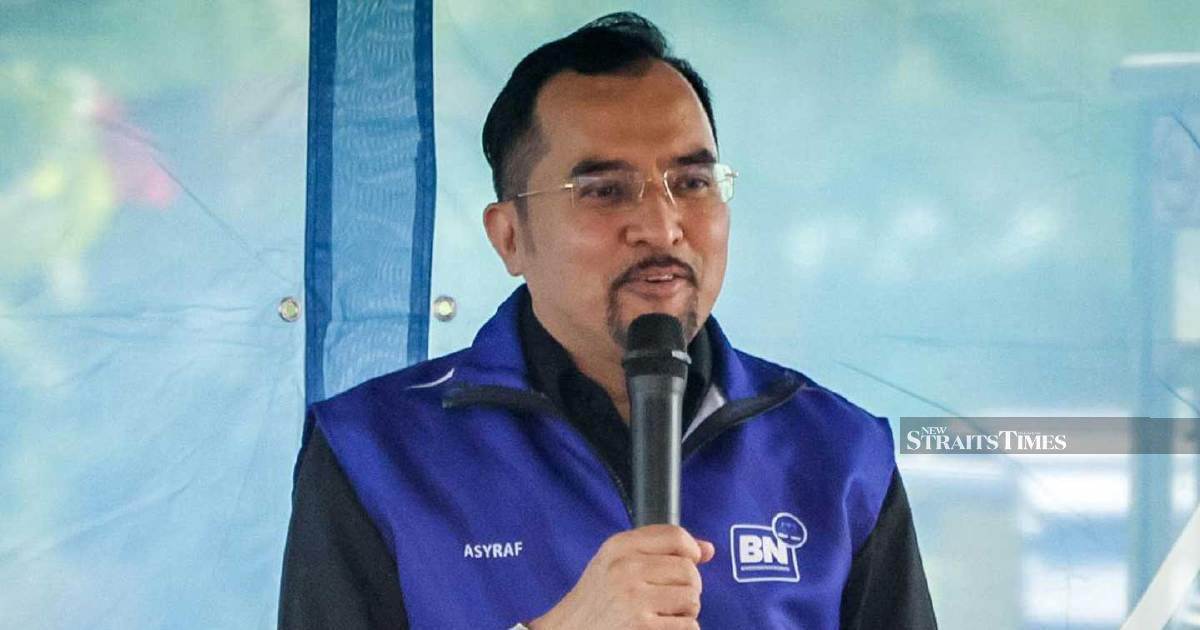

ISTANBUL: There is no need for the Attorney-General to be told to meet Sultan Ibrahim, King of Malaysia, to explain legal issues surrounding Datuk Seri Najib Razak’s house arrest, says an Umno leader.
The party’s secretary-general Datuk Dr Asyraf Wajdi Dusuki said the King’s power to grant pardons was clearly enshrined in the Federal Constitution. This includes reducing sentences.
“So when the King has decreed through the proper process, namely through the Pardons Board, the decision cannot be disputed.
“So there is no need for the Attorney-General to be directed to meet the King to explain,” he said when met here.
Attorney-General Tan Sri Mohd Dusuki Mokhtar is seeking an audience with Sultan Ibrahim to explain his position on complying with the royal decree concerning Najib’s conditional pardon.
The Prime Minister’s Office said Dusuki would also explain legal questions arising from the High Court’s discharge order following payment of the RM50 million fine, a condition for the house arrest.
It said the court needed to determine these issues as they affected the commencement date of Najib’s prison sentence in the 1Malaysia Development Bhd (1MDB) case.
Najib was convicted of misappropriating RM42 million in SRC International funds and began serving his 12-year prison sentence at Kajang Prison on Aug 23, 2022.
In 2024, his jail term was halved to six years and his fine reduced from RM210 million to RM50 million.
On Sept 18, Sultan Ibrahim granted Najib a conditional pardon allowing him to serve the remainder of his sentence under house arrest, subject to payment of the RM50 million fine.
Najib’s lawyers paid the fine yesterday. The Attorney-General’s Chambers (A-GC) later called for the implementation of the house arrest to be temporarily deferred pending judicial clarification on the legal effect of the High Court’s discharge order.
Istana Negara today said the conditional pardon granted to Najib on Sept 18 was clear, explicit and unambiguous, and unrelated to any other cases involving him.
The palace said all conditions imposed under the pardon had been fulfilled, warning that any attempt to dispute the order would amount to defying the King’s decree.