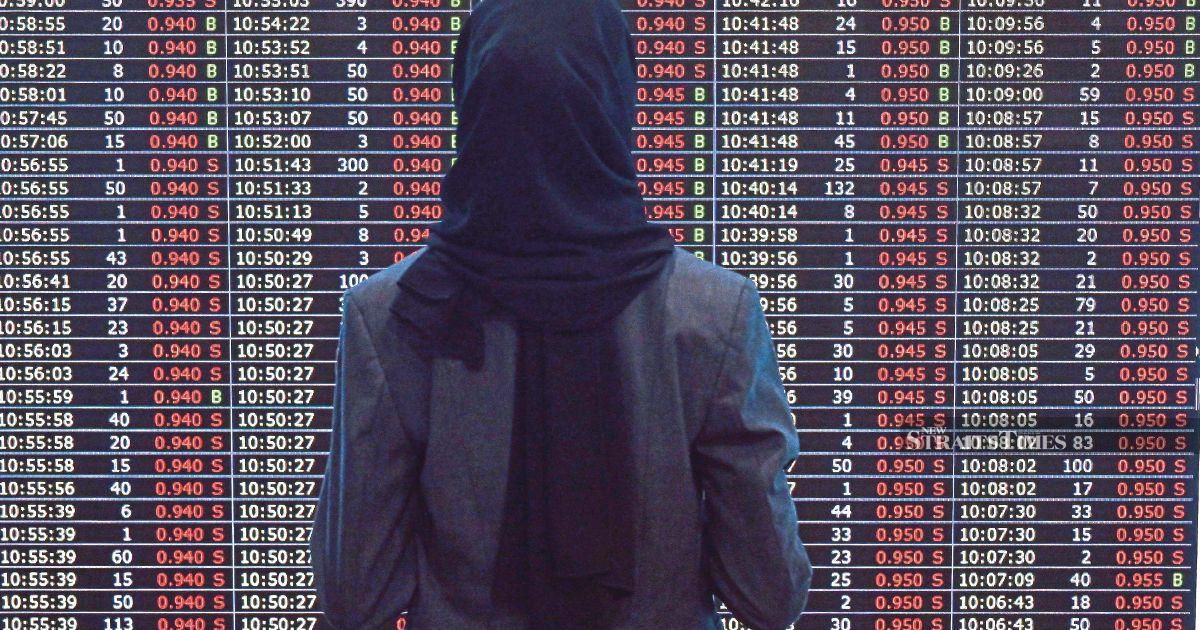

KUALA LUMPUR: Banking and telecommunications stocks could regain investor attention in 2027 as investors look beyond the artificial intelligence (AI)-driven investment boom in search of attractive valuations, sustainable dividends and opportunities for earnings recovery.
Analysts said traditionally overlooked sectors could offer compelling investment opportunities amid growing concerns over technology stocks’ stretched valuations, while improving fundamentals and potential industry consolidation could provide fresh catalysts for banking and telecommunications counters.
The banking sector, in particular, is drawing attention as valuations approach historically low levels, with dividend yields offering investors an alternative to growth-oriented stocks that have benefited from the strong appetite for AI-related investments.
Malacca Securities head of research Loui Low said selective value was emerging in Malaysian banking stocks, supported by attractive dividend yields, stable asset quality and sustained loan growth.
“I believe selective value is emerging in Malaysian banks, with some trading around 0.8 to 0.9 times price-to-book and offering dividend yields of approximately six per cent.
“While margin pressure and modest earnings growth remain concerns, stable asset quality, sustained loan growth and attractive dividends could support a gradual re-rating in 2027,” he told Business Times.
AmInvestment Bank research analyst Paul Yap Ee Xing similarly highlighted the sector’s valuation appeal, noting that banking stocks had increasingly become a source of funding for investors amid tighter cash conditions.
He said concerns over treasury-related earnings, capital positions and near-term dividends had weighed on sentiment, pushing banking price-to-book multiples towards 0.8 times, close to previous trough levels.
However, dividend yields of around six per cent could provide an attractive accumulation opportunity, particularly for investors seeking more consistent income amid market volatility.
He also highlighted the potential for telecommunications stocks to stage a recovery following a significant valuation derating over the past five years.
Cellular operators’ enterprise value-to-earnings before interest, tax, depreciation and amortisation (EV/Ebitda) multiples have compressed from historical levels of around 12 times to between seven and eight times currently.
Potential merger activity could provide a catalyst for a sector re-rating, with consolidation offering opportunities to generate operational synergies, improve economies of scale and create a more rational competitive environment.
Low said further consolidation remained possible, particularly amid discussions involving Maxis Bhd and U Mobile Sdn Bhd, which could potentially reshape the industry’s competitive landscape.
“A merger could improve economies of scale, reduce operating costs and strengthen pricing discipline.
“However, regulatory approvals, integration costs and 5G investment requirements remain key hurdles. Any earnings benefits would likely materialise gradually,” he said.
Beyond sector-specific developments, the potential shift in investor appetite also comes amid changing portfolio allocations, as market participants reassess their exposure to high-growth counters.
Yap said cash holdings increased by 0.8 percentage points month-on-month to 7.2 per cent of assets under management in September 2026, as investors trimmed yield-oriented stocks to raise liquidity.
He said investors had redirected exposure towards technology, industrials, particularly mechanical, electrical and plumbing-related counters, and energy stocks, including solar companies.
However, growing concentration in technology and AI-related investments could leave other sectors overlooked, particularly those offering relatively attractive valuations and dividend income.
Low said stretched AI valuations and increasing scrutiny over investment returns could encourage investors to diversify into more defensive sectors offering consistent earnings and dividend income.
He also pointed to seasonal market trends as a potential supporting factor, noting that the FTSE Bursa Malaysia KLCI (FBM KLCI) had historically recorded positive December returns in more than 85 per cent of the past 26 years.
Nevertheless, changes to the benchmark index composition could introduce some rebalancing pressure on banking heavyweights.
The financial services sector’s weightage is expected to decline from approximately 42.8 per cent to 36.8 per cent following the expansion of the FBM KLCI from 30 to 50 constituents, which is being implemented progressively from December 2026 to June 2027.
“This could create some rebalancing pressure on banking heavyweights.
“Nevertheless, attractive bank dividends, earnings recovery and potential telco consolidation could support renewed investor interest heading into 2027,” he said.
The potential recovery in both sectors comes despite continued institutional selling pressure, particularly in banking stocks.
The continued appeal of AI-related investments suggests that any shift towards banking and telecommunications may not necessarily come at the expense of technology stocks.
This also indicates that investors could continue to participate in AI-related growth while seeking additional opportunities in sectors offering more attractive valuations, dividend income and potential corporate catalysts.
“We recommend accumulating on weakness. Hyperscalers’ strong balance sheets should allow them to sustain elevated AI capex in the near future.
“This underpins consensus 2027 earnings growth expectation of 55 per cent year-on-year, which remains compelling for the year ahead,” said Yap.
Comparing the two sectors, Low favoured banking stocks on a risk-adjusted basis, citing clearer earnings visibility, attractive dividend yields and the potential stabilisation of margins.
He said telecommunications stocks could offer greater upside if consolidation materialised, although regulatory uncertainty, integration costs and capital expenditure requirements remained key risks.
“Overall, banking offers a more predictable recovery, while telecommunications presents a more event-driven re-rating opportunity,” he said.
c3dASl-qjtI