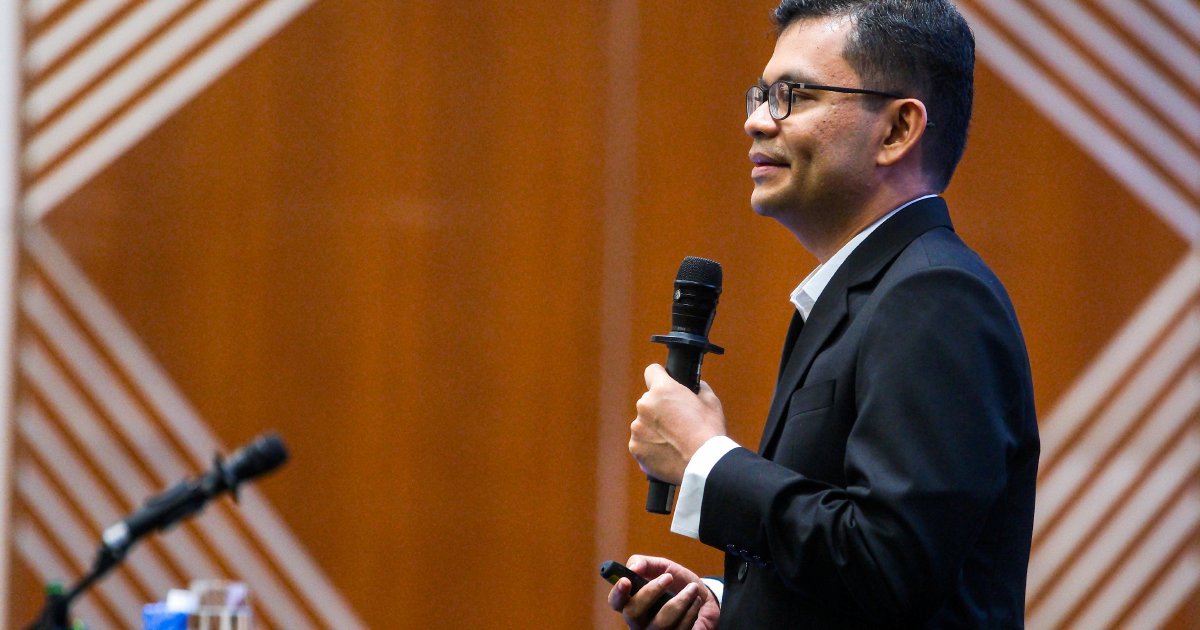

JOHOR BARU: Bumiputera businesses must move beyond domestic markets and secure a bigger share of exports to capitalise on Johor’s investment boom, Economy Minister Akmal Nasrullah Mohd Nasir said.
He said Malaysia’s small and medium enterprises (SMEs) contributed 39.7 per cent to gross domestic product and 48.7 per cent to employment last year, but accounted for only 14.7 per cent of total exports.
The gap highlights a key challenge for the economy: turning the growth of local businesses into larger, more productive companies capable of competing in regional and international markets.
“Four fundamentals that companies need to master are productivity, technology, governance and market access,” he said when opening the Teraju Aspirasi Business Symposium Johor 2026 here today.
Akmal said Johor’s economic expansion and the Johor-Singapore Special Economic Zone (JS-SEZ) presented opportunities for local businesses to enter higher-value supply chains, secure contracts and establish commercial partnerships with regional players.
Johor’s economy grew 8 per cent to RM170.9 billion last year, the fastest among Malaysian states, while approved investments reached RM59.4 billion in the first half of this year.
However, he said the priority was to ensure the investment momentum translated into operating projects, contracts for local suppliers, technology transfer and better-paying jobs.
The JS-SEZ recorded RM88.83 billion in approved investments between January last year and June this year, of which RM40.3 billion had been implemented.
The projects were associated with 12,796 jobs, while the overall pipeline was expected to generate 28,755 potential employment opportunities.
Akmal said the zone’s benefits must extend beyond southern Johor, with better transport and logistics links connecting businesses in districts such as Muar, Segamat and Mersing to wider markets.
He cited a RM477 million road project in Mersing as part of efforts to improve connectivity and link local economic activity to Johor’s wider industrial and logistics network.
For Bumiputera companies, he said, access to financing alone would not guarantee growth. Businesses needed the capacity to meet industrial specifications, deliver on time, maintain quality and manage larger contracts.
Under Budget 2027, the government had outlined up to RM1 billion in financing through the Bumiputera Agenda Steering Unit (Teraju), a RM250 million Ciptawan fund by Khazanah Nasional and Teraju, and RM2 billion in investments by government-linked investment companies to support Bumiputera business expansion.
Teraju had approved about RM2.19 billion in financing through various programmes for 1,369 companies nationwide between Dec 1, 2024, and Oct 16 this year.
In Johor, approvals under the Bumiputera expansion and catalyst fund and Islamic working capital financing programme totalled about RM101.43 million.
Nine strategic financing approvals worth about RM8.56 million under the two programmes were highlighted at the symposium.
Akmal also said 10 companies had completed Teraju’s Xcelerate programme, which prepares high-potential Bumiputera businesses for possible public listings on Bursa Malaysia.
The companies were identified as having the potential to generate annual revenue exceeding RM100 million.
He said the programme would help the companies strengthen management, governance and capital-market readiness as they prepared for their next stage of growth.