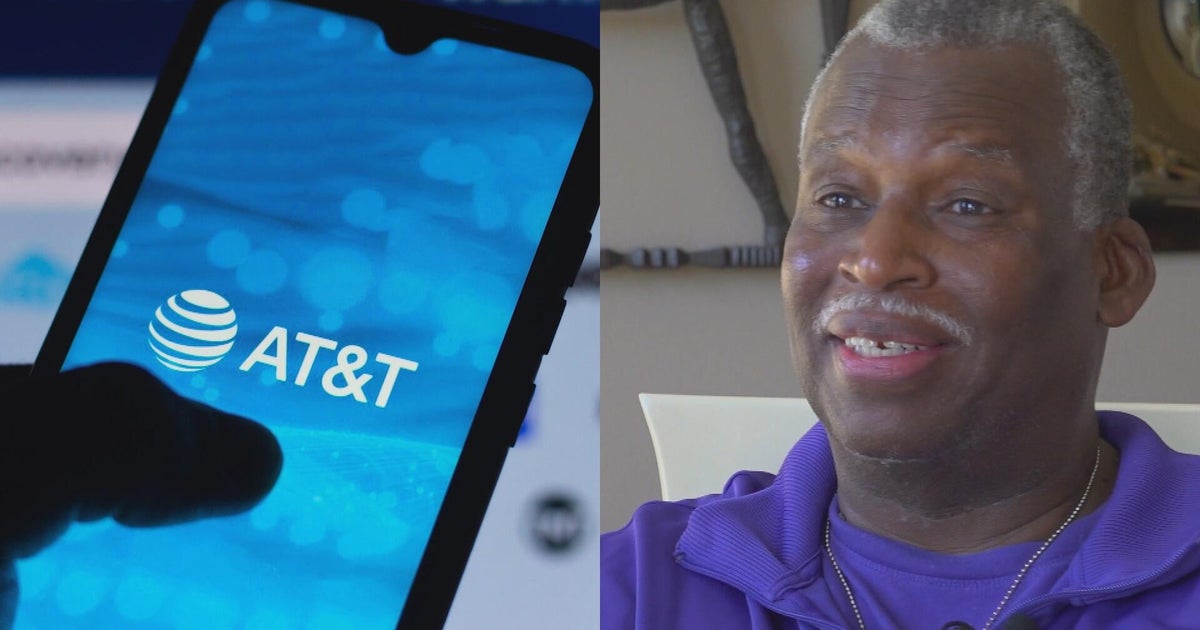

When David Miller received a call that appeared to come from AT&T, he thought he was being rewarded for more than 50 years as a customer. The caller claimed to be from the company’s loyalty department and offered four new iPhones along with a lower monthly bill.
“It sounded pretty good,” Miller said.
The New Castle, Delaware, man followed the caller’s instructions, purchasing four new iPhone Pro Max devices that cost about $1,200 each. He was told to bring the phones home and call back so they could be activated.
That’s when things took a turn.
The red flags
Miller said someone claiming to be from the company’s IT department called him on FaceTime and asked to see the backs of the phone boxes.
“He says, ‘I need to see the back of the phone boxes, so I can activate the phones,’” Miller recalled.
After telling him there was a problem activating the devices, the caller instructed Miller to ship the phones back using a prepaid shipping label. He was promised replacement phones would arrive the next day.
Looking back, Miller said one warning sign stood out.
“When he said [not to] tell the people at the store that the loyalty department was giving me the phones, that’s when it sounded kind of suspicious,” he said.
Still, the caller continued to pressure him. Miller told the person contacted him repeatedly, sometimes several times a day for an entire week.
The moment of realization came when the promised replacement phones never arrived.
“I said to myself, ‘Oh no, I think I’ve been scammed,’” Miller said.
A familiar scam tactic
Miller’s experience mirrors a case previously reported in which a viewer said scammers posing as Comcast and Xfinity convinced him to return a newly delivered phone.
These types of impersonation scams, in which criminals pose as trusted companies, are among the most commonly reported fraud schemes in the United States, according to the Federal Trade Commission, and result in billions of dollars in losses each year.
A key tactic is caller ID spoofing, which allows scammers to make calls appear as though they are coming from legitimate businesses or even people victims know.
Miller said that is exactly what convinced him.
“Every time the phone rang, it said AT&T,” he said. “That is what convinced me.”
A $5,128 problem
After realizing he had likely been scammed, Miller immediately contacted AT&T’s fraud department, filed reports with UPS and police, and reached out to multiple consumer protection agencies.
Despite those efforts, he said he was initially told he was responsible for the charges because he had authorized the phone purchases himself.
The total bill came to $5,128.
“I was devastated,” Miller said.
The first bill alone would have been more than $900 for phones he no longer possessed.
Turning to In Your Corner
Feeling out of options, Miller contacted In Your Corner, and we reviewed his case and contacted AT&T on Miller’s behalf.
Miller said he received a call the very next day from a representative in the Office of the President and Consumer Affairs.
“He says, ‘Mr. Miller, we have been contacted by In Your Corner. We understand you have a problem,’” Miller recalled. “He says, ‘No problem. We’re going to take care of it for you.’”
Miller said AT&T agreed not to hold him responsible for the charges and to refund any fees he had incurred.
The resolution even became a source of humor in his household.
“My wife unpacked her bags,” Miller joked. “The marriage is saved.”
The lessons Miller wants others to hear
Now that the ordeal is behind him, Miller hopes sharing his story will prevent others from falling victim to similar schemes.
“If it sounds too good to be true, it probably is,” he said. “And secondly, if you can’t take time, a day or so to think something over, and somebody’s rushing you, probably not a good idea.”
Consumer advocates recommend hanging up and contacting a company directly using the phone number listed on a bill, account statement or official website any time an unexpected offer or request seems suspicious.
Scammers can spoof virtually any phone number, making it appear that calls are coming from legitimate businesses, even when they are not.
Looking for help with a consumer issue? Click here to submit your complaint to In Your Corner.