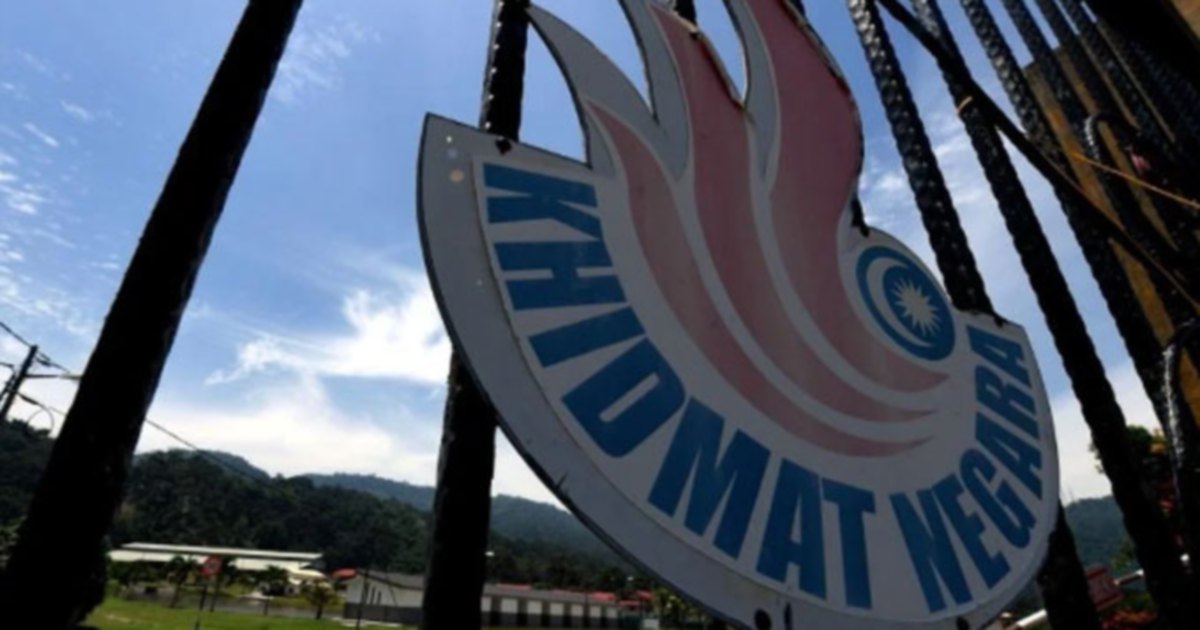

KUALA LUMPUR: The Home Ministry plans to repurpose former National Service Training Programme camps into drug-offender cluster prisons, satellite prisons or reintegration centres to ease prison overcrowding, now 18.54 per cent above capacity.
Leasing or acquiring the former sites would optimise existing infrastructure, expand accommodation capacity and support rehabilitation programmes tailored to different inmate categories, the ministry said.
Malaysian Prison Department statistics as of Sept 23 showed 88,609 inmates were being held nationwide, exceeding the actual capacity of 74,751 by 13,858.
“The government believes that prison overcrowding cannot be resolved solely through the construction of new prisons. Instead, a more comprehensive approach is needed, involving the optimisation of physical capacity while reducing pressure on the prison population through community-based rehabilitation programmes,” it said in a written reply posted on Parliament’s official website.
The ministry was responding to Datuk Khlir Mohd Nor (PN-Ketereh) on plans to improve prison capacity, infrastructure and the staff-to-inmate ratio.
It also identified five of 12 dilapidated prison facilities as priorities for urgent replacement: Penang Prison, Taiping Prison, Alor Star Prison, Seremban Prison and Batu Gajah Correctional Centre.
To improve the staff-to-inmate ratio, the Prison Department is expected to recruit 516 uniformed officers next year to fill part of the 1,224 vacancies recorded as of last August.
In a separate written reply to Ramkarpal Singh (PH-Bukit Gelugor), the ministry said amendments to the Security Offences (Special Measures) Act 2012 (Sosma) would only be tabled in the Dewan Rakyat after further stakeholder engagement sessions were completed.
The sessions follow a Feb 6 Cabinet directive to refine the proposed amendments, particularly through a detailed review of detention powers during investigations and Sosma’s applicability to transnational organised economic crimes, it said.
The proposed amendments include realigning offences under the First Schedule of Sosma to give courts discretion to grant conditional bail for certain categories deemed not to pose an extreme security threat.
Meanwhile, the ministry said random drug screening for pilots and flight crew had begun under the immediate rollout of 17 recommendations to tighten security at Kuala Lumpur International Airport (KLIA).
Replying to Onn Abu Bakar (PH-Batu Pahat), it said Phase One, covering zero to six months, was approved by the Cabinet on Aug 19.
The first phase also includes tighter vetting through the e-Vetting system and stricter management of access passes to restricted areas, overseen by the Office of the Chief Government Security Officer (CGSO) and Aviation Security (Avsec).
Phase Two, spanning six to 24 months, will focus on procuring high-tech strategic equipment, including body scanners and high-capacity baggage scanners, the ministry said.
It will also involve installing closed-circuit television (CCTV) systems with artificial intelligence (AI) analytics and strengthening the police’s K9 unit.