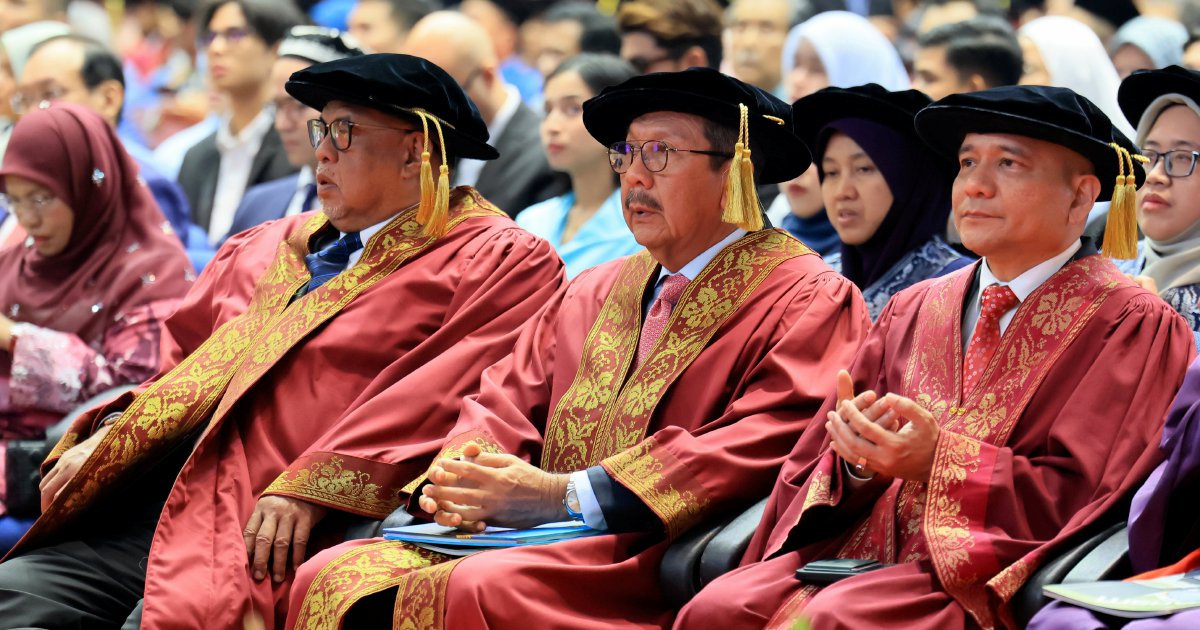

BANGI: Former Public Service Department (PSD) director-general Tan Sri Dr Wan Ahmad Dahlan Abdul Aziz hopes to contribute further to the nation through academic research highlighting values as the cornerstone of public service reform.
Wan Ahmad Dahlan, who retired two days ago after more than 31 years in the public sector, said his Doctor of Philosophy (PhD) research aimed to strengthen the work culture among civil servants so government service delivery truly benefits the people.
He said that throughout his more than three decades in public service, various policies and administrative structures had been developed, but their effectiveness ultimately depended on the values upheld by every civil servant.
“Even when we have good instruments or structures in place, without values within civil servants to drive the delivery of every service, we will not be able to achieve the highest standards in the public service.
“This is what I hope to leave behind for civil servants after completing my tenure as the PSD director-general,” he said after the Universiti Kebangsaan Malaysia (UKM) Convocation Ceremony here today.
Wan Ahmad Dahlan, who received his PhD from UKM, said his research on public service reform also highlighted the H.E.M.A.T framework, which he introduced to strengthen the practice of values among civil servants.
The framework comprises ‘hijrah tatakelola’ (governance transformation), ’empati rakyat’ (public empathy), ‘minda pekin’ (an agile mindset), ‘apresiasi inovasi’ (appreciation of innovation) and ‘telus tadbiran’ (transparent administration).
He said these elements were important as excellence in the public service depended not only on sound policies and systems, but also on the attitudes and values of individuals entrusted with serving the people.
Meanwhile, Melaka Chief Minister Datuk Seri Dr Ab Rauf Yusoh, who received a Doctor of Business Administration (DBA) at the same ceremony, hopes his research on the ‘Kampung Digital’ (Digital Village) initiative will serve as a reference for government administrations nationwide.
He said the study, which took more than two-and-a-half years to complete, was undertaken to address problems with conventional addressing systems in traditional villages, where up to 1,000 residents could share a single address, affecting the efficiency of information delivery and official government dealings.
The research, conducted in collaboration with UKM, has been translated into the implementation of the initiative in Melaka, enabling traditional village houses to be assigned digital numbers and addresses complete with Quick Response (QR) codes, he said.
“Melaka is the pilot project for the Kampung Digital initiative, which I researched. Alhamdulillah, we have achieved what we set out to do, with all traditional village houses now assigned digital numbers and addresses complete with QR codes,” he said.
Rauf said he hoped the initiative would not only benefit Melaka residents, but also serve as a more organised community management model that could be adopted nationwide.