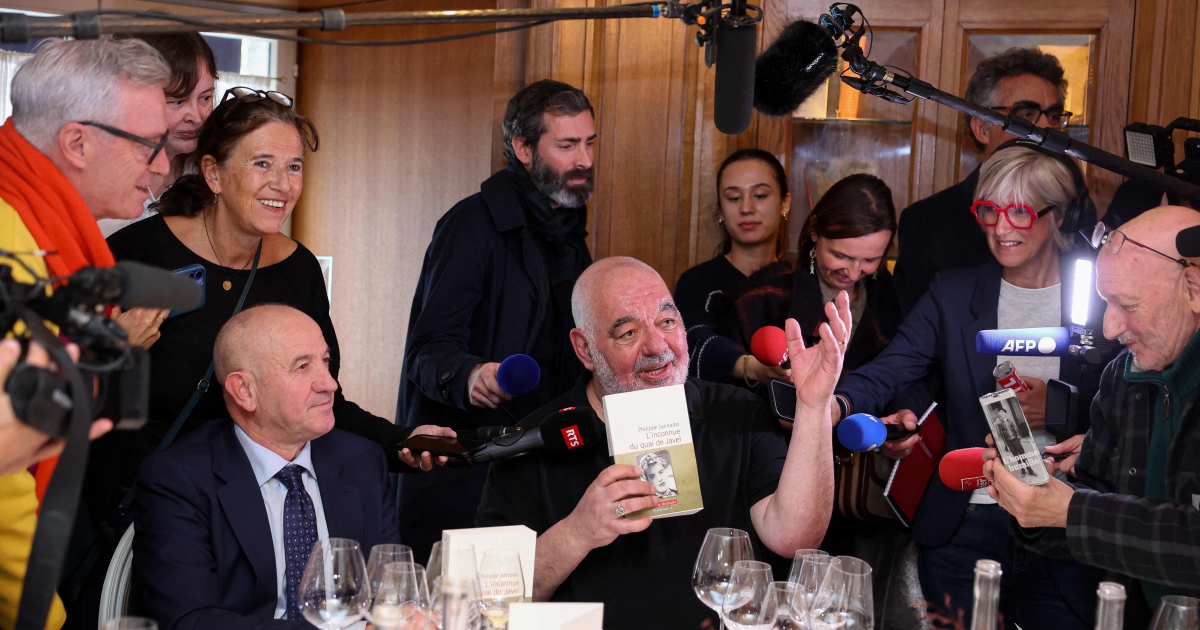

PARIS: The winner of France’s top literary award, the Prix Goncourt, defended on Friday his “playful”, “ironic” and very limited use of AI in his acclaimed book.
“It is ridiculously absurd to think for half a second that I used generative AI to write anything at all in this book,” Philippe Jaenada said in a statement sent to AFP by his publisher, Flammarion, in which the author detailed how he used the technology.
“The playful or ironic use of AI — above all fully acknowledged — was actually part of my plan even before I started writing,” he said.
Jaenada, who was announced on Tuesday as the winner of the 2026 prize for his novel “L’Inconnue du quai de Javel” (The Unknown Woman of the Quai de Javel), had admitted to using AI three times during the writing process.
His comments came amid a worldwide backlash against academics and authors, including their exclusion from literary competitions, over allegations of using the technology in their writing.
On Friday, Jaenada reiterated that he had used AI only three times for his sprawling novel about the unsolved murder of a young Breton woman in the late 1940s.
First, the author asked a question to AI chatbots and said he received “comically precise, and therefore stupid, and contradictory answers”.
He then used AI in a more conventional way, to conduct research.
Finally, he said he amused himself by “hiding in the text a sentence generated by AI”.
It amounted to just 10 words, and since the book’s publication, he had received dozens of guesses from readers.
The writer said he had decided to reveal the sentence in response to “stupidity, treachery, and bad faith”.
Once considered a frontrunner for the Prix Goncourt, Haitian-Canadian author Thelyson Orelien had his novel withdrawn from the shortlist amid speculation that he had used AI to write it.
Orelien’s Canadian publisher last month confirmed that he had used AI to help write the book and was severing professional ties with the author.