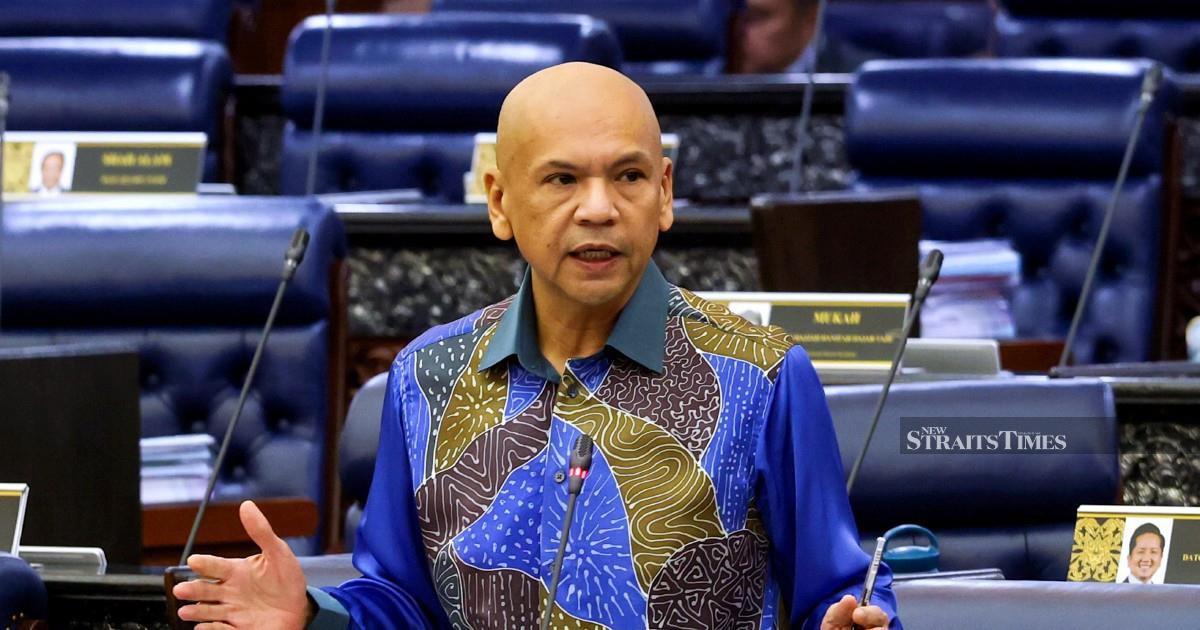

KUALA LUMPUR: The government is implementing measures to cushion the economic impact of the prolonged Middle East conflict, focusing on living costs, supply chains and local businesses.
Domestic Trade and Cost of Living Minister Datuk Armizan Mohd Ali said the measures focused on four areas: fiscal rationalisation, supply chain security, sustainability of local industries and businesses, and cost-of-living management.
“Fiscal rationalisation includes expenditure control measures, strengthening economic resilience and maintaining economic growth momentum.
“Ensuring the security of strategic supply chains and domestic consumer essentials includes efforts to secure alternative sources of supply,” he told the Dewan Rakyat.
He was responding to Dr Abd Ghani Ahmad (PN-Jerlun), who asked about the anticipated impact of the United States-Iran conflict and disruptions to trade routes in the Strait of Hormuz on the cost of living.
Armizan said support for local industries and businesses, particularly micro, small and medium enterprises, included financing to help them manage cost pressures.
The government would also manage living costs by stabilising prices of goods and services and supporting household incomes through subsidies and additional assistance.
He said Malaysia was exposed to the conflict because domestic oil refineries relied on both locally produced and imported crude oil, with nearly 40 per cent of the country’s crude oil supply coming through the Strait of Hormuz.
The National Economic Action Council met weekly to assess the conflict’s economic implications and identify strategies, intervention measures and mitigation efforts, he said.
The International Monetary Fund projected global inflation to rise from three per cent in 2025 to 4.7 per cent this year.
“Malaysia’s inflation remained stable at 1.9 per cent in October 2026, compared with the Philippines (7.8 per cent), Vietnam (5.1 per cent), Thailand (3.9 per cent) and Indonesia (3.2 per cent),” he said.
Armizan also said the government would continue monitoring the conflict’s impact and coordinating mitigation strategies across ministries.
He said the effectiveness of the government’s immediate measures was reflected in uninterrupted supplies of fuel, consumer essentials and industrial goods, the absence of any need for rationing and low, stable inflation.
The government would continue addressing cost-of-living concerns through measures under Budget 2027 and the National Cost of Living Action Plan 2030, he said.