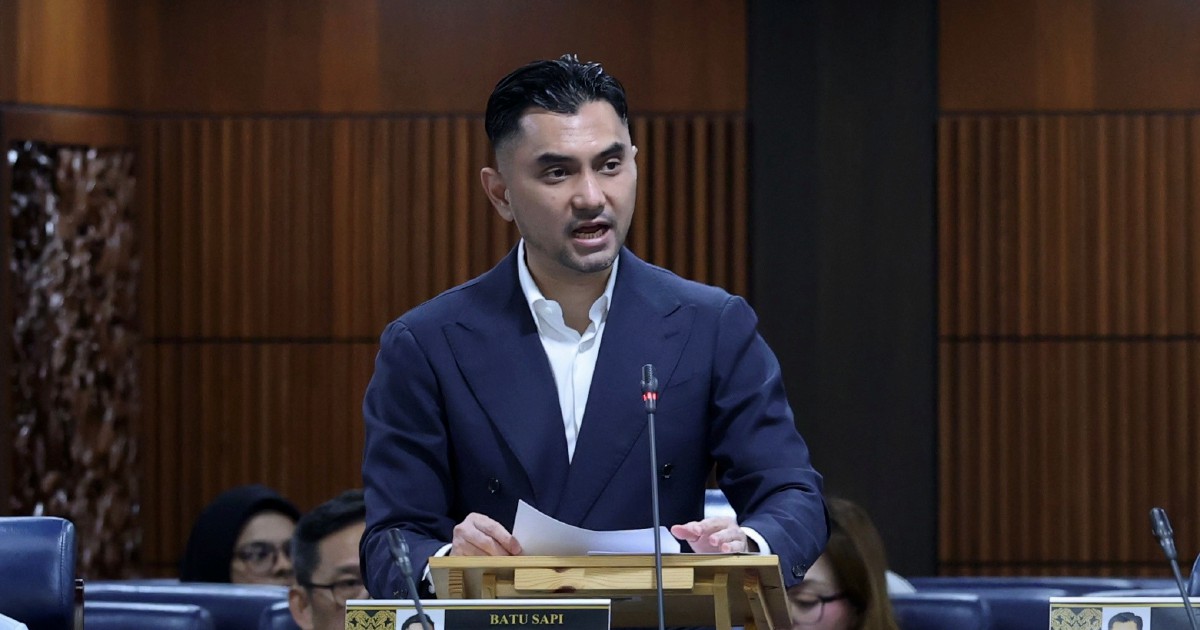

KUALA LUMPUR: The government is still reviewing the proposed Universal Recruitment Advanced Platform (Turap), aimed at reducing foreign worker recruitment costs, curbing the involvement of illegal agents and eliminating debt bondage.
Deputy Human Resources Minister Datuk Khairul Firdaus Akbar Khan said discussions with relevant government agencies were ongoing to finalise the platform’s specifications, scope and technical requirements before its implementation.
He said the review process had taken longer than expected but added that the government wanted to ensure the system would operate effectively once introduced.
“The decision-making process has been rather lengthy because we want to ensure that the decisions made will not continue to raise questions.
“This is one approach that could benefit the public by making recruitment easier and, most importantly, drastically reducing recruitment costs,” he said.
Khairul Firdaus was responding to issues raised by Datuk Mohd Isam Mohd Isa (BN-Tampin) during the committee-stage debate on the 2027 Budget for the Human Resources Ministry in the Dewan Rakyat today.
He said the proposed platform had the potential to address several longstanding issues in foreign worker recruitment, particularly excessive recruitment costs, illegal agents and debt bondage.
However, he stressed that the government needed to carefully examine the operational framework before proceeding.
“Turap is still being studied with the relevant government agencies to ensure that its specifications, scope and technical aspects are properly detailed before implementation,” he said.
Khairul Firdaus said engagement sessions were also being conducted to ensure stakeholders understood how the proposed platform would operate.
He said the system was intended to function in cooperation with countries supplying foreign workers to Malaysia.
However, its implementation would not disrupt existing pre- and post-recruitment arrangements, policies, procedures or laws in Malaysia and the source countries.
He also assured private employment agencies that the platform was not intended to take over their existing roles in recruitment activities.
“The system will operate in cooperation with source countries without disrupting the existing recruitment ecosystem, policies, processes and legislation.
“It will also not take over the roles of stakeholders involved in recruitment activities, particularly private employment agencies in Malaysia,” he said.
Previously, seven members of parliament had urged the government to halt the implementation of the proposed Turap platform, warning that it could create another private monopoly in Malaysia’s foreign worker recruitment system if transparency concerns are not addressed.
They had questioned whether the cabinet had approved Turap and why Bestinet Sdn Bhd, the company behind the existing Foreign Workers Centralised Management System (FWCMS), appeared poised to play another central role in the country’s foreign worker recruitment ecosystem.
The MPs questioned why the government was considering another major platform involving the same company after subsequently formalising an agreement with Bestinet from June 2024 until January 2031 at RM215 per worker, compared with the previous RM100 rate.