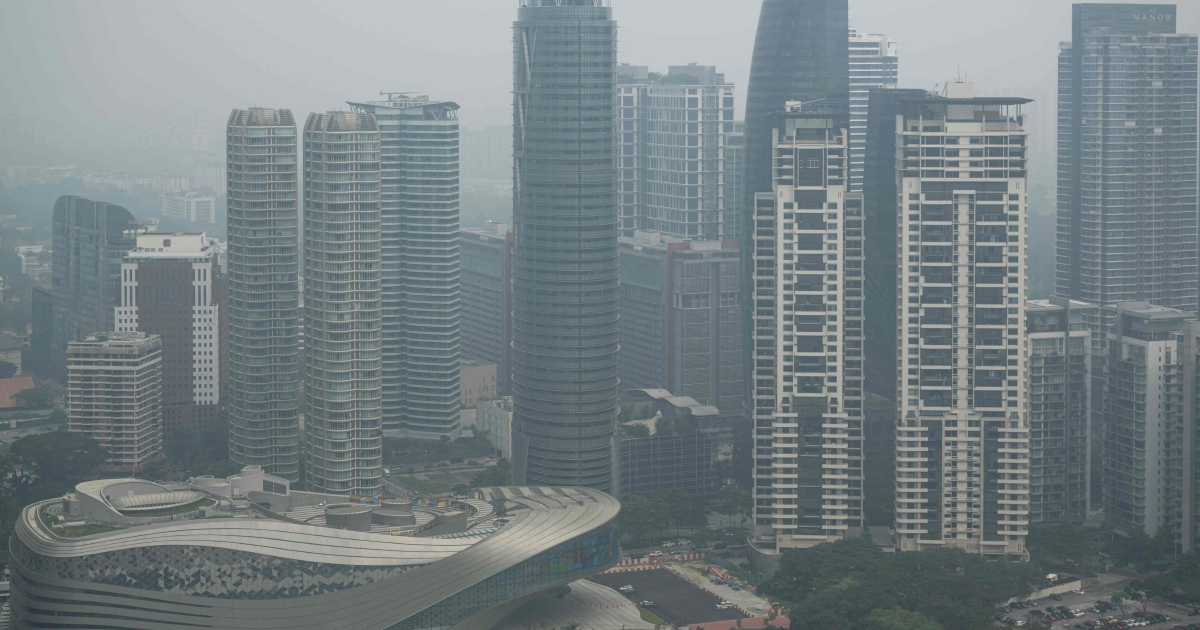

KUALA LUMPUR: Malaysia could incur economic losses of up to RM1.5 billion monthly from haze, while severe El Niño-induced dry spells could slash paddy and smallholder crop yields by more than 50 per cent, particularly in Kedah and Perlis.
The Institute for Democracy and Economic Affairs (Ideas) said worsening climate conditions could threaten food production, rural livelihoods and energy security, particularly as depleted irrigation dams risk disrupting planting seasons in the country’s northern rice-producing region.
Ideas climate and sustainability research assistant manager Jazreen Harith Jefri said Malaysia must strengthen its climate resilience by protecting vulnerable households, improving rural resilience and reducing dependencies across energy and supply chains.
“Malaysia must build clean energy resilience now, and this requires protecting vulnerable households, strengthening rural resilience, and also reducing grid and supply chain dependencies before the next climate shock hits.”
Jazreen spoke at a webinar on “Super El Niño 2026-2027: People, Preparedness and Resilience in a Warming Climate’ today.
He said Malaysia was already experiencing the effects of worsening haze, with 2026 marking its worst haze season in more than a decade.
Kuala Lumpur recorded 20 unhealthy air quality days and 36 days of poor air quality this year, compared with no unhealthy days and only one poor air quality day in the preceding four years combined.
Kuching recorded eight severe, 30 unhealthy and 38 poor air quality days this year, reflecting a sharp deterioration in air quality since August.
Jazreen said much of the haze originated from across the border, particularly Indonesia, making it a regional issue requiring cross-border cooperation.
“The economic cost is significant, estimated up to RM1.5 billion per month, and this covers productivity, healthcare costs, school disruptions and also knock-on effects on trade and tourism.”
He warned that drought could inflict more lasting damage on rural communities, particularly smallholders and paddy farmers in Kedah and Perlis, Malaysia’s northern rice-producing region.
Past severe El Niño dry spells had caused paddy and smallholder crop losses of more than 50 per cent, while depleted irrigation dams could disrupt planting seasons.
“For a paddy farmer, a lost season means lost income for the whole year,” he said.
Jazreen said the impact would be uneven, with B40 households and Orang Asli communities bearing greater losses due to limited or no savings to absorb the shocks.
Climate-related disruptions could push vulnerable households into debt or force children to leave school, further aggravating socioeconomic inequalities.
The energy sector would also face mounting pressure as heatwaves increased electricity demand from households and businesses seeking cooling, while drought reduced hydropower generation.
He said rising demand alongside tightening supply could expose weaknesses in the electricity grid, particularly during prolonged heatwaves.
Jazreen called for faster reductions in fossil fuel use, grid upgrades and greater investment in utility-scale battery storage to help the system manage surges in cooling-related electricity demand.
He also urged policymakers to incorporate equity considerations into energy transition measures, including tariff and subsidy changes, to ensure B40 households were not disproportionately affected.
Decentralised energy solutions such as rooftop solar, community solar and off-grid microgrids could also help sustain rural water pumps and other critical infrastructure when the main grid came under strain.
“But none of this can rest on the government alone. It will take community-based solutions, stronger links between mitigation and also adaptation, public-private partnerships that bring in private capital and also local knowledge,” Jazreen said.
On the potential impact of water stress on data centre investments, he said Malaysia should carefully assess new projects and their energy requirements to ensure they did not place additional pressure on households.
Data centres could bring investments and employment opportunities, but their electricity demand needed to be properly planned, particularly if large users could provide their own clean energy generation and storage.
He said such investments should strengthen the grid rather than strain it, while ensuring households did not end up subsidising the growth through electricity costs.
“The question is how that demand is planned for if new large users bring or fund their own clean generation and storage. They can strengthen the grid rather than strain it.
“We should also focus on household tariffs that we shouldn’t end up subsidising that growth. The government needs to be looking at it seriously before they’re planning to accept more data-centred investments,” Jazreen added.