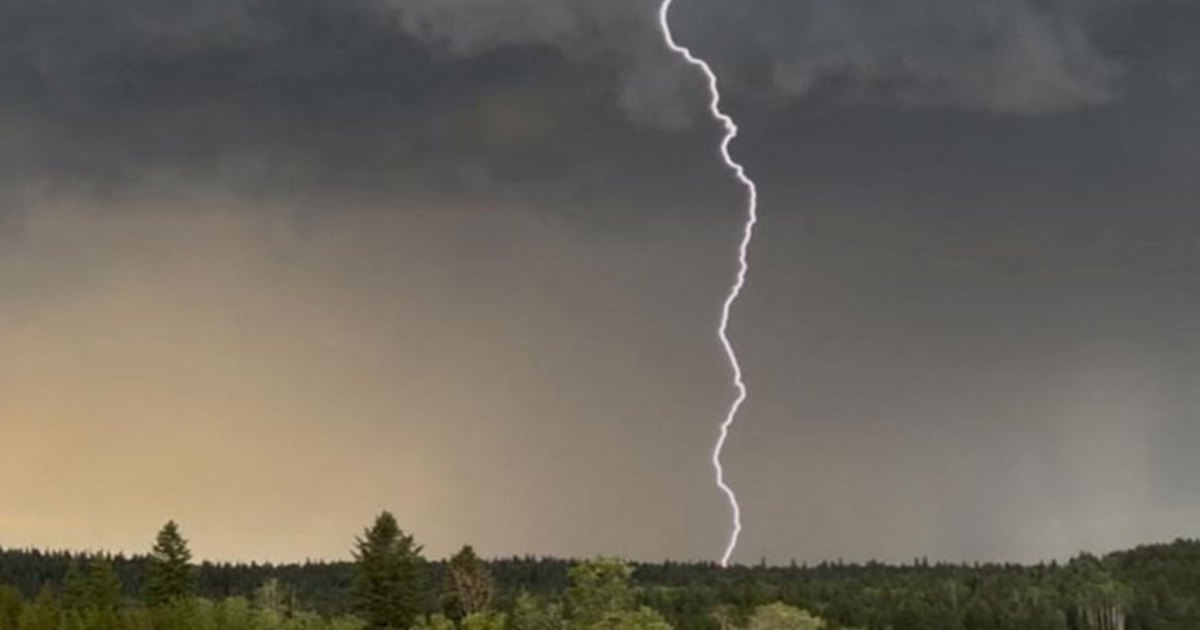

KUALA LUMPUR: Sheltering under a tree during bad weather has been identified as a key factor in the deaths of three relatives struck by lightning in Bandar Salak Tinggi, Sepang, yesterday afternoon.
Universiti Putra Malaysia (UPM) Faculty of Engineering dean and lightning expert Professor Dr Mohd Zainal Abidin Ab. Kadir said the common perception that lightning is only dangerous through direct strikes is inaccurate.
He said international data shows direct strikes account for only three to five per cent of lightning injuries, with the majority occurring through other electrical discharge pathways.
Commenting on the incident, Zainal said ground currents and side flashes were believed to be the primary causes behind all three victims being killed simultaneously.
“Ground current accounts for 40 to 50 per cent of injuries. When lightning strikes a tree, high-voltage current spreads across the ground surface like ripples in water.
“The voltage difference between a victim’s left and right foot allows electrical current to pass through the body, posing a risk of injury or death to individuals within 15 to 30 metres of the strike point.
“Side flashes, which account for 20 to 30 per cent of cases, occur when current jumps from the tree trunk to a person nearby because the human body conducts electricity better than wet wood,” he said when contacted today.
He added that the victims sheltering closely under the same tree in an open area placed them directly in the risk zone for both side flashes and ground currents.
“A single lightning flash usually contains multiple return strokes within less than a second, causing repeated electrical shocks,” he said.
He emphasised that his assessment was based on media reports, noting that the actual cause of death remains subject to post-mortem examinations and forensic investigations.
On lightning distribution in Malaysia, Zainal said the country records an average of 180 to 260 thunderstorm days annually, with the Klang Valley identified as one of the most active areas in the world.
He said the ground flash density in the Klang Valley reaches 25 to 40 flashes per square kilometre each year, compared with fewer than five flashes in most temperate European countries.
“Subang, for example, records at least 240 thunderstorm days a year, meaning lightning occurs nearly two out of every three days.
“Factors such as the convergence of Malacca Straits sea breezes with warm land air, high humidity, and the urban heat island effect make the formation of cumulonimbus storm clouds very frequent in the afternoon, especially during monsoon transition periods from April to May and October to November,” he said.
He advised the public to remain vigilant about personal safety during bad weather.
Local authorities and employers in outdoor sectors such as construction and agriculture were also urged to install early warning systems and comply with lightning protection standards (MS IEC 62305) to prevent similar tragedies.
Safety guidelines during bad weather:
– Seek shelter immediately: Enter a building or a metal-roofed vehicle upon hearing the first rumble of thunder, without waiting for heavy rain.
– Avoid high-risk spots: Do not take shelter under trees, gazebos, rest huts, bus stops, or open tents, as these structures are not equipped with a lightning protection system.
– Practise the 30-minute rule: Wait at least 30 minutes after the last thunderclap before returning to an open area.