
KUALA LUMPUR: Has Malaysian football placed its continental seeding at risk while balancing the demands of domestic clubs and the national team?
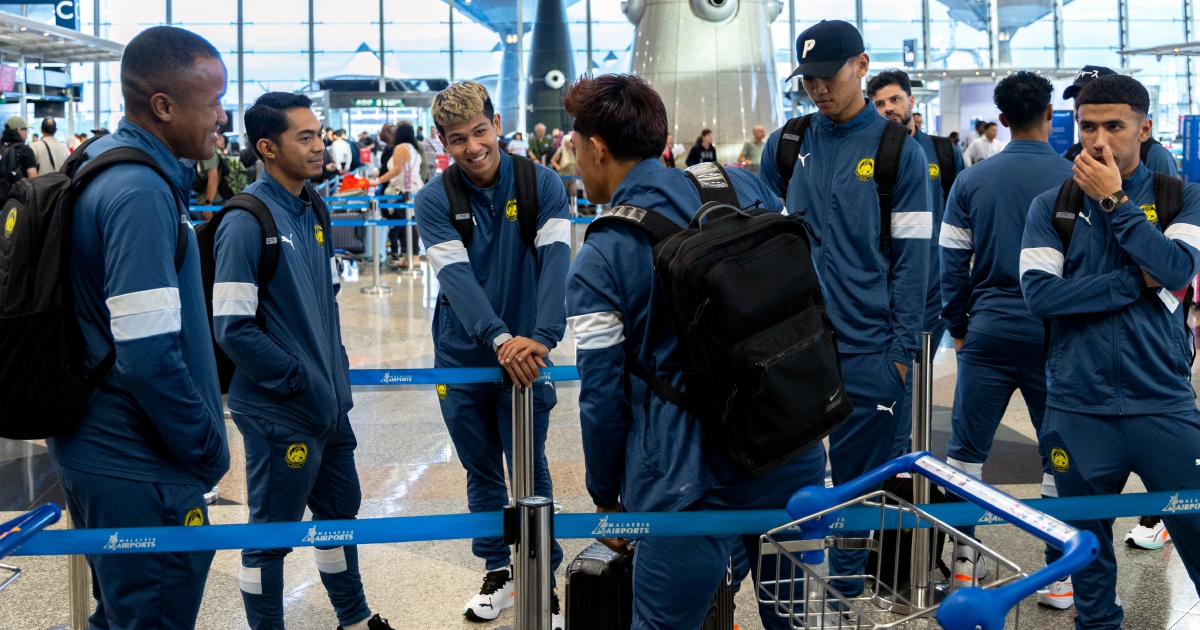
This question has come to mind as Harimau Malaya prepare to face China and Yemen in Zhaoqing.
The FA of Malaysia’s (FAM) decision to excuse Johor Darul Ta’zim (JDT) players from the November FIFA window was linked to managing player workloads and protecting Malaysia’s AFC Member Association (MA) ranking.
That ranking determines the country’s continental club allocations, including its sole direct group-stage slot in the Asian Champions League Elite (ACLE).
Reaching the league stage carries a US$800,000 (RM3.55 million) participation fee from the Asian Football Confederation (AFC), making the allocation an important prize for Malaysia’s domestic champion.
However, the national team’s FIFA ranking also has significant implications, particularly with the preliminary joint 2030 World Cup and 2031 Asian Cup qualifiers draw approaching.
Under FIFA’s SUM ranking formula, official friendlies played during designated international windows carry an importance weighting of 10.
For 133rd-ranked Malaysia, a win over 96th-ranked China is worth a projected 6.31 points, while beating 144th-ranked Yemen could add another 4.67 points.
A clean sweep would bring nearly 11 points and potentially lift Malaysia towards 128th in the world.
Meanwhile, two defeats could cost the national team around nine points. The difference between those outcomes represents an estimated 20-point swing, potentially bringing Malaysia down to 139th.
The draw for the World Cup qualifiers will use the November FIFA rankings, with top 26 teams going directly to the second round.
Malaysia, ranked 23rd in Asia, are close to the Pot 1 cut-off, making the China and Yemen results particularly important.
Dropping into Pot 2 could leave Malaysia facing a two-legged knockout tie in the first round.
On paper, Malaysia have not beaten China in 44 years. Their 1-1 draw in Chengdu in Sept 2023 was a creditable result, while their last victories over Yemen were narrow 2-1 wins during the 2015 Asian Cup qualifying campaign.
Interim head coach Tan Cheng Hoe acknowledged the competing considerations between club commitments and national team ambitions.
“Of course, as a coach we have mixed feelings,” Cheng Hoe said.
“We need to look after what will be a win-win situation. Definitely, as a coach, we want the best. But at the same time, we need the MA ranking points for JDT. As a coach, I am still doing my job as a national coach. Until now, I leave everything to FAM (FA of Malaysia).”
Cheng Hoe admitted that having the country’s best players available would make a difference, particularly with six Selangor players (Harith Haiqal Adam Afkar, Nooa Laine, Ahmad Zikri Khalili, Syahir Bashah and A. Selvan) also withdrawing from the squad due to injuries.
“Definitely, as a coach you want the best players around you because they bring a different quality and a different impact to the team,” he said.
“At the same time, we have to give chances to the upcoming young players. We need a bigger pool of players for the national team in the future.”