
KUALA LUMPUR: A proposed Human Rights Tribunal to strengthen the enforcement of recommendations by the Human Rights Commission of Malaysia (Suhakam) is in its final stages, with the enabling legislation expected to be tabled in Parliament soon.
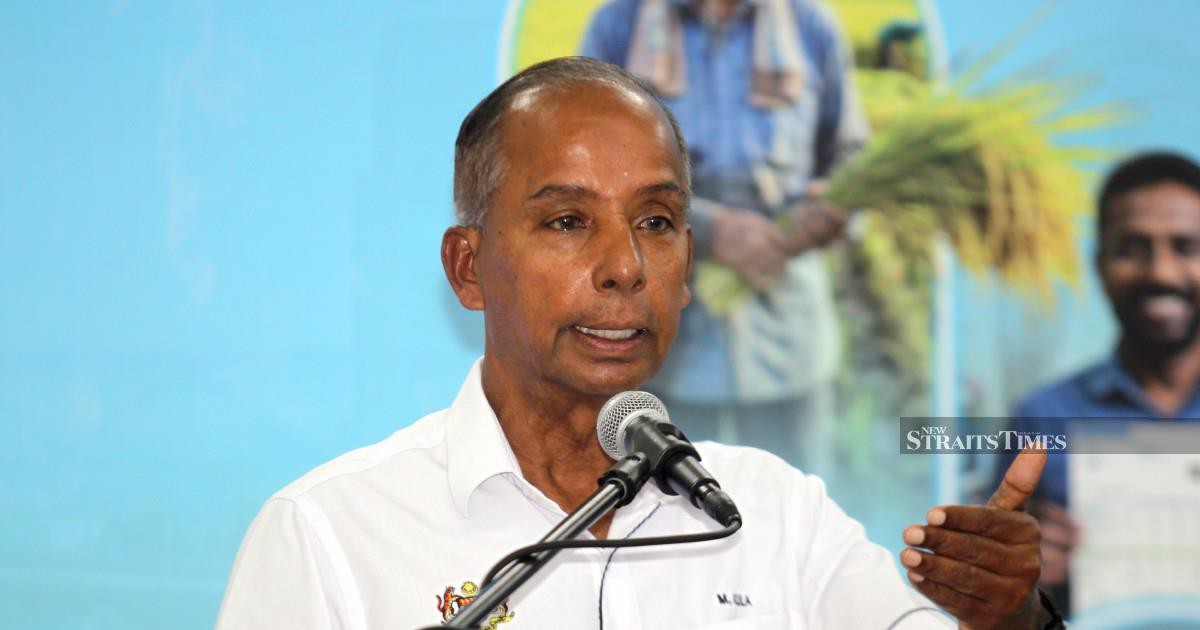
Deputy Minister in the Prime Minister’s Department (Law and Institutional Reform) M. Kulasegaran said the tribunal would ensure that Suhakam’s findings and recommendations were acted upon without imposing hefty legal costs on the public.
“Other countries have a Human Rights Tribunal, and we are also at the final stage on this matter.
“We hope we have enough time, unless Parliament is dissolved earlier, to see it through and introduce the necessary legislation so that people can benefit from it.
“It is inexpensive and reasonable to maintain. If other countries can do it, why can’t we?” he said in his keynote address at the Malaysia Legal Forum 2026 at the Asian International Arbitration Centre here today.
Kulasegaran said Suhakam had produced numerous reports over the years, but many had not received sufficient attention, including in Parliament.
“Over the years, I have noticed that they have submitted countless Human Rights Commission reports. Many of us do not even have time to look at them. We tell the office boy to put them in the car and take them to the office. We do not have time to read them.
“But many people are affected by these issues and want change. These reports are very important,” he said.
He said discussions on Suhakam’s reports had received greater attention under the current Madani government, which had allocated dedicated time in Parliament for their deliberation.
However, the absence of an enforcement mechanism remained a major obstacle, he said, adding that pursuing human rights cases through the conventional court system, from the High Court to the Federal Court, was costly and time-consuming for ordinary citizens.
On other legal reforms, Kulasegaran said proposals to separate the roles of the Attorney-General and Public Prosecutor, and to limit the Prime Minister’s tenure to 10 years, were also at their final stages and expected to advance during the next parliamentary sitting.
“From what I know and from what I have gathered through internal discussions, I believe it will go through in the coming parliamentary session. That will be a great exercise.
“The other proposal is to limit the Prime Minister’s term to 10 years. That, too, is at the final stage,” he said.
Kulasegaran said the government was also considering a Mental Capacity Act to regulate the management and distribution of funds belonging to individuals who lacked the mental capacity to manage their own affairs.
He said the proposed law would establish a clearer legal framework and safeguards, including for compensation received by individuals or their families, drawing on Singapore’s model.
“Like in Singapore, we understand that they have certain governance measures in place. We have had substantive discussions on this. The government is fully agreeable, and this is also in the pipeline and should be coming soon,” he said.
He added that discussions on a proposed Charities Act were also at an advanced stage after three years of work.
Although Malaysia already had the Trustee Act, he said a dedicated law to regulate and govern charitable organisations was equally important.