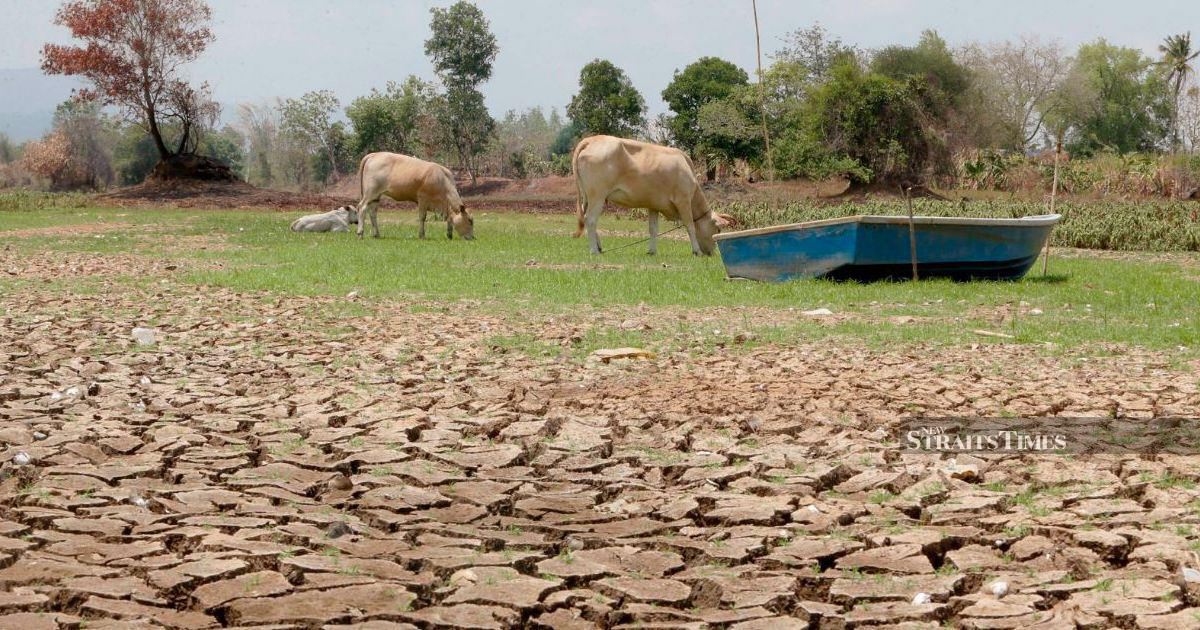

KOTA BARU: Water shortages triggered by the Super El Niño phenomenon could disrupt firefighting operations in Kelantan, especially if a dry spell hits after the northeast monsoon.
Kelantan Fire and Rescue Department director Farhan Sufyan Borhan said arid conditions and low rainfall could increase open burning risks while depleting water reserves needed for fire operations.
He said the department was concerned the phenomenon might persist until March next year, jeopardising supplies from hydrants, domestic networks and open water sources.
“If Super El Niño continues until March next year, the likelihood of open burning incidents will be high, and at the same time, we are concerned that water supplies may become scarce.
“This is because firefighting operations still rely on water from fire hydrants, domestic supplies and open water sources,” he said.
Farhan Sufyan said that based on Malaysian Meteorological Department (MetMalaysia) forecasts, the phenomenon was expected to last until early next year, although its conclusion remained uncertain.
The concern was heightened by Kelantan’s typical weather cycle, as the state usually endures a dry spell from late February to April after the monsoon ends.
Kelantan recorded 1,920 open burning calls in March and April this year, compared with more than 300 calls during the corresponding period in 2023.
Calls had since fallen to once or twice weekly as the state was currently in the wet season, he said.
On operational challenges, Farhan Sufyan said districts such as Tumpat and Bachok often faced supply constraints when hydrant pressure dropped, or equipment was faulty.
Pressure also fluctuated during peak hours, notably in industrial zones during daylight hours and residential neighbourhoods at night.
“In some areas, certain fire hydrants are not functioning, while others are operational but not fully functional. Water pressure also depends on the conditions and usage in the respective areas.
“Therefore, we cannot rely entirely on fire hydrants because some areas face water supply problems, and we have to obtain water from open sources,” he said.
Farhan Sufyan said the department had 10 water tanker trucks ready to be dispatched alongside fire engines, particularly for structural fires, to offset shortages.
He cited a firefighting operation in Rantau Panjang, Pasir Mas, in July, where personnel had to pump water from the Golok River 300 metres away despite its proximity because fencing blocked direct access, while the closest working hydrant was far off.
Water tankers also had operational constraints because repeated trips were needed to refill empty tanks, requiring strict coordination on the ground.
“Firefighters will regulate water pressure during firefighting operations according to the conditions and extent of the affected area to ensure water is used prudently, with priority given to preventing the fire from spreading to other areas,” he said.