
DOHA: Malaysia has called for a broader approach to global digital connectivity that goes beyond populated areas to include key economic locations as reliable internet access becomes increasingly vital to economic growth and resilience.
This includes as ports, railway networks and highways.
Communications Minister Datuk Seri Fahmi Fadzil said Malaysia was exploring the Coverage of Economic Areas (CoEA) concept to complement the existing Coverage of Populated Areas (CoPA) approach, reflecting the need to ensure digital infrastructure supports economic activities and national development.
He said Malaysia hoped the International Telecommunication Union (ITU) would explore the concept with member states as an additional approach to assessing connectivity and advancing inclusive and sustainable digital development.
“Building on this progress, we are now looking at how we can go beyond CoPA and also cover key economic areas (CoEA).
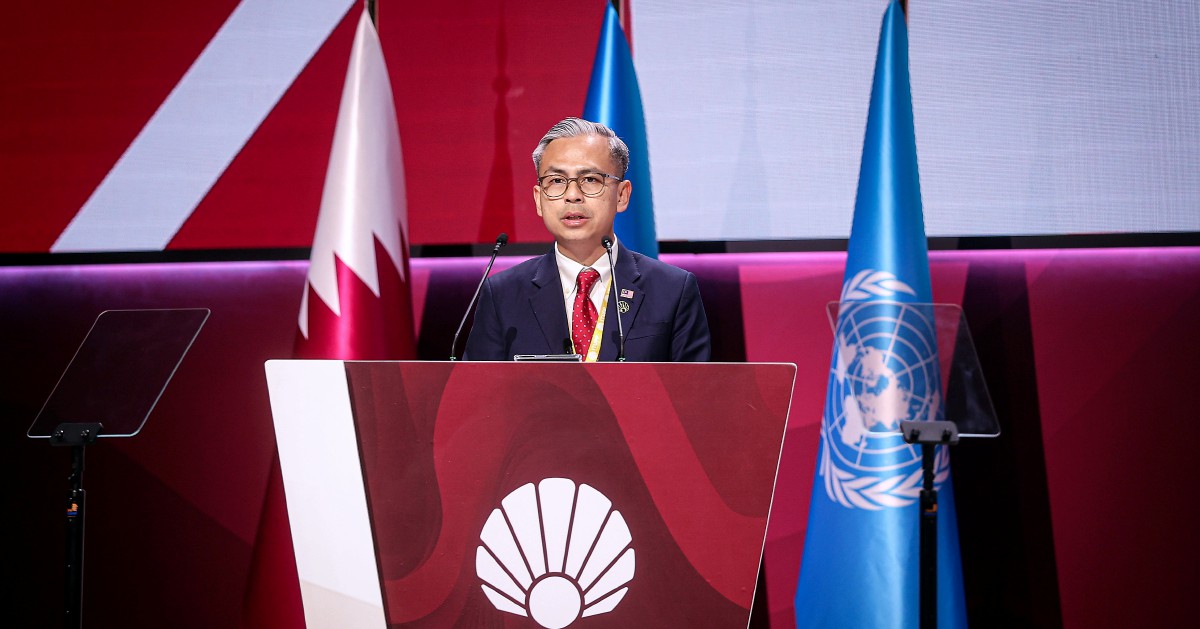
“This means looking at places such as ports, railway networks and highways, where reliable connectivity is important for businesses, economic growth and resilience,” he said when delivering Malaysia’s policy statement at the 2026 ITU Plenipotentiary Conference.
He said Malaysia had made significant progress in expanding its digital infrastructure through the National Digital Network Plan (Jendela), particularly in underserved areas.
“As of September, internet coverage reached 99.75 per cent of populated areas nationwide, while 5G subscriptions stood at 31.3 million,” he added.
However, Fahmi said expanding telecommunications infrastructure was only the first step towards meaningful digital transformation.
Equally important, he said, was ensuring that communities had the necessary digital skills and opportunities to benefit from improved connectivity.
“For Malaysia, connectivity is not merely about infrastructure. It is about creating opportunities, empowering communities and improving lives,” he added.
Fahmi said Malaysia continued to strengthen digital inclusion through its 1,099 National Information Dissemination Centres (Nadi), which provide communities with digital skills training and entrepreneurship opportunities.
He said Nadi joined the ITU’s Digital Transformation Centres network in April 2026, reinforcing the country’s commitment to empowering communities through technology.
On online safety, Fahmi said meaningful connectivity must also be supported by a safe and trusted digital environment.
He said Malaysia’s Online Safety Act, which came into effect in January 2026, strengthened platform accountability and protected internet users, particularly children, from online harms.
“Complementing this, our nationwide Internet Safety Campaign has reached over three million participants, promoting digital literacy and responsible online behaviour,” he added.
Meanwhile, Fahmi reaffirmed Malaysia’s commitment to international cooperation in advancing shared digital priorities, noting that the country had been an ITU member since 1958 and currently served on its Council.
He also sought continued support from fellow member states for Malaysia’s candidature for re-election to the ITU Council for the 2027-2030 term.
“Let us work together to make sure everyone can benefit from a digital future that is connected, inclusive and safe,” he said.
ITU PP-26, themed “Together for A Connected, Digital Future”, brings together member states to discuss global telecommunications priorities and the future direction of digital development.
Fahmi is in Doha to lead the Malaysian delegation to ITU PP-26 from Nov 6-11, and is accompanied by Communications Ministry deputy secretary-general (telecommunications infrastructure) Mano Verabathran.
The Malaysian delegation also included representatives from the Malaysian Communications and Multimedia Commission (MCMC), as well as representatives from telecommunications companies, including Telekom Malaysia, CelcomDigi, Maxis and U Mobile.
As a specialised agency of the United Nations for digital technologies, the ITU plays a key role in international telecommunications cooperation, radio spectrum coordination and efforts to bridge the global digital divide.