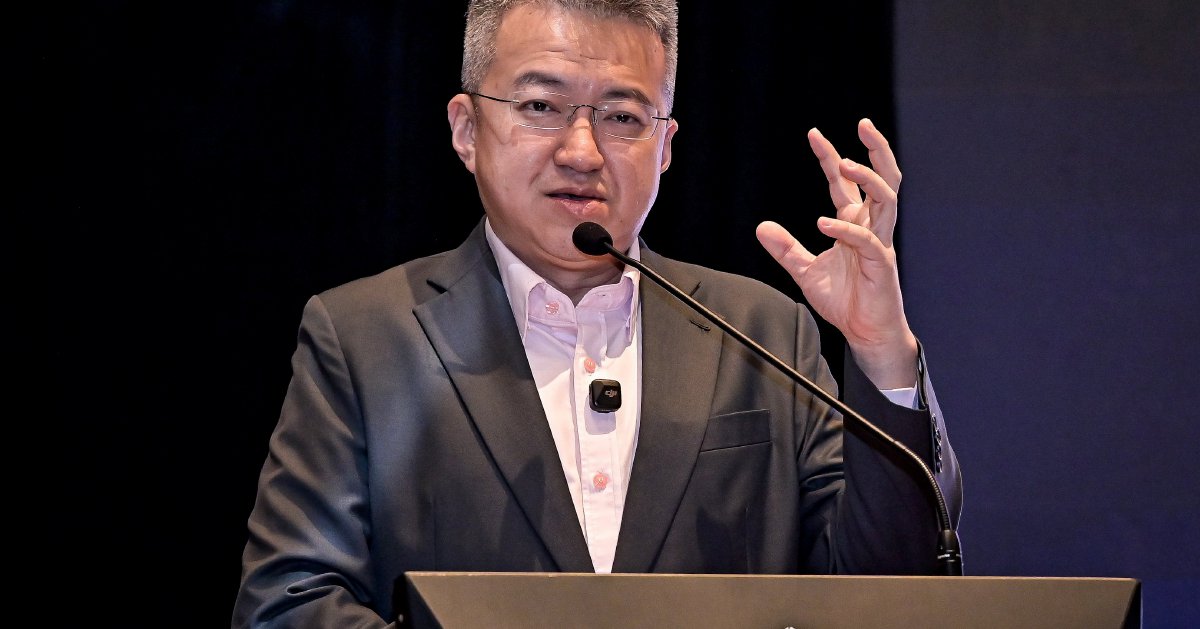

KUALA LUMPUR: Malaysia needs to strengthen its middle class, develop more mid-sized companies and build greater technological ownership to create new engines of growth amid shifting global economic and geopolitical dynamics.
Deputy Finance Minister Liew Chin Tong said the country could no longer rely heavily on external demand, particularly from the United States as the consumer of last resort, and must instead build stronger domestic and regional purchasing power.
He said a larger middle class with better-paying jobs, alongside more Malaysian companies with the capabilities to scale up, would help drive economic growth and reduce dependence on individual export markets.
“The world has been dependent on the US market as the consumer of last resort. But it is time for us to really build a strong middle class here.
“When our people are richer, then we are not dependent on one market, not just in Malaysia, but in Asean as well,” he said, speaking at the National Economic Outlook Conference 2026 organised by the Malaysian Institute of Economic Research today.
Liew outlined several longer-term priorities for Malaysia, including strengthening its position as a middle power, developing its technological capabilities, expanding the care economy and accelerating the transition towards a greener economy.
On technology, he said Malaysia needed to move beyond seeing itself primarily as a trading nation and establish itself as a technology nation by increasing local ownership and capabilities in the sector.
He said greater technological ownership would provide another engine of growth, allowing Malaysian companies to build stronger capabilities and participate more meaningfully in the global technology ecosystem.
Liew also identified the care economy as an important source of employment, particularly as Malaysia moves towards becoming an ageing society.
He said the country needed to ensure that more Malaysians could work in the care sector and receive better wages, and that more people, especially the elderly, had access to adequate care.
The sector would also become increasingly relevant as artificial intelligence (AI) reshapes the employment landscape, given that care-related jobs could not be easily replaced by AI, he added.
On sustainability, Liew said climate change could become an engine of economic growth if managed effectively, including through the development of greener and more liveable cities.
He said urban planning should encourage more young people to remain in cities without having to own cars, as Malaysia sought to create more sustainable urban environments.
Beyond domestic priorities, Liew said Malaysia must be more geopolitically literate and position itself as a middle power, given its strategic location amid intensifying competition between major powers.
He said Asean countries, including Malaysia, Singapore, Indonesia, Vietnam and Thailand, should not view one another merely as competitors but take a stronger collective leadership role in deepening regional ties.
The rivalry between the US and China had made Asean increasingly strategic in the global economic landscape, requiring countries in the region to work together to strengthen their position, he said.
This cooperation should also extend to attracting foreign investment, with countries avoiding competition that comes at the expense of labour standards, wages and environmental protections.
Liew said Malaysia, Singapore and Vietnam must also ensure that multinational companies paid the taxes they were required to under the Global Minimum Tax, rather than allowing countries to offer special incentives to outbid one another and circumvent the framework.
He said these longer-term priorities required Malaysia to rethink how it approached economic development and identify new ways to sustain growth in an increasingly uncertain global environment.