
SHENZHEN and Kuala Lumpur both owe their names to water. Shenzhen means “deep channel”, after the irrigation channels that once ran through its farmland. Kuala Lumpur is the “muddy confluence” where the Klang and Gombak rivers meet. Both cities grew through the flow of commerce and people.
Few places owe more to integration with the world economy than Shenzhen, which grew in four decades from a border town in Hong Kong’s shadow into a city whose economy is now larger than its neighbour’s.
Yet, as Prime Minister Datuk Seri Anwar Ibrahim pointed out at the Asia Pacific Economic Cooperation (Apec) CEO Summit in Shenzhen this week, the conditions that made its rise possible can no longer be taken for granted.
The Apec Policy Support Unit expects the region to grow by 3.4 per cent this year, but its latest figures show that trade remedies and trade-restrictive measures in force outnumber trade facilitating ones by nearly three to one. Technology and critical minerals are increasingly used as instruments of strategic competition.
President Xi Jinping spoke of widening access to China’s market and lowering barriers to commerce. Russian President Vladimir Putin warned of a fragmenting world economy. The United States continues to rely on tariffs and controls on advanced technology. Each major power has its own idea of openness, shaped by its strengths and interests.
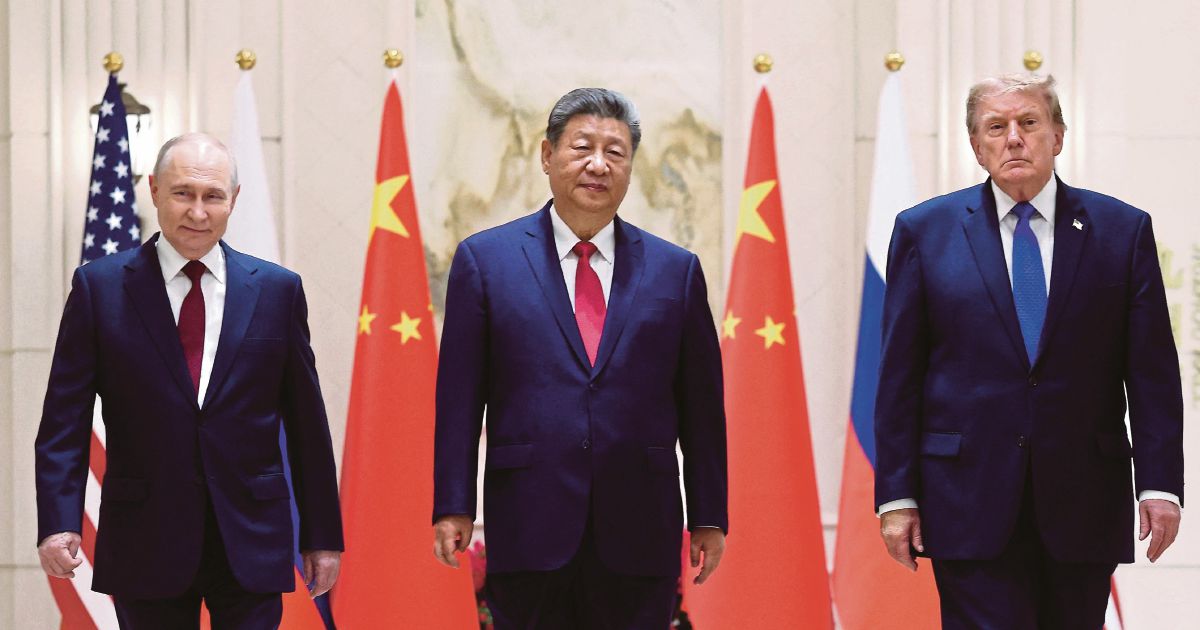
Then there was the trilateral meeting among Xi, Putin and US President Donald Trump, which some commentators have compared to the Yalta conference of 1945, where US president Franklin D. Roosevelt, British prime minister Winston Churchill and Soviet Union premier Joseph Stalin shaped postwar Europe.
The comparison is imperfect, and the suggestion about it being the harbinger of a new triumvirate world order is far-fetched, but the anxiety behind it is understandable. Great powers should talk to one another, and on matters of war and peace they must.
Still, it is not easy to shake off the notion about the strong doing what they can and the weak having to suffer what they must. Hence, what troubles smaller countries is the lingering suspicion that the powerful may decide the fate of others without those others having a say.
Anwar’s keynote at the CEO Summit had already spoken to that concern in his exhortation against letting the region’s future “to be dictated by competing spheres of influence, exclusive economic blocs, or the rivalries of great powers”. Small countries and emerging economies must be treated with respect, dignity and equality. Every country, whatever its size, should retain the freedom to chart its own course.
For Malaysia, that is the practical meaning of active non-alignment: constructive relations with every major power, and the right to make our own choices.
His larger theme was “equitable openness”. The usual measures of openness are tariffs and market access. They still matter, and Malaysia’s growth has depended heavily on trade and foreign investment. But removing barriers does not give every economy the same chance. A country can enjoy access to markets and still depend on technology and capital controlled elsewhere. Anwar’s answer was to broaden openness to include the capabilities and policy space that let economies move up the value chain.
At the Apec Economic Leaders’ Meeting, Anwar invoked the Confucian ideal of “harmony without uniformity”, defended the rules-based multilateral trading system and called for an ethics-driven approach to artificial intelligence and cybersecurity, warning that a breach in one economy is a vulnerability for all. He also called for the benefits of the region’s prosperity to extend to the developing economies of the Global South.
Apec brings together 21 economies, including all three major powers, but its decisions are reached by consensus and its commitments are voluntary. Agreement on principles comes far more easily than agreement on hard choices.
Its value also lies in less glamorous work such as paperless trade and modernised customs procedures, which lack the drama of great-power summitry but can lower costs for business.
For Malaysia, neither retreat from the world economy nor dependence on a single power is an answer. Our interests require markets and investment from many partners, and the freedom to decide according to our own circumstances.
Shenzhen and Kuala Lumpur were built on the flow of water, and later, the flow of trade. But the channels of commerce should not serve only those who control them. That, in the end, was the prime minister’s argument.
Openness is no longer only about tariffs and market access. It is also about who owns the technology, who controls the supply chains and who is left behind. For a trading nation like Malaysia, the real question is on whose terms the world stays open.
- The writer is executive chairman of the Institute of Strategic and International Studies, Malaysia