
SITTING astride the Strait of Malacca in the centre of Southeast Asia has brought the country immense blessings, from being a shipping hub since time immemorial to being an essential aviation centre for regional and international airlines in more recent times.
With this has come trade and tourism, making Malaysia a strategic magnet for people from all over. With blessings, though, usually comes a potential curse; that we attract also less savoury characters and those who have a criminal bent.
We need, therefore, not just to reap the clear economic advantages of our strategic location but also to take care that it does not become a strategic weakness. The same connectivity that makes the country a regional trade, aviation and logistics hub also provides opportunities for drug traffickers to move their illicit cargo across borders.
This being the case, Home Minister Datuk Seri Saifuddin Nasution Ismail let on that the cabinet has approved a joint memorandum between the home and transport ministries on Aug 19 for the implementation of a comprehensive, short to medium and long-term action plan on Security Improvement and Mitigation to strengthen phased-in security controls and screening at Kuala Lumpur International Airport (KLIA) and other international entry points.
Malaysia’s proximity to the Golden Triangle, one of the world’s major drug-producing regions, puts it in a particularly vulnerable position. This is not merely a theoretical concern.
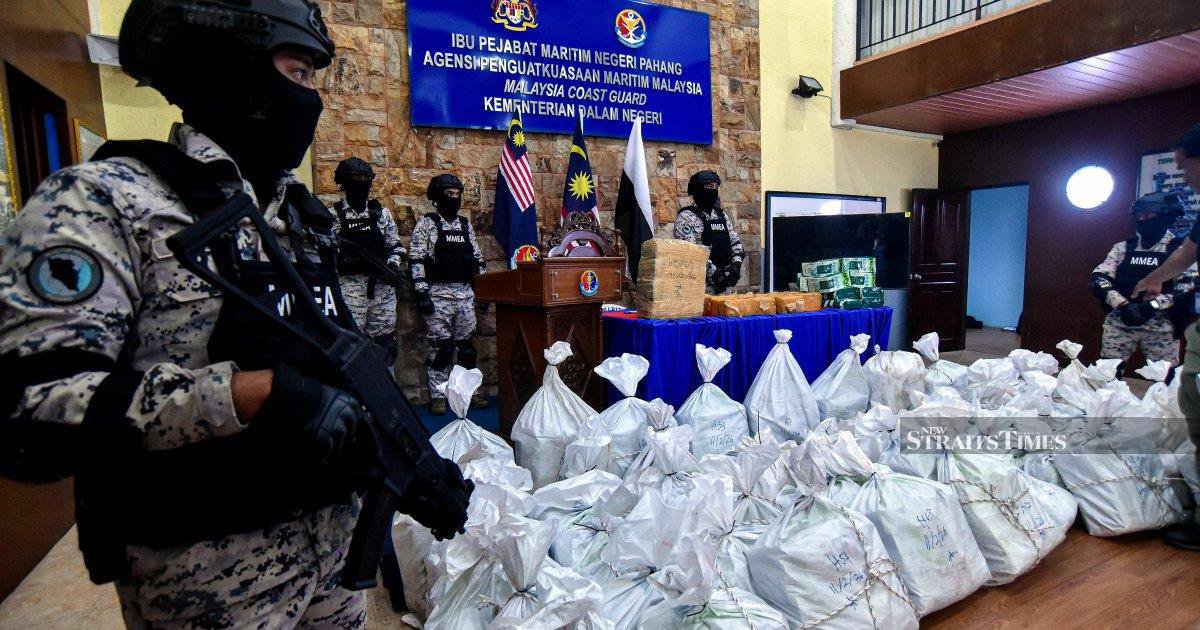
In March, police seized more than 3.4 tonnes of methamphetamine worth an estimated RM170 million in the Klang Valley. The drugs had reportedly entered through northern Peninsular Malaysia before being stored in rented houses.
In November, police also linked a Hong Kong drug seizure to a syndicate that had used Malaysia as a transit point before the drugs were despatched through KLIA and Penang International Airport.
The challenge is that enforcement cannot be confined to airports. Ports, coastal waters, land crossings, warehouses and logistics facilities all need to be part of a well-coordinated security strategy.
The government’s 17-point security improvement and mitigation plan for KLIA and other international entry points is a timely step in the right direction. However, the government will need to ensure that implementation is measurable, adequately funded and continuously evaluated.
We basically need to ensure a fool-proof protective shield covering virtually the entire country, given that an increased security focus on airports will incentivise the drug syndicates to probe for other vulnerable spots along our lengthy coastline as well as land borders.
We simply cannot afford to become a convenient stopover for the international narcotics trade. Our connectivity must be protected at all costs, not exploited. Intelligence gathering and sharing, border screenings and enforcement coordination must all be beefed up without compromising legitimate trade and travel in and out of the country.
There must be no let-up. As the minister rightly said, the police, through the Narcotics Crime Investigation Department, are intensifying efforts against the illicit trade through the entire syndicate network.