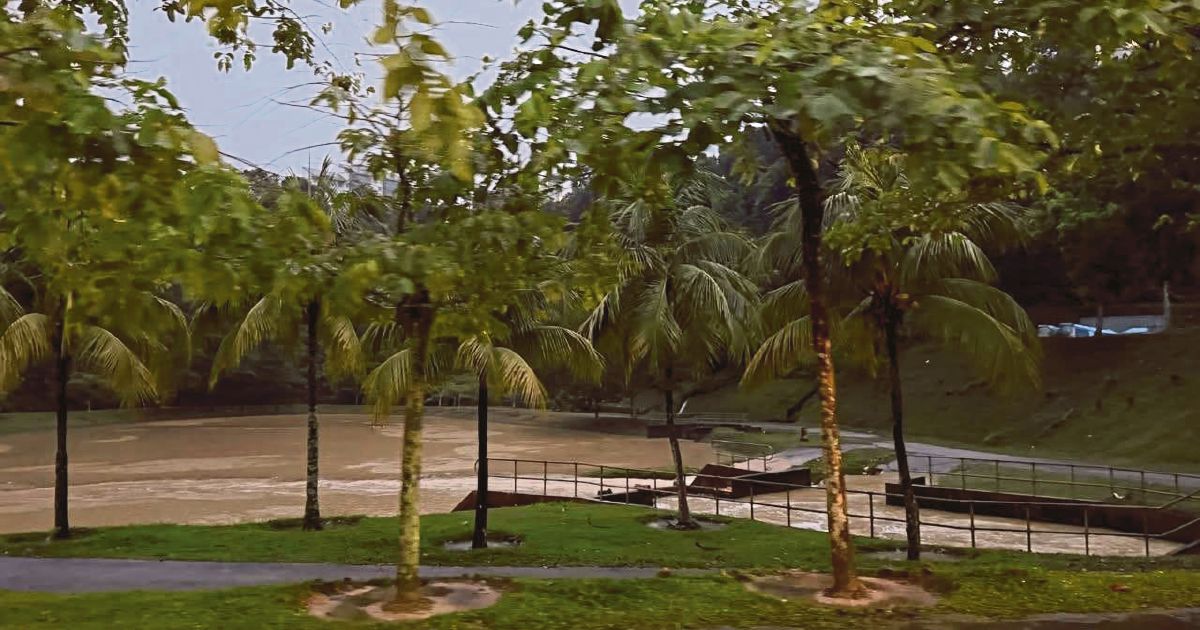

THE seasons are unchanging; the hot, dry season is always followed by the wet season. What changes is the country’s landscape: verdant lands where forests and crops coexist will increasingly give way to urbanisation as the pace of development quickens.
This means the natural landscape and its capacity to absorb rainfall will inexorably give way to paved and concreted cityscapes, where only adequate drainage systems can spare us from inevitable floods during the rainy season or even the occasional heavy thunderstorm.
Thus, it is high time the country stopped treating floods as a seasonal emergency requiring temporary fixes and instead focused on the structural and environmental factors that make flooding a recurring problem year in, year out.
Social activist Tan Sri Lee Lam Thye has a point when he says Malaysia must move beyond repeated drain-clearing exercises and adopt a long-term flood mitigation strategy.
The country’s ageing drainage infrastructure, as well as woefully inadequate drainage systems in most towns and cities, needs an overall review.
What is clearly needed is a comprehensive overhaul to address ageing or inadequate drainage systems, not another round of maintenance and superficial servicing whenever the monsoon approaches.
The National Disaster Management Agency (Nadma) has previously outlined strategies and preparedness measures ahead of the monsoon season.
However, these are largely aimed at managing the consequences of floods as they occur rather than preventing them in the first place. Preparedness is important and necessary, for sure. But it cannot substitute for longer-term solutions.
Those tasked with flood control must resist the reflexive urge to repeat the cycle of reactive responses. Clearing drains and desilting waterways are routine and necessary maintenance exercises. They should, however, be only part of a sustained programme, not the be-all and end-all of the response to flooding.
Systemic weaknesses in the drainage network must be identified and addressed. A serious study is needed to ascertain whether our ageing infrastructure is adequate to address flooding.
This must include a comprehensive assessment of drainage systems, particularly in urban and flood-prone areas. Drainage capacity must keep pace with population growth, urbanisation and increasingly frequent episodes of intense rainfall.
Uncontrolled development, poor land-use planning, the loss of natural water catchment areas, inadequate retention ponds and deforestation all contribute to the problem and must be addressed holistically, not piecemeal.
There must be better coordination across the board, from the federal level down to state and local levels, with clear delineation of responsibilities, implementation timelines and adequate funding for approved mitigation projects.
The end goal must be clear to all: invest in flood prevention, not just recovery efforts. The economic and social costs of repeated flooding — damage to homes, businesses, infrastructure and livelihoods — make a strong case for sustained investment in flood prevention, which will reduce and ultimately eliminate the recurring need for flood recovery efforts.