
KUALA LUMPUR: Malaysia’s plantation industry must accelerate productivity and technology adoption to address rising operating costs, labour shortages and intensifying global competition.
Plantations and Commodities Minister Datuk Seri Dr Noraini Ahmad said the industry could no longer rely solely on conventional operating practices, particularly as ageing estates and evolving market requirements placed greater pressure on operators.
“Many of our old farm fields are getting old. Replanting is necessary if we want to maintain good yields and keep our estates productive,” she said.
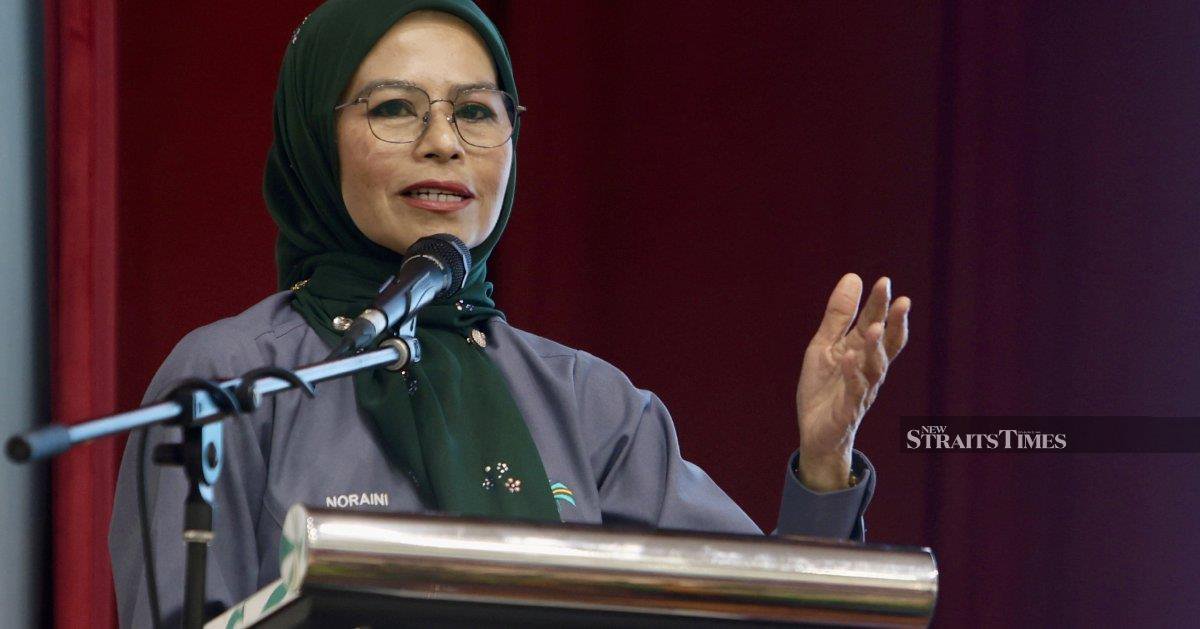
Noraini was speaking at the 95th anniversary celebration of the Malaysian Estate Owners Association (MEOA) today.
She said the government and industry must work together to address structural challenges, particularly replanting, which requires substantial financing, time and careful planning.
She also highlighted the growing importance of sustainability as international buyers increasingly demand greater transparency over how and where plantation products are produced.
Noraini said the Malaysian Sustainable Palm Oil (MSPO) certification provided an important foundation for strengthening industry standards and meeting international market expectations.
“We must continue to strengthen our standards and help producers meet the needs of international market.
“Sustainability should not be seen only as a cost. When managed well, it can help our industry remain competitive and build greater trust with buyers,” she said.
On technology adoption, Noraini said mechanisation, digital tools and artificial intelligence could help plantation operators improve yields, reduce wastage, manage costs and address labour shortages.
However, she cautioned against adopting technology merely for the sake of modernisation, stressing that solutions must demonstrate practical benefits in actual estate operations.
“We do not need technology simply because it is new. We need technology because it works,” she said.
She encouraged estate owners to collaborate with the ministry, research agencies and technology providers to test practical solutions that could improve operational efficiency.
She highlighted the access to financing as a key challenge for estate owners, noting that investments in replanting, sustainability initiatives and new technologies would remain difficult without adequate financial support.
She said efforts to modernise the sector should also focus on improving working conditions and making the plantation industry more attractive to younger generations.
“Let us make our estates more productive, our operations more efficient, and our industry more attractive to the younger generation,” said Noraini.