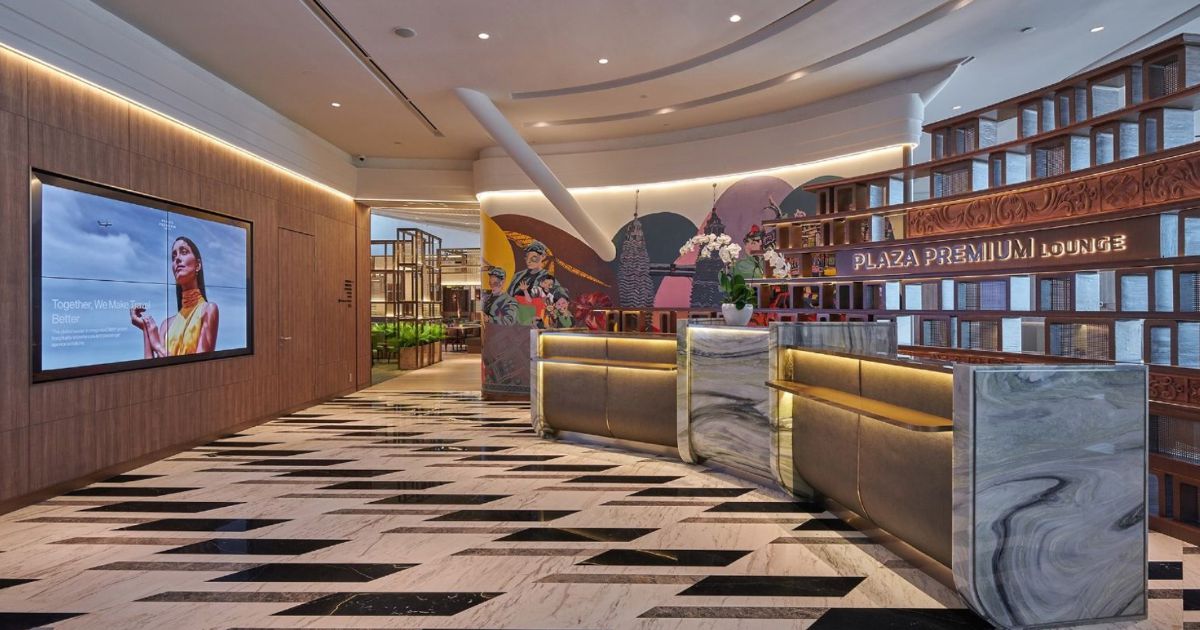

KUALA LUMPUR: Plaza Premium Group (PPG) is exploring opportunities to expand its airport lounge business into Sabah and Sarawak as it strengthens its presence across Asia.
Founder and chief executive officer Datuk Wira Song Hoi See said the group was interested in expanding into both states and other smaller airports in Malaysia, depending on future airport developments.
“We will look into Sabah and Sarawak, and also smaller states,” he told Business Times in a recent interview.
Song said Malaysia remained an important market for PPG despite its growing international operations.
“Being in Malaysia, my heart is always in Malaysia,” he said.
The group operates Plaza Premium Lounge and Plaza Premium First at Kuala Lumpur International Airport (KLIA) Terminal 1, as well as Plaza Premium Lounge at KLIA Terminal 2.
PPG also operates its own lounges in Penang and Langkawi and its airport dining concept, Flight Club, in Kota Kinabalu. It also manages Malaysia Airlines Bhd’s international, regional and domestic lounges.
PPG recently refurbished its lounge at Langkawi International Airport as part of ongoing efforts to maintain service standards across its network.
On its regional expansion strategy, Song said more than half of the group’s US$300 million investment programme, announced in 2024, had been allocated to Asia.
The group had earmarked US$160 million for growth in Asia-Pacific over three years, focusing on Southeast Asia and India.
Song said PPG’s investment decisions were driven by demand, with airport infrastructure development playing an important role in identifying potential markets.
“We build on demand. When the demand [is there], we build. That is our strategy for investment,” he said.
He cited airport developments in Hong Kong, Singapore, Vietnam, Thailand and Cambodia as examples of investments being undertaken to accommodate future air travel demand.
“If you watch Asia Pacific carefully, a lot of countries spend a lot of money on infrastructure to build airports,” he said.
Song said rising affluence and economic growth across the region would also increase the movement of people and goods, supporting demand for airport services.
FROM MALAYSIA TO THE GLOBAL MARKET
A former investment banker, Song founded PPG in 1998 after identifying a gap in the airport hospitality market, where lounge access was largely restricted to first- and business-class passengers or eligible frequent flyers.
The Hong Kong-headquartered group is privately owned by Song and his wife, Linda.
He introduced the independent, pay-per-use airport lounge concept at Hong Kong International Airport (HKIA) and KLIA, allowing passengers to use lounge facilities regardless of the airline or class they were travelling in.
The Hong Kong-headquartered company has since expanded into airport transit hotels, dining, meet-and-greet services and other passenger services.
Its international lounge operations include HKIA, Singapore Changi Airport and London Heathrow Airport. The group also operates and manages lounges for airlines and other partners.
PPG has also expanded into Latin America, with plans to open five lounges at Arturo Merino Benitez International Airport in Santiago, Chile.
According to its announcement in July, three lounges are scheduled to begin operations by the end of 2026, followed by another two in the first quarter of 2027.
Song said the group’s reputation and international network had helped it secure opportunities in markets beyond Asia.
“Chile is so far away and they invite us because they know we are producing good quality services,” he said.
He said Hong Kong had played an important role in PPG’s international growth, providing greater exposure to overseas airport operators when the company first entered the market.
“Hong Kong is such a big hub. It’s a major hub,” he said, adding that airport representatives visiting Hong Kong were introduced to PPG’s services, subsequently creating opportunities for the company to expand internationally.
Its international network also allows airlines to engage PPG for lounge services across multiple countries under a single agreement, rather than negotiating separate agreements in each market.
“What does it mean? Branding is very important. The second thing – networking is very important,” Song said.
Beyond Southeast Asia, PPG is also investing in China, where its business has expanded from managing airport lounges to operating through joint ventures and wholly-owned businesses.
Song said airports in China were developed by individual provinces, which often established their own companies to manage airport services.
He said PPG initially entered the market through lounge management contracts after airline and airport representatives from mainland China visited its operations in Hong Kong.
The city remains an important platform for the group to access mainland China and the Greater Bay Area, where Song sees further business opportunities.
COMPETITION AND THE FUTURE OF AIRPORT LOUNGES
As airlines continue to operate their own airport lounges, Song said PPG viewed them as business partners rather than competitors.
“No, actually we are a complement to airlines,” he said.
He added that operating dedicated lounges could be costly for carriers, particularly those serving an airport only once or twice a day.
PPG’s common-use lounges allow these airlines to provide lounge access to their passengers without having to manage their own facilities.
“We create a common lounge to take care of them. It saves a lot of money for them. That’s how we complement each other,” he said.
Song said the airport lounge business had changed significantly over the past decade as travellers increasingly sought personalised services, wellness facilities and better travel experiences.
“You cannot have one size fits all. You cannot have one lounge that everybody goes into. You have to have segmentation,” he said.
This has led PPG to introduce different lounge categories, including Plaza Premium Lounge and Plaza Premium First, with services tailored to different passenger requirements.
The group has also diversified into airport transit hotels, meet-and-greet services and digital platforms that allow travellers to access multiple airport services through a single point of contact.
Its Aerotel airport transit hotel business offers accommodation in shorter blocks, catering to passengers who need to rest for a few hours between flights.
Song said PPG was also exploring the development of airport pet hotels, including grooming facilities, as part of efforts to meet changing passenger needs.
“The second thing that I would do is develop what we call a pet hotel, including grooming as well. This will provide a lot of convenience to travellers who has pet in the house,” Song said.
On the future of airport lounges, Song said the industry would continue to evolve, with wellness, food quality and local cultural experiences becoming increasingly important.
He said PPG incorporated local elements into its lounges through interior design, furniture and food offerings to reflect the destinations where it operated.
In Malaysia, these include dishes such as nasi lemak, curry laksa and satay.
“I don’t want you to come to Malaysia without even having the chance to try laksa or satay. People going to lounges do not eat a lot but you must give them quality so they remember you,” Song said