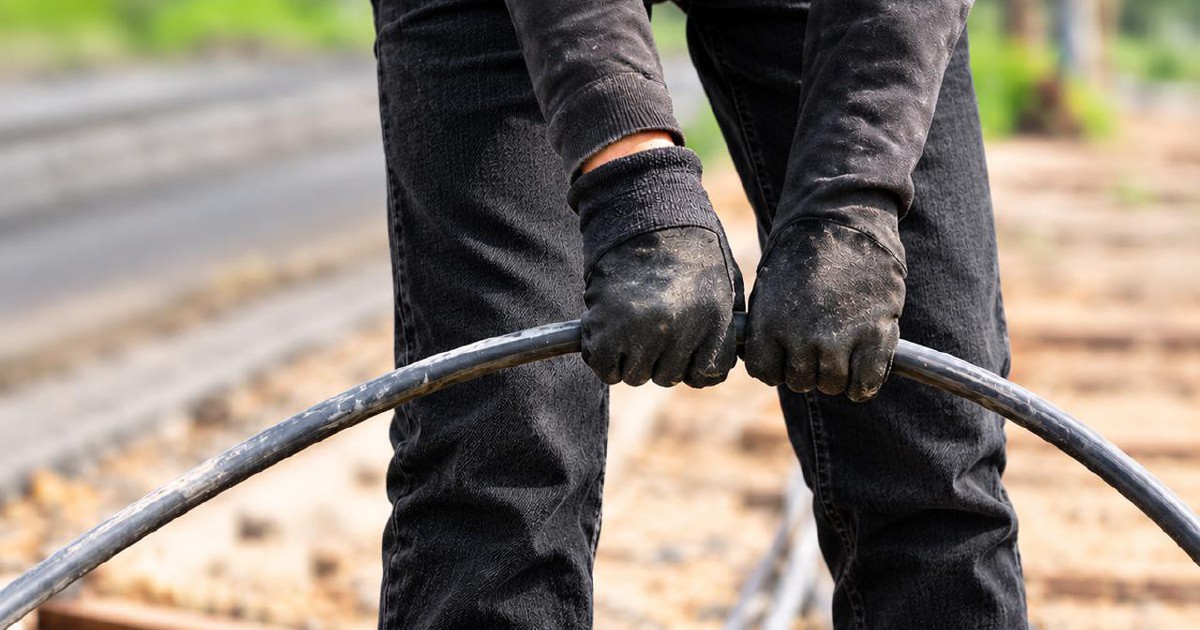

KUALA LUMPUR: Cable thieves continue to disrupt essential public services, causing operational delays, community-wide outages and mounting financial losses.
Telekom Malaysia (TM) said its shift from copper cables to optical fibre had helped reduce thefts, but those targeting its critical infrastructure were becoming increasingly brazen.
Rail operator Prasarana Malaysia Bhd said that although it had recorded fewer incidents, thieves were stealing larger quantities of cable, posing a growing threat to urban rail operations.
Both companies are calling for tougher enforcement and stiffer penalties.
Prasarana told the New Straits Times that it recorded 26 cable thefts between January and September, compared with 72 for the whole of last year.
However, losses have exceeded RM1.38 million this year.
“The value of stolen cable this year has already surpassed last year’s figure,” it said.
The losses have prompted the rail operator to call for tougher laws, stronger enforcement and tighter regulation of scrapyards and recycling centres suspected of trading in stolen cables.
Prasarana said cable theft should not be treated merely as a property crime.
It called for laws to be reviewed and strengthened, with penalties and fines reflecting not only the value of the stolen materials but also the wider damage to critical infrastructure.
Penalties, it said, must take into account the potential consequences for passenger safety and the continuity of public transport services.
Prasarana wants enforcement agencies to target not only cable thieves but also individuals and businesses involved in trading stolen cables.
It called for closer cooperation between the police and other enforcement agencies to ensure action is taken against every link in the stolen-cable supply chain.
The company also wants the authorities to address weaknesses in legislation that could undermine the prosecution of those involved in cable theft.
A key recommendation is tighter regulation of scrapyards and recycling centres to prevent stolen cables from entering the legitimate scrap metal market.
Prasarana proposed requiring businesses dealing in cables and other metals to keep proper records of sellers’ identities, the sources of materials and transactions.
[[nid:1582855]]
Such records, it said, should be subject to audits, enabling enforcement agencies to trace suspicious transactions and identify businesses potentially involved in handling stolen property.
It also called for frequent inspections and tougher action against premises suspected of buying or handling stolen cables.
Prasarana wants stronger intelligence-sharing between enforcement agencies and infrastructure operators, alongside closer monitoring of high-risk locations to detect suspicious activity.
It said these measures should form part of a comprehensive strategy to protect railway assets from repeated attacks.
In July, Parliament was informed that 393 railway cable theft cases had been recorded nationwide since 2024, resulting in losses of approximately RM16.3 million.
Prasarana said public transport infrastructure must be recognised as a strategic national asset, rather than merely a collection of equipment vulnerable to theft.
It also hopes that stronger legal protection and more aggressive enforcement will safeguard essential infrastructure and ensure uninterrupted services for train commuters.
TM TAKES ACTION
TM has recorded a 15 per cent year-on-year reduction in financial losses linked to cable theft and vandalism over the past two years.
Despite the improvement, the company said vandalism of its infrastructure remained a persistent problem that often disrupted public services and diverted resources from network upgrades.
TM chief network officer Mohamed Tajul Mohamed Sultan said the replacement of copper cables with high-speed optical fibre was beginning to yield results.
[[nid:1582854]]
“Our network modernisation programme, specifically replacing legacy copper with fibre, is yielding results, with the number of customers affected by theft and vandalism having decreased by approximately 30 per cent this year.”
However, Tajul said infrastructure damage remained a persistent challenge.
He said when thieves break into TM’s installations and do not find any copper wires, they become frustrated and start vandalising the optical fibres, leaving entire communities disconnected.
“The direct repair and restoration costs may have fallen by 15 per cent, but less visible is the cost of lost progress.
“Every ringgit spent repairing the same sites again and again is a ringgit not spent extending and upgrading our network for faster, more reliable connectivity.”
He added that the disruptions caused by cable theft could affect daily life and essential public services, including business payment terminals, access to medical records at clinics and emergency response services.
“Theft and vandalism are deliberate and preventable. That is why we treat every incident first as a disruption to people’s lives, and then as a repair job.”
Tajul said TM is stepping up joint operations with the police and the Malaysian Communications and Multimedia Commission.
“The enforcement measures include targeted patrols in high-risk zones, sealing manholes at vulnerable locations and conducting joint raids on scrap collection yards where we believe stolen cables are fenced.”
He also asked the public to act as the eyes and ears of the authorities by reporting suspicious activity to the police.
“Look out for suspicious activity around manholes or cabinets being opened, cables being pulled or cut, or work being carried out at unusual hours without proper identification.
“Genuine TM and Unifi crews can be identified by their safety vests and helmets, marked vehicles and clear worksite signage,” he added.
Meanwhile, Tenaga Nasional Bhd recorded 439 cable thefts in Selangor between Jan 1, 2023, and Sept 30 this year, resulting in losses amounting to RM62.7 million.
Selangor Infrastructure and Agriculture Committee chairman Datuk Izham Hashim said 166 cases were recorded this year, with Cheras accounting for the highest number, at 45.
This was followed by Bangi with 37 cases, Port Klang (24), Banting (12) and Rawang (10).
Izham said the Selangor Drainage and Irrigation Department recorded 38 cases of cable and equipment theft at pump houses and water gates between 2023 and 2026, resulting in losses of about RM1.5 million.