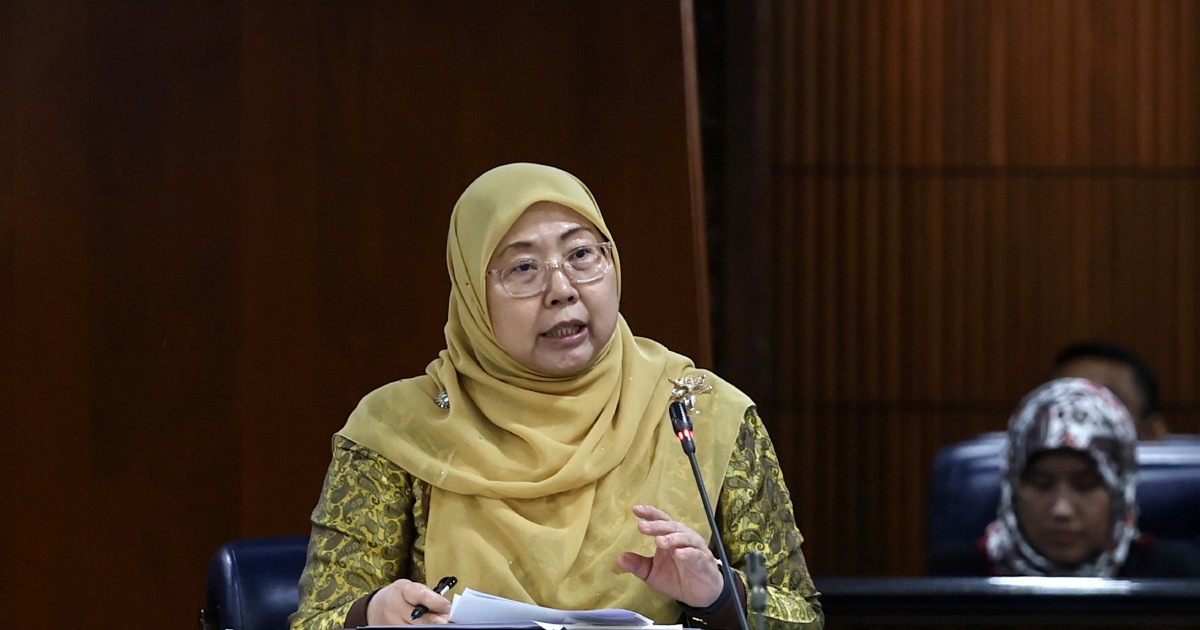

KUALA LUMPUR: Rural sundry shops can participate in the Sumbangan Asas Rahmah (Sara) programme by applying for payment terminals to receive direct subsidy reimbursements, said Deputy Domestic Trade and Cost of Living Minister Datuk Dr Fuziah Salleh.
She said eligible operators only needed to apply to the Finance Ministry for the terminals, which allow consumers to make purchases using their identity cards.
“All sundry shop operators can participate in the Sara programme, as subsidy payments are made directly by the ministry. They only need to apply to the ministry to obtain the terminal.
“Once the terminal is installed at their shops and consumers use their identity cards to make purchases, the ministry will make payments directly to the operators,” she said during the question-and-answer session in the Dewan Rakyat today.
She was replying to a supplementary question from Datuk Idris Ahmad (PN-Bagan Serai) on steps to ensure rural sundry shops benefit from Sara amid competition from supermarkets and strategic partners.
Fuziah said her observations during visits to rural areas showed that sundry shops and points of sale (POS) equipped with Sara terminals had benefited from the programme.
Earlier, replying to an original question from Datuk Seri Doris Sophia Brodi (GPS-Sri Aman) on cost differences between rural traders and large supermarkets, Fuziah said the government factored in disparities in bulk purchasing and logistics.
She said large supermarkets enjoyed economies of scale to buy goods at lower prices, whereas rural traders bore additional transport costs.
To address this, she said the government provided logistics assistance through several initiatives, including the Price Standardisation programme, which received RM67 million to transport goods from Peninsular Malaysia to Sabah and Sarawak.
The Essential Goods Distribution programme was also allocated RM250 million each for 2026 and 2027 to serve 828 areas, while RM3.5 billion was allocated in 2025 for the Subsidised Diesel Control System (SKDS), benefiting about 30,000 vehicles transporting essential consumer goods.
On price control, Fuziah said the Domestic Trade and Cost of Living Ministry conducted daily monitoring through 850 enforcement officers, who inspected 2,170 premises covering 316 types of goods.